How to Build an Atmos Home Theater with In-Ceiling Speakers
AI-generated, human-reviewed.
For new homeowners facing a builder-installed in-ceiling speaker package, getting true Dolby Atmos immersion can seem confusing. On Home Theater Geeks, host Scott Wilkinson provided actionable guidance on optimizing speaker and subwoofer setups, so you get the best performance with what the builder offers.
Building a home theater with five in-ceiling speakers from a builder package is common, but not always ideal for Atmos. Scott Wilkinson found that careful placement, adding overhead speakers, and choosing the right subwoofer are key to unlocking immersive sound.
Choosing Speakers for Dolby Atmos
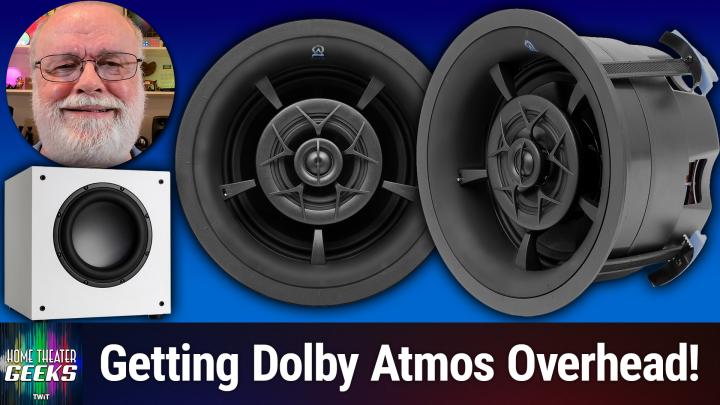
New home builds often include Origin Acoustics Director D85 in-ceiling speakers—three in front, two in back, all directional. These aimable models can provide decent sound, but true Atmos calls for thoughtful modification. For a proper Atmos setup, you need at least two discrete speakers mounted directly above the primary listening position. Placing additional speakers near the TV wall will not create a convincing overhead effect, which is essential for Atmos. Think rain or aircraft sounds moving above you.
Scott Wilkinson recommends:
- If possible, have the builder install front left, center, and right speakers in-wall, surrounding the TV rather than in-ceiling. This makes dialogue and main sounds feel anchored to the screen.
- If the builder will allow, add two more in-ceiling speakers (identical Origin Acoustics D85s) directly above the main seating area to serve as Atmos height channels.
- Avoid placing Atmos speakers near any room edge or wall, as this fails to create the enveloping overhead effect.
Subwoofer Choices: Built-In vs Standalone
While the Origin Acoustics D85 has strong specs (8” woofer, frequency response down to 36Hz), it won’t deliver the deep, room-filling bass that defines great movie soundtracks. A quality subwoofer is a must.
- Architectural subwoofers (in-wall or in-ceiling): these hide easily, but their location is fixed. That can cause uneven bass response due to room acoustics.
- Standalone powered subwoofers: these can be moved and placed for even, impactful bass. They’re easier to add without upsetting builder plans.
Scott Wilkinson suggests standalone subs offer better flexibility and performance.
Recommended brands and models include:
- RSL Speedwoofer 10E: Only $300, featured on many “best of” lists.
- SVS SB-1000: $600, renowned for balanced, deep bass.
- Stark SW15: $600, delivers strong bass for larger rooms.
For best results, use two smaller subwoofers (like dual RSL Speedwoofer 10Es) and place them at different locations to minimize issues from room modes (bass peaks and dips). Branded subs from Origin Acoustics are pricier (from $1,000–$1,300), with top models like the Sub D8 or D10, but quality alternatives are available for less.
System Overview: What Setup Should You Aim For?
The ideal configuration, based on Scott Wilkinson’s advice:
- 5.1.2 or 5.2.2 system:
- Five in-ceiling or in-wall speakers for surround
- One or two subwoofers for deep bass
- Two overhead in-ceiling speakers positioned above listeners for Atmos
This approach delivers height cues, full-range impact, and greater adjustment ability—even if the builder’s default package is limited.
The Overhead View
If you’re locked into a builder’s in-ceiling speaker offer, you can still achieve high-quality surround and Atmos sound by:
- Requesting in-wall front speakers (if possible)
- Adding two matching in-ceiling speakers directly overhead for Atmos
- Investing in one or two standalone powered subwoofers and placing them strategically for even bass
Subwoofer brand and model choice is flexible; you’re not constrained to match the main speaker brand. Look for compact, well-reviewed models within your budget. Builder-installed in-ceiling speaker systems don’t have to limit your home theater ambitions. With careful speaker placement and subwoofer upgrades, immersive Atmos audio is well within reach—even if you need to work with what the builder offers.
Subscribe to Home Theater Geeks for more expert AV tips:
https://twit.tv/shows/home-theater-geeks/episodes/529