SpaceX Starship’s Splashdown: A Major Step Toward Reusable Rockets
AI-generated, human-reviewed.
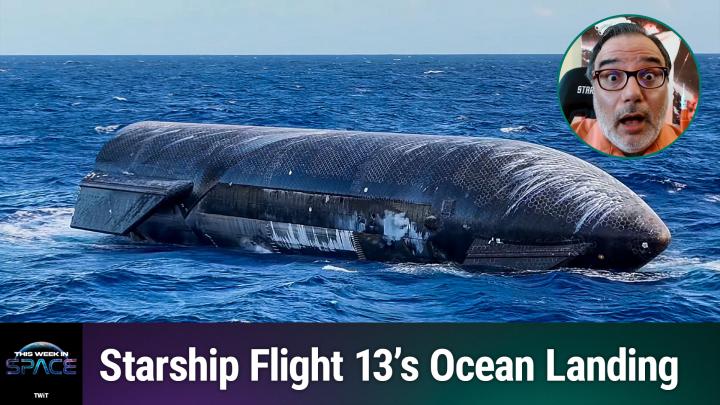
SpaceX’s Starship has completed its 13th test flight with a surprisingly intact, floating splashdown in the Indian Ocean. On This Week in Space, hosts explored why this moment matters beyond just another test: it provides SpaceX with its first real opportunity to inspect the vehicle’s heat shield and structural integrity after reentry, offering insights that could shape the future of cost-effective, rapid-turnaround spaceflight.
Why the Starship Floating Splashdown is a Breakthrough
Starship’s 13th test flight stands apart because, unlike prior missions where the vehicle exploded after splashdown, this time the ship remained intact and buoyant for days afterward. This result allows engineers to directly examine a flown, unburned heat shield, welds, and manufacturing precision—offering rare feedback to improve design and reliability for crewed missions.
Previously, after suborbital test flights, Starship prototypes would hover over ocean waters before deliberately tipping over and breaking apart. This time, the ship’s ability to float demonstrates robust engineering, especially in heat protection and manufacturing quality, which are crucial for a reusable launch system.
What Starship’s Reusability Could Mean for Space Launch Costs
SpaceX aims to dramatically lower launch costs by making Starship rapidly reusable. Compared to the Space Shuttle, which took months and billions of dollars to refurbish, Starship could (in the future) support quicker turnaround with a fleet approach—even if each vehicle isn’t ready in just hours. The hosts noted that incremental Starship cost is about $100 million versus the Shuttle’s adjusted $4 billion per flight, changing the economics of space access.
According to comments discussed on This Week in Space, a single intact Starship after ocean recovery unlocks new data for redesigning faster, more reliable reusable rockets. This could improve how many flights are possible per year and bring the vision of cost-effective space travel closer to reality.
The Critical Role of Starship’s Heat Shield
One concept discussed was the limitation posed by heat shield tiles, which, while performing well on this flight, are considered delicate and could restrict how quickly the rockets turn around between missions. Inspection and repair of these shields were major time sinks for the Space Shuttle program. Now, with a recovered Starship, engineers can analyze the actual wear and develop solutions for higher durability or faster inspection.
If SpaceX can perfect this process, ambitious goals like turning around a Starship in mere hours could shift from hype to near-term reality as fleet size and inspection technology expand.
Next Steps for Starship and What to Watch
The episode highlighted that SpaceX is already preparing for Starship’s 14th test flight. Elon Musk has suggested that if on-orbit and reentry inspections check out, SpaceX may attempt to actually catch the vehicle with its ground-based “chopsticks” mechanism—moving even closer to full reusability.
Additionally, each success builds confidence for Starship’s assigned NASA Artemis lunar landing mission. Starship’s demonstrated ocean survivability gives customers and agencies new reasons to believe in its potential.
Key Takeaways
- Starship’s intact splashdown in the Indian Ocean provides unprecedented engineering data for SpaceX.
- The event marks a new milestone in the march toward rapidly reusable, lower-cost rockets.
- Heat shield reusability and inspection time are currently the biggest limiting factors for true “airplane-like” spaceflight.
- More test flights, hands-on analysis, and design evolution will determine if SpaceX can move from successful demos to operational reliability.
- SpaceX’s approach is fundamentally changing cost and scale expectations for space launch—including crewed lunar and Mars missions.
The Bottom Line
Starship’s floating splashdown isn’t just a technical feat—it’s a real-world opportunity for SpaceX to fine-tune reusability and operational cadence. Every lesson learned from this ship floating in the Indian Ocean—how the heat shield survived, what welds held, what failed—brings the industry closer to reliable, affordable, and frequent space missions that used to be the stuff of science fiction.
Ready for more expert breakdowns on the latest in space and tech? Subscribe to This Week in Space at:
https://twit.tv/shows/this-week-in-space/episodes/221