Understanding the UN's Growing Role in Space Governance
AI-generated, human-edited.
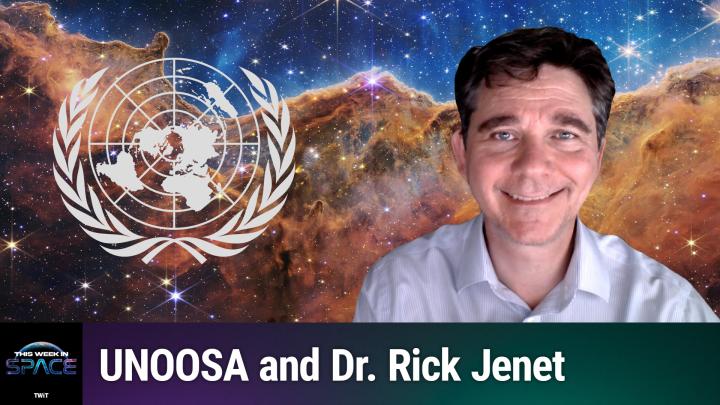
The acronyms might sound like something from a science fiction novel, but UNOOSA and COPUOS represent very real organizations working to govern humanity's activities beyond Earth's atmosphere. On a recent episode of This Week in Space, hosts Rod Pyle and Isaac Arthur explored these crucial UN bodies with Dr. Rick Jenet, who serves as the National Space Society's representative to the United Nations.
Understanding the Space Governance Landscape
The United Nations Office of Outer Space Affairs (UNOOSA) and the Committee on the Peaceful Uses of Outer Space (COPUOS) were both established in the 1960s during the height of the Space Race. As Dr. Jenet explained during the podcast, these organizations serve complementary but distinct roles in international space governance.
"I like to look at it as COPUOS is kind of like the Congress, and UNOOSA is kind of like the executive branch," Dr. Jenet noted. "COPUOS, that's the member delegations. They're the people that are setting what's going to happen, what should happen, the principles, the laws, in some cases early on, and it's UNOOSA that kind of carries out and makes sure that things are being carried out."
UNOOSA functions as the secretariat that organizes and supports the work of COPUOS, which now includes 104 member state delegations that meet three times annually. More than just administrative support, UNOOSA maintains the official registry of all objects launched into space by member states, making it a critical repository of information about humanity's presence in orbit and beyond.
The National Space Society's Observer Role
The National Space Society has held permanent observer status at the UN since 2001, allowing the organization to participate in discussions and provide expertise to member state delegations. This observer status represents a significant opportunity for space advocacy organizations to influence international policy.
"Having observer status is a privilege," Dr. Jenet emphasized. "We're allowed to be there because the member states allow us to be there, and it is something that we take seriously." Rather than simply advocating for specific positions, the NSS focuses on listening to member states' concerns and providing research and technical expertise to inform their decisions.
The approach appears to be working. During recent sessions, Dr. Jenet noted that "our delegation got called out by name, the National Space Society, by one of the official member state delegations for the work that we submitted on space traffic management, which was a great thing to see."
Addressing Today's Space Challenges
While the Outer Space Treaty of 1967 established the foundational framework for space activities, modern commercial space development presents new challenges that weren't anticipated fifty years ago. COPUOS operates on a consensus basis, meaning all 104 member states must agree before any action can be taken.
This might seem cumbersome, but Dr. Jenet sees value in the process: "When they do agree on something, it is something that is agreed on by the entire membership, which is reflecting the entire voice of humanity."
Current discussions focus on several critical areas. Space traffic management has become increasingly urgent as the number of satellites and space debris objects continues to grow. The committee is also developing principles for space resource utilization, addressing questions about how commercial entities might extract materials from asteroids or the lunar surface while respecting the Outer Space Treaty's prohibition on territorial claims.
The Moon as a Testing Ground
Perhaps nowhere are these challenges more apparent than in discussions about lunar activities. Two major international initiatives are currently planning sustained human presence on the Moon: NASA's Artemis program with its mid-50s signatory nations, and the China-Russia International Lunar Research Station (ILRS).
COPUOS has established the Action Team for Lunar Activities Consultation to coordinate between these efforts. As Dr. Jenet described it, "All member states are participating in it. There are two co-chairs: one is from Romania, the other is from Pakistan. They represent basically Artemis and ILRS. So they're there together having these discussions and coordinating the future of humanity going to the moon."
Looking Toward the Future
The work of UNOOSA and COPUOS might seem abstract to many people, but their decisions will have concrete impacts as space commercialization accelerates. From determining liability for space debris collisions to establishing frameworks for asteroid mining operations, these organizations are laying the groundwork for humanity's expansion into the solar system.
"These are discussions that are happening at a very high level, but ultimately going to lead to agreements that member states are going to take back and that they're going to create laws around," Dr. Jenet explained. For entrepreneurs and companies planning space ventures, understanding these international frameworks will become increasingly important.
The peaceful development of space resources, coordination of traffic management, and prevention of conflicts in orbit all depend on the often tedious work of international diplomacy. As Isaac Arthur noted during the discussion, the goal is to ensure that space remains accessible and beneficial for all humanity rather than becoming dominated by a few powerful actors.
The acronyms UNOOSA and COPUOS might be unfamiliar to most people today, but their work will shape the future of human civilization beyond Earth. As commercial space activities expand and more nations develop space capabilities, these UN bodies will play an increasingly vital role in ensuring that space remains, in the words of the Outer Space Treaty, a province of all mankind.