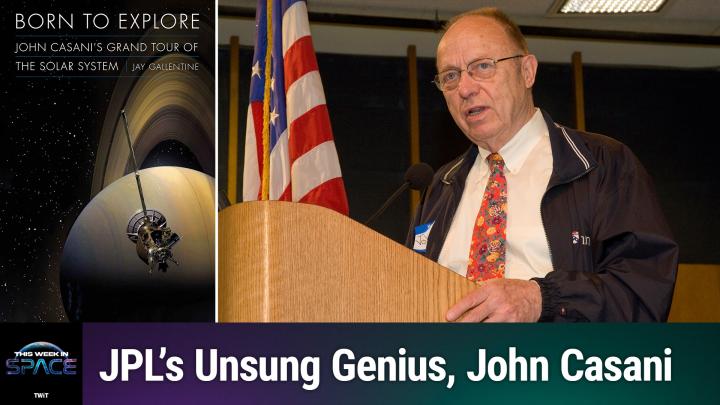
What Made John Casani the “Man With No Corners” in NASA’s Greatest Robotic Missions?
AI-generated, human-reviewed.
On This Week in Space, guest Jay Gallantine revealed the behind-the-scenes leadership and problem solving that drove decades of NASA’s most ambitious missions, including Galileo and Cassini. The episode focuses on how John Casani, a pivotal figure at the Jet Propulsion Laboratory (JPL), shaped the culture and resilience of planetary exploration teams through practical strategies and personal philosophies.
Who Was John Casani and Why Does He Matter for NASA’s Legacy?
John Casani acted as a cornerstone for NASA’s robotic planetary missions, working on nearly every major project from the late 1950s through the early 21st century. According to Jay Gallantine on This Week in Space, Casani’s influence wasn’t just technical - it was his approach to team-building and leadership that set him apart. Casani consistently inspired loyalty and perseverance in his teams, helping mission staff overcome repeated hurdles ranging from changing hardware specifications to budget cuts and delays.
Casani’s methods, such as open-door policies and innovative morale-building (including the infamous “goat story”), have become part of JPL’s unwritten rulebook. His legacy persists in NASA project management standards today, with current staff still asking, “What would Casani do?” when facing difficult decisions.
Managing Setbacks: Galileo’s Multiple Redesigns and Delays
NASA’s Galileo mission to Jupiter was famously beset by external challenges - chief among them, changes in space shuttle cargo capacity and repeated delays after the Challenger disaster. On the podcast, Gallantine explains that Casani had to repeatedly redesign the spacecraft science package and its mission plan to accommodate shifting requirements. This meant rethinking not only hardware, like the booster rocket, but also re-imagining scientific objectives and operational timelines.
Despite these obstacles, Casani led his team to persevere. His refusal to give up and his knack for “living in a world with no corners” - finding creative, unexpected solutions - kept the project alive when many believed it would be cancelled.
Cassini: Balancing Budget Cuts with Science Goals
Casani’s leadership extended into the Cassini mission to Saturn. Facing severe budget constraints, he had to make controversial decisions - such as rigidly attaching scientific instruments to the spacecraft’s body, rather than placing them on a maneuverable boom or turntable. Gallantine reports that Casani’s approach was blunt but effective: “You can have limited science, or you can have nothing.” This hard stance was difficult for scientists but ultimately ensured the mission launched rather than succumbing to endless compromises or cancellation.
Casani summarized his philosophy simply: when everyone is equally unhappy with a solution, you’ve probably found the best possible outcome. The Cassini mission, despite its limitations, provided invaluable data and memories for generations of planetary scientists.
Leadership Wisdom: Building Teams Through Trust and Respect
A major theme discussed by Gallantine was Casani’s interpersonal effectiveness. Casani believed in “respectful argumentation” - welcoming disagreements but ensuring all sides brought facts and genuine understanding to the table. This not only streamlined decision-making but also reduced office politics and fostered collaboration.
Casani also took an active interest in supporting mission families. One famous anecdote involved a live goat used as a morale-boosting incentive in a ticket-selling contest for a mission team picnic. Such gestures made team members - and their families - feel valued during the long, stressful periods leading up to launches.
What You Need to Know
- John Casani was a key figure in NASA’s planetary exploration for over five decades
- Casani’s leadership methods helped teams overcome technical and organizational challenges
- Major missions like Galileo and Cassini survived because of Casani’s persistence and adaptability
- Practical team-building, respectful argumentation, and creative morale boosters defined Casani’s style
- His legacy continues in JPL project management, shaping how space missions are run
The Bottom Line
The insights from Jay Gallantine on This Week in Space highlight the importance of strong leadership and adaptability in scientific missions. John Casani’s career offers actionable lessons for anyone managing complex projects - NASA or otherwise. His unique mix of technical acumen, people skills, and resilient problem-solving changed the trajectory of planetary exploration and set a lasting standard for space engineering.
Subscribe to This Week in Space for more in-depth stories and expert insights:
https://twit.tv/shows/this-week-in-space/episodes/201