MacBreak Weekly 1004 Transcript
Please be advised this transcript is AI-generated and may not be word for word. Time codes refer to the approximate times in the ad-supported version of the show.
Leo Laporte [00:00:00]:
It's time for MacBreak Weekly. Andy Ihnatko's here, Jason Snell's here, and one last time, Alex Lindsey is here. We're going to talk about 26.3. Yeah. We're already getting ready for the next version of Mac os. We'll also talk about the new iPhone that might be coming later this year. Some bad news for Apple in Brazil, Japan, and Italy, and good news for all of us. But we'll explain that in just a bit.
Leo Laporte [00:00:27]:
MacBreak Weekly is next. Podcasts you love from people you trust. This is Twit. This is MacBreak Weekly. Episode 1004, recorded Tuesday, December 23, 2025: A Sad Farewell. It's time for MacBreak Weekly, the Last show of 2025.
Leo Laporte [00:00:57]:
The last show of the year. I don't know what it means, everybody. Hello. How are you? Good to see you. We are getting ready for the holidays. I hope your Hanukkah was great. I hope you're gonna have a nice Festivus tomorrow.
Dr. Paris Buttfield-Addison [00:01:09]:
Wait a minute.
Leo Laporte [00:01:09]:
Is Festivus over? Is it tomorrow? I can't remember. Joining me right now, Jason Snell. Hello, Mr. Snell. Wearing your holiday sweater?
Jason Snell [00:01:18]:
Yes, I decided to be festive. I've got my ugly sweater on.
Leo Laporte [00:01:22]:
One sweater to rule them all.
Jason Snell [00:01:24]:
Yep, that's right.
Leo Laporte [00:01:25]:
Does that glow if you go in the moonlight?
Jason Snell [00:01:28]:
It might. It's possible. It is. We don't know. It may be made of mithril. We just don't know.
Leo Laporte [00:01:33]:
Oh, God. It's a mithril sweater. Let me try to stab you with my little sting and see what happens.
Jason Snell [00:01:39]:
Guess we'll find out.
Leo Laporte [00:01:41]:
Ah, the lore. Andy Inako is also here, wrapped in a giant scarf.
Andy Ihnatko [00:01:47]:
Yes, and this isn't one of those fake decorative scarves either. This is the sort of scarf you wear with malicious intent, I. E. Maliciousness again, against cold.
Leo Laporte [00:01:55]:
Is it a Dr. Who scarf?
Andy Ihnatko [00:01:57]:
No, no, it's just. It's just red. It's just red. And it's long and it's cozy and it's comfy.
Leo Laporte [00:02:01]:
Who invented infinity scarves? That seems like such a bad idea. That's the scarf that never ends.
Andy Ihnatko [00:02:07]:
Is it a Mobius scarf?
Leo Laporte [00:02:11]:
And. Ladies and gentlemen, Mr. Alex Lindsay from Officehours Global.
Alex Lindsay [00:02:16]:
Hello. Hello. Good to be here.
Leo Laporte [00:02:17]:
Now, we have some news about Mr. Lindsay. You know, this pisses me off. Cupertino keeps coming a calling. And apparently Cupertino has come to your door, Alex Lindsey, for the holiday season. Can you explain? Yeah.
Alex Lindsay [00:02:40]:
I'll be transitioning to Apple's developer relations, so I'LL be part of. I'll be the partnership Manager for the 3D ecosystem starting in January.
Leo Laporte [00:02:49]:
I hear the screams throughout the Mac Break universe as if a thousand voices cried out in agony.
Jason Snell [00:02:56]:
So, Alex, does that mean you're going to be working with Serenity Caldwell, my old pal?
Alex Lindsay [00:03:00]:
She is in the same building.
Leo Laporte [00:03:01]:
Yeah, she interviewed him for the job. That interview must have been funny. Did you say, oh, hi, Alex.
Alex Lindsay [00:03:09]:
So, yeah, so we'll all be in the same.
Leo Laporte [00:03:14]:
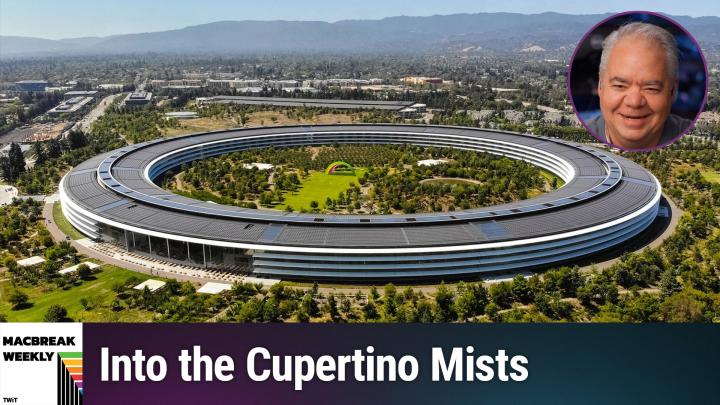
Are you in the campus? The ring, the spaceship.
Alex Lindsay [00:03:17]:
I'll be right outside. So there's the developer relations building. That's right outside the ring. So, yeah.
Leo Laporte [00:03:22]:
So needless to say, when people take a job at Apple, they can no longer be on the Apple.
Alex Lindsay [00:03:27]:
Oh, yeah, being on MacBeak was probably.
Jason Snell [00:03:30]:
Yeah, they won't even let Serenity play Dungeons and Dragons with us anymore on Tele Party Kill. Like, it's like, no. No podcast.
Leo Laporte [00:03:37]:
No podcast for you, Leo.
Andy Ihnatko [00:03:39]:
Did he even try to make a counter offer? I mean, come on. Alex is way too valuable. This podcast.
Leo Laporte [00:03:43]:
I did write him a giant check. One of those giant.
Alex Lindsay [00:03:49]:
You can't cash it, but it was giant.
Andy Ihnatko [00:03:51]:
It was huge.
Alex Lindsay [00:03:51]:
I can put it on the wall.
Andy Ihnatko [00:03:52]:
We can give you something that Apple cannot, and that's exposure, sir.
Leo Laporte [00:03:57]:
Yeah, yeah, yeah. I gotta warn you, Alex, when people go to work for Apple, we've seen it happen time and time again with Serenity, Nathan Oliveris Giles. So many people who've gone to work for Apple, it's like a black hole. They just disappear.
Alex Lindsay [00:04:10]:
Well, I think that, you know, again, I really had to think about it a lot. And you got a lot of time to think about it while you're kind of going down that path. And I think that there's such a huge opportunity with 3D, whether it's Gaussian splat or photogrammetry or how we use 3D inside of what we do and everything. Usdz all these things. And I felt like I can't keep on complaining about it. If I was offered something, I didn't.
Leo Laporte [00:04:40]:
Do something about it.
Alex Lindsay [00:04:42]:
And I constantly feel like world just isn't using the tools the way it could. And so I'm. I'm super excited of, you know, trying to do my part into moving that forward. So.
Leo Laporte [00:04:53]:
So, hey, what happens to office hours?
Alex Lindsay [00:04:56]:
Office hours is still running and we've reduced the number of days during the week. Panel. I can't do it, so I'll be off. But we have, you know, it's been run by a lot of. I don't even know to be honest with you, I don't even know how office hours actually runs, you know, like, during.
Leo Laporte [00:05:10]:
Yeah, no, at this point, it's.
Alex Lindsay [00:05:11]:
So there's. There's such a huge community that's managing that, and. And the panel has always been there, and I had only been hosting a couple days a week for the last year, so. But what we're doing is we're still doing something every day, but when we do things in the evening for the other side of the world, we're not doing the same thing in the morning. So. So we have evening shows on. On Monday, Tuesday, and Thursday, and then we still have the same morning show on Wednesday, Friday, and the weekend. So.
Alex Lindsay [00:05:37]:
So it's. It's. And so it's kind of funneling a little bit. Little bit. Taking a little less. Little pressure off of the panelists because it's. It's a lot. It's a lot to take.
Alex Lindsay [00:05:46]:
Live questions all for an hour a day.
Leo Laporte [00:05:48]:
Yeah.
Alex Lindsay [00:05:49]:
So. So there. But the. But we have such, you know, such an incredible set of panelists that have been, you know, doing a lot of it without me when I'm traveling and so on and so forth.
Leo Laporte [00:05:58]:
Right.
Alex Lindsay [00:05:58]:
A long time. So I feel very.
Leo Laporte [00:06:00]:
And so you're leaving 090 as well, I would guess.
Alex Lindsay [00:06:03]:
Yeah, yeah. So we're just finishing up the installs for the Arena 1 project, so that's. That's been a mad rush.
Leo Laporte [00:06:09]:
Oh, that's the movie theater one, right.
Alex Lindsay [00:06:11]:
Yeah. So we've been getting that working, and, you know, we had some really big success in both, you know, getting all the theaters ready to go for. To start concerts early next year, as well as we've kind of figured out how to. I got a lot of time in an AMC theater. We figured out how to do how to stream live, stereoscopic, you know, concerts, you know, to a screen without, you know, without reinventing, without making it too complicated. And so you should. Hopefully people will see the. The fruits of that next year where we start doing actual.
Alex Lindsay [00:06:47]:
You know, I don't think anyone's ever seen a live concert in 3D. You know, stereoscopic live, like, you know, 30 seconds after it was shot.
Leo Laporte [00:06:55]:
Do you wear a helmet or do you. You wear kick glasses. What are they?
Alex Lindsay [00:06:58]:
It'll be sunglasses. You know, like little sunglasses that you polarize. Sunglasses in a. In an AMC theater. It's using real D, not the actual real D. Okay. This is real D, actually, of the.
Leo Laporte [00:07:07]:
Of all of them. That's my favorite.
Alex Lindsay [00:07:08]:
Yeah, it. It can. It can actually work with. It can work with anything. I mean, it can stream to the Vision Pro, it can stream to the Dolby Active version to imax. And it's a higher frame rate, so it looks way better than 24 frames a second. 3D doesn't really work at 24, which James Cameron has alluded to. And so at 60 frames a second, it's more interesting to watch.
Alex Lindsay [00:07:34]:
And it's true optical 3D, so there's no fakery. You know, it's just two cameras that are delivering each eye some content and so pretty excited to see where that goes. I mean, it'll probably take some time over next year to. To make that work, but. But it's. We've did a lot of great work over this year and I needed to finish all of those things before I was able to. To. To move into the Cupertino Mists.
Leo Laporte [00:07:59]:
So we haven't found a replacement yet. I have been canvassing and I hope we will have announcements soon. Next episode, which will be in January, Shelley Brisbane will be. It's gonna be an opportunity for us to bring in some of our favorite people, but I have somebody in mind I'd really love to hire, so. And we're talking with that person, so we'll let you know what happens. But, yeah, I'm sad we're gonna lose you. You were the founding member of MacBreak. You created the show.
Alex Lindsay [00:08:33]:
Well, it's been, you know, there's been other opportunities to do other things and how I choose my jobs has largely been wrapped around office hours and Mac break and, you know, all the other things that are. That were there. And I think that it was really just this specific opportunity was. Was big enough. But it's been incredible. I kind of. I was like, I can't believe it went 19 years instead of. Because almost exactly 19 years.
Alex Lindsay [00:08:55]:
Because, of course, our first show was 19 years ago in January, right at. At Mac World, I think. So we're very close.
Leo Laporte [00:09:03]:
Well, my friend, we're going to keep you for the rest of the show, Right? You can talk about Apple, right?
Alex Lindsay [00:09:09]:
I got the rest of the show.
Leo Laporte [00:09:10]:
Last chance.
Andy Ihnatko [00:09:11]:
Exactly.
Alex Lindsay [00:09:12]:
It's my last chance. All my opinions are my own.
Andy Ihnatko [00:09:15]:
What a time for you to say, oh, I got a heart out at noon. I'm being fitted for my Apple 3D team Blazer.
Leo Laporte [00:09:24]:
Do you get a. What do you get as a, you know, Nooglers? Get a beanie and there's all sorts of.
Alex Lindsay [00:09:29]:
I have no idea. Like, I. I just.
Leo Laporte [00:09:31]:
Something sitting on your desk. When you walk in, I'll show up.
Alex Lindsay [00:09:33]:
I'll show up on January 5th and find out.
Leo Laporte [00:09:35]:
So do you, do you have to work on site?
Alex Lindsay [00:09:40]:
Yes, it's some days on site. So it's some days on site, some days off site. So it's. Yeah.
Leo Laporte [00:09:44]:
So I've got a drive to Cupertino.
Andy Ihnatko [00:09:48]:
Huh.
Alex Lindsay [00:09:48]:
Very early in the morning.
Leo Laporte [00:09:50]:
I did that. I told you when you, when you told me, I said, yeah, I did that. For how long? Too long.
Alex Lindsay [00:09:57]:
Yeah, I did the math or something. I did the math in Google Maps and if I leave at 5:15, it's an hour and 20 minutes. If I leave at 5:45, it's two hours. So that'll be a strong, a strong push up.
Andy Ihnatko [00:10:11]:
You'll be caught up on podcasts and audiobooks.
Alex Lindsay [00:10:13]:
Exactly. By the end of my family now will know when they can call. Like I'm just sitting in the car doing my thing. So. Yeah, yeah. So that's, that's, that's in my future there.
Andy Ihnatko [00:10:22]:
Yeah. Are you, are you sure that you're still housebroken for like office work like at a big company?
Alex Lindsay [00:10:27]:
I, I don't know. I don't know. I tell people like, I'm like, do.
Andy Ihnatko [00:10:31]:
You have to bring in your own coffee mug or is a coffee mug going to be provided for you in the break? That stuff like that.
Alex Lindsay [00:10:37]:
My wife is like, this is the first time you've had a grown up job in a long time. You know, like, you know, and so, so, you know, so I tell people that it is a, you know, keep the, keep the, everything warm because I don't know how, how long I'll last, but we'll do the best we can. So I'm going to, I'm pretty excited about it.
Leo Laporte [00:10:53]:
Wow. Well, we're very excited about your new job and that you're going to be making an honest living. I hope we will hear from you from time to time.
Alex Lindsay [00:11:03]:
I'm sure you will.
Leo Laporte [00:11:04]:
It won't be on the air. I have a feeling. Just really, I'm so happy for you. I think that's just, that's wonderful. And Apple, if, actually when you get there, if you would just mention that Leah wouldn't mind coming to an event or two at the camp. No, don't, because I don't want to tarnish. Wait till you've been there five or.
Andy Ihnatko [00:11:25]:
Six years and then again, baby steps basically. First Alex basically sends like an encrypted chat saying there will be a catering cart with a drapery over it by this east exit that will be taken in at 1:02pm and they don't. And they're not going to be checking underneath the tablecloth. So just don't be giggling while they wheel you into the press room.
Leo Laporte [00:11:51]:
It's very fun. We're going to really miss you, Alex.
Andy Ihnatko [00:11:54]:
Yeah. I was very, very sad when I heard about this because, I mean, this is one of the reasons why I look forward to the show each and every week is a chance to chat with my friends for two or three hours and having a couple hours less.
Alex Lindsay [00:12:09]:
Yeah.
Leo Laporte [00:12:09]:
Yeah.
Alex Lindsay [00:12:10]:
I think for me it's been. Again, it's been hard. I mean, obviously the concert thing has been 10 years of development.
Leo Laporte [00:12:17]:
Wow. You've been working on that 10 years.
Alex Lindsay [00:12:20]:
Started thinking about what it would look like 10 years ago and then started doing the pitches about four years ago. And then we're just. And I had hoped to, as this all kind of came up, that we'd have our first actual public show. We've had a test show, but our first actual public show before this happened. But we're not quite there yet, so. So I will get to. I'll get to be a consumer and sit and see how it turns out. But so.
Alex Lindsay [00:12:44]:
And then, you know, obviously hanging out with everyone here is such as, you know, Mac Break has been such a huge part of my life in the last 20. 20 years. It's crazy to say 20 years. I feel very wild. But. Yeah, so it's incred. It's incredible. So it's funny.
Alex Lindsay [00:12:57]:
And I just. I'm just so grateful, you know, to. Specifically to you, Leo. You know, like, I just. I just want to say that it's been really. You know, I showed up at Tech TV because someone that worked at one of your camera operators said that you might be looking for guests, you know, and who is that?
Leo Laporte [00:13:17]:
I gotta send that guy a cake. Yeah.
Alex Lindsay [00:13:19]:
I'm trying to think of who it was. I think it was Dave. And I can't think of his last. He was. But he, you know, he just said, oh, you might want to stop by. And I think I came by and showed camera mapping or something like that.
Leo Laporte [00:13:29]:
Oh, my God, that's great. I remember you drawing on my face with a Sharpie. I do remember that. I got to still get the pictures.
Alex Lindsay [00:13:35]:
Yeah.
Andy Ihnatko [00:13:36]:
Little dots.
Alex Lindsay [00:13:37]:
Welcome to photogrammetry 20. Over 20 years ago.
Leo Laporte [00:13:39]:
20 years ago.
Alex Lindsay [00:13:41]:
But between tech TV and twit and everything else, so many of the opportunities that I've had over the last 25 years have been really directly connected to working with you, Leo. And so.
Leo Laporte [00:13:54]:
Well, now you're going to rock and roll heaven. And I'm sure they got an incredible band up there. Now you're going to be with all of our friends. So congratulations to Alex and. Well, you know. Stay tuned, Stay tuned. It's not the first transition. In fact, everybody here is relatively newer than Alex.
Leo Laporte [00:14:20]:
Andy, you probably though you've been here for quite a while.
Alex Lindsay [00:14:25]:
I still feel like Jason's the new kid on the block.
Leo Laporte [00:14:27]:
Oh, yeah.
Alex Lindsay [00:14:28]:
It's been like what, four or five years now.
Jason Snell [00:14:29]:
I don't even know how long it's been now.
Andy Ihnatko [00:14:31]:
We might.
Jason Snell [00:14:32]:
It seems like a long time.
Andy Ihnatko [00:14:32]:
We might have to stop calling you the Stig.
Alex Lindsay [00:14:34]:
Yeah.
Jason Snell [00:14:35]:
You know, so my Lauren's aunt is a Supreme Court justice in the state of Washington. And one of the things that a lot of these courts do is they have a very strict seniority policy. So when you get on the court, you have to sit all the way on the end and you also have to bring the snacks.
Alex Lindsay [00:14:53]:
It's a true story.
Jason Snell [00:14:54]:
Yes, we're gonna snack and then very gradually you get to not be the person on the end. So, you know, I have really enjoyed.
Leo Laporte [00:15:01]:
But you do always have years of snacks.
Jason Snell [00:15:03]:
I just want to say I'm happy to not be on the end. So that's nice. But yeah. Yeah. I'll just point out for the record, Google is the one who took Renee from us.
Leo Laporte [00:15:12]:
That's right.
Jason Snell [00:15:13]:
It wasn't Apple.
Leo Laporte [00:15:14]:
No, that's right.
Jason Snell [00:15:15]:
Big tech giants steal everybody.
Leo Laporte [00:15:17]:
Yeah. I mean, yeah. I think part of that is because so many of our hosts are ink stained wretches who are happy to be getting a paycheck and I can't really blame them for that. I really can't.
Jason Snell [00:15:31]:
Anyway, just those of us unemployable out here.
Alex Lindsay [00:15:34]:
Yeah.
Jason Snell [00:15:34]:
Please stick around.
Leo Laporte [00:15:36]:
Yeah, we keep going. Congratulations, Alex. I hope we hear from you from time to time. I guess it can't be on the show. I wish it would, but yeah, I think it'll be.
Alex Lindsay [00:15:47]:
It's a different.
Leo Laporte [00:15:47]:
Any leaks or secret inside information that we have from now on will absolutely not be coming from Alex Lindsay, though I have to promise you that because Alex isn't crazy.
Alex Lindsay [00:16:00]:
I'm used to working on secure projects.
Leo Laporte [00:16:05]:
Hey, some really good news after that sad news. Our good friend, and I didn't realize how good a friend he was has got his Apple account back.
Andy Ihnatko [00:16:17]:
Yay.
Leo Laporte [00:16:18]:
Yay. I've actually talked to him. In fact, I just sent him. If you're watching Paris, I just sent him our zoom link. So if John Ashley, if somebody suddenly appears from Australia, I think.
John Ashley [00:16:32]:
Wait, what? I have to get this all set up...
Leo Laporte [00:16:34]:
It will be Dr. Paris Butfield. Addison. I said, did you know we talked about you? He said, I've listened to every show since episode one. I knew you. I was. It was surreal to hear you talking about me. You may remember a couple of weeks ago.
Leo Laporte [00:16:49]:
Oh, there he is. There he is.
Leo Laporte [00:16:53]:
Yeah. Get Paris in here. He lives in Hobart in Tasmania, which is a beautiful place. In fact, it turns out we met when I was down there maybe 10 years ago for the Lightroom adventure. He's also been to the Brick House, so it really was close to home. He's written books about Apple, including learning cocoa with objective C20 plus books for O'Reilly Media. He's got the longest running Apple developer event not run by Apple themselves, Dev World. But he made a terrible mistake.
Leo Laporte [00:17:30]:
He bought an Apple gift card at a well known retailer in Australia. I think one of the. There's only a couple really big ones, I think one of them. And turned out it had been used before and Apple summarily executed him. You could see his blog post at. Hey, Paris, 20 years of digital life gone in an instant thanks to Apple. Now, when we talked about that, we surmised that maybe by the time we talked about it again, things would have turned around because Paris got a lot of attention. Dr.
Leo Laporte [00:18:12]:
Dr. Buttfield-Addison, welcome to MacBreak Weekly. It's great to see you and we're so happy.
Dr. Paris Buttfield-Addison [00:18:19]:
Hello.
Leo Laporte [00:18:19]:
So am I. I bet you are. So what was the consequence of losing your Apple account? Oh my God.
Dr. Paris Buttfield-Addison [00:18:29]:
So many things break that you don't expect to break. Like every time I spoke to Apple they were like, it should only affect X, Y and Z. But then when I actually started using my computer, everything started failing because icloud lost its connection. As far as I can tell, because they deauthorized my account from doing whatever it is that my account was allowed.
Leo Laporte [00:18:48]:
Did you have a developer account? You must have, right?
Andy Ihnatko [00:18:51]:
Yes.
Dr. Paris Buttfield-Addison [00:18:51]:
And because they authorized the account, also you could log out because the logout endpoint said that you were no longer allowed to log out.
Leo Laporte [00:18:58]:
Wow.
Dr. Paris Buttfield-Addison [00:18:58]:
Everything got stuck in a weird loop and they were like, this shouldn't be happening. Like it is happening.
Leo Laporte [00:19:03]:
As you pointed out, you had tens of thousands of dollars in app purchases. But probably if you're like us over 30 years, many, many thousands of dollars in hardware that was suddenly. I mean, you can use it, can't you? You can use your Mac without being able to log into an account.
Dr. Paris Buttfield-Addison [00:19:19]:
That's what they tell me whether that's true in practice. If you're already logged into an account that's then disabled. That does not quite seem to be the case.
Leo Laporte [00:19:26]:
What, you couldn't even use your, your Macs.
Andy Ihnatko [00:19:28]:
It kind of worked.
Dr. Paris Buttfield-Addison [00:19:29]:
So just because the system was logged into something that was then barred rather than out of storage or you know, some other problem that your icloud account can reasonably have, everything just freaked out constantly. You would open pages and because it would presumably try and read the icloud container for where pages source things, the word processing app, it would freak out and not let you write a document. So everything.
Leo Laporte [00:19:52]:
Oh, unbelievable. So when we last left, you left this story. You were just hanging in space. You had really escalated it. Jason, you said, well, the executive team's gotta leap into action.
Jason Snell [00:20:07]:
That's generally the. I've had this happen and I've seen this happen that they, there's that secret team that's like the, oh, bad publicity is happening. We need to get in there and fix this, whatever it is. And so I was optimistic that when the executive team, executive relations team got involved that you would get, you would get taken care of eventually. Although I think it does show maybe the level of dysfunction happening inside that it took as long as it did.
Leo Laporte [00:20:34]:
Oh, I would agree.
Dr. Paris Buttfield-Addison [00:20:34]:
I've had great success with that team in the past. Like they've done absurd things for me like refund a laptop three years after I purchased it because they decided something was wrong and you know, deal with all sorts of magic problems when it comes to like going to WWDC and flights got canceled. People fix things at Apple in my experience, which is why despite what the hacker news people and the comments on various articles would tell me, that's why I said he'd been like a 30 year long apple user. They typically fix things and make things right in a reasonable process that you can understand. So this was my first experience where the initial contact with executive relations, which is not necessarily the easiest to get in contact with to begin with, unless you know that they exist, wasn't successful.
Leo Laporte [00:21:12]:
You knew enough to escalate. Yeah, all the way. All the way to executive, I'd say.
Jason Snell [00:21:17]:
Also once this became a story and got passed around, that is when executive relations finds you.
Leo Laporte [00:21:23]:
Yeah, right.
Jason Snell [00:21:24]:
Seriously.
Alex Lindsay [00:21:25]:
Right.
Dr. Paris Buttfield-Addison [00:21:25]:
And I hate, I hated having to do that because it felt like, you know, this, this is such a foolish thing to have to escalate and waste somebody's time for.
Leo Laporte [00:21:32]:
But your blog post of 10 days ago has the Best meme of. Of Darth Tim Apple. I am altering the terms. Pray I don't alter them any further.
Dr. Paris Buttfield-Addison [00:21:45]:
Yeah, look, a friend of mine made that when I started talking about what had happened, like, within the first five minutes of it happening on our friends group's discord. And that was just the perfect image of the blog post.
Leo Laporte [00:21:55]:
It's awesome. That was on the 13th. The Register covered it a couple of days later. We covered it a couple of days after that. So what? I guess there's a lot of questions. First of all, how did they get a hold of you? How did they fix it?
Dr. Paris Buttfield-Addison [00:22:13]:
A lovely gentleman at Executive Relations worked with me over a couple of days, kept saying he'll call me back in two to three hours, and then called me back to tell me that he was a little bit overeager with his.
Leo Laporte [00:22:22]:
Two to three hours.
Dr. Paris Buttfield-Addison [00:22:23]:
So it actually took him about three or four days to seemingly figure out what had happened. And eventually he called me back and said, everything's reactivated, and it wasn't. So we had a little bit of an argument and he went away for another 24 hours and came back and said, actually, now it should be fixed. It looks like they had trouble reading between the lines. I would say they had trouble restoring it and didn't quite know what was going on.
Leo Laporte [00:22:41]:
That's what we kind of surmised, as you remember when we talked about it last week, is that there's something wrong, the system overreacted and they didn't have an easy way to fix it.
Dr. Paris Buttfield-Addison [00:22:52]:
Yes, that does seem to be the case.
Leo Laporte [00:22:54]:
Yeah.
Andy Ihnatko [00:22:54]:
Yeah. It's kind of amazing sometimes because this happens more frequently than you'd kind of like that you get the sense. Or even the company will actually outright state we were not aware that such a thing was even possible. And we're as confused as you are at this point. This is not for lack of effort. This is for like, this is 1,000 people at the same time saying that, no, let's get Dave. Dave must know. Dave must know.
Leo Laporte [00:23:22]:
Somebody must know.
Andy Ihnatko [00:23:23]:
And Dave doesn't know. Well, let's call Teresa. Maybe Theresa knows.
Leo Laporte [00:23:27]:
Like, did they ever explain what happened? Like how. How you got.
Dr. Paris Buttfield-Addison [00:23:33]:
Look, they. They. This is going to surprise you. I'm sure Apple was very cagey about what was going on.
Alex Lindsay [00:23:39]:
Yeah, yeah.
Dr. Paris Buttfield-Addison [00:23:41]:
And didn't really want to admit anything or explain anything. And I've. Because, you know, I've been in orbit of this very strange company, as have you all, for many years, so I can kind of SCRY between the lines sometimes as to what's going on? And my analysis of reading between the lines of what was was that I bought a gift card that had presumably been part of some sort of gift card fraud where, you know, people take it out at the shop, write down all the details, and then repeatedly try and activate it, which means they can catch it before you've activated it. So, you know, when you. When you check out with the receipt, that activates the card to be able to be activated. And then when you activate it again, it's fully activated, you've got the credit. So in between those last two activations, people still give cards and then use bots to spam Apple's activation service so they can catch the moment when the card becomes usable and take the money before the person actually purchased the card can redeem it. I've seen it happen to friends I've heard about that happen many times.
Dr. Paris Buttfield-Addison [00:24:31]:
I think that's what happened here. And I think, for whatever reason, it triggered a process on my account, was like, this guy must have stolen the gift card and went into nuclear mode. That's only a theory just based on little pieces.
Alex Lindsay [00:24:42]:
Apples.
Leo Laporte [00:24:44]:
Yeah. But once you get sucked into the maws, the gears of a giant corporation, they're not. They themselves don't exactly know how to extract you out of it. No.
Dr. Paris Buttfield-Addison [00:24:55]:
Especially on frontline support like the apple.
Leo Laporte [00:24:57]:
The apple. They didn't know anything.
Dr. Paris Buttfield-Addison [00:24:58]:
They were really trying to help their credit. But everything, like the computer was clearly saying no to them at every point and they didn't.
Leo Laporte [00:25:03]:
So that's to their credit. They didn't assume that you were in fact a bad guy trying to get in.
Dr. Paris Buttfield-Addison [00:25:08]:
Most of them were like, I'll have a look what I can do and then come back for 15 minutes later. Very sorry, sir, but we can't help you. That account is locked down.
Alex Lindsay [00:25:15]:
Yeah.
Leo Laporte [00:25:15]:
And we can't tell you why. And we can't tell you anything else.
Alex Lindsay [00:25:18]:
Yeah.
Leo Laporte [00:25:18]:
Caris, thank you so much for letting me jump you.
Dr. Paris Buttfield-Addison [00:25:21]:
That's all right.
Leo Laporte [00:25:22]:
Thank you for putting on your holiday attire. His ba humbug hat.
Dr. Paris Buttfield-Addison [00:25:26]:
Standard. Standard Christmas, that every year.
Leo Laporte [00:25:28]:
I love Hobart. I love Tasmania. It was a very wonderful visit when I was there many years ago.
Dr. Paris Buttfield-Addison [00:25:35]:
It's even better now.
Leo Laporte [00:25:36]:
I'm glad we saw you. Did we see you in Tasmania or Sydney?
Dr. Paris Buttfield-Addison [00:25:39]:
You saw me in Tasmania?
Alex Lindsay [00:25:40]:
Yeah.
Dr. Paris Buttfield-Addison [00:25:41]:
Nice friend of mine bought like a photo of you in some Qantas pajamas.
Leo Laporte [00:25:44]:
Oh, yeah. He bought that, huh? Yeah.
Jason Snell [00:25:47]:
Yeah.
Leo Laporte [00:25:47]:
We did an auction to benefit the Tasmanian Devils, who I understand are actually much better.
Andy Ihnatko [00:25:53]:
That's Going well.
Leo Laporte [00:25:54]:
Yeah, they had a face cancer and because they fight with each other, they would bite each other and they would spread the cancer and they were about to die out.
Dr. Paris Buttfield-Addison [00:26:02]:
Yeah, there might be some progress in that.
Leo Laporte [00:26:03]:
Yeah, yeah, yeah, apparently so we were, you know, we were down there, we thought we should do something nice. So I was there with a bunch of really talented photographers and we had a gallery show and sold the prints and I didn't know your friend had a picture of me in my jammies.
Dr. Paris Buttfield-Addison [00:26:17]:
But it's one of his treasured possessions.
Leo Laporte [00:26:19]:
I think that's a Michael Oland picture I think he took. I think so, yeah. Well, it's such a pleasure to talk to you. Paris's blog is. Hey, Paris. He's actually amazing fellow. I mean he's got a law degree, history major, trained engineer. He founded a game studio, worked at Meebo which was acquired by Google, has written books, hosts a radio show on space news.
Leo Laporte [00:26:43]:
You are a multi talented.
Dr. Paris Buttfield-Addison [00:26:45]:
Oh, can't pick a hobby.
Leo Laporte [00:26:47]:
I'm so sorry that this happened to you and I'm so glad it worked out.
Dr. Paris Buttfield-Addison [00:26:51]:
So am I.
Leo Laporte [00:26:52]:
And I'm glad we could get you up early. Early, early in the morning.
Dr. Paris Buttfield-Addison [00:26:55]:
I get up pretty early.
Leo Laporte [00:26:57]:
I'm thrilled that we could talk to you. Thank you so much, Paris. Thank you for being a club member and for listening. You said since episode one. Absolutely.
Alex Lindsay [00:27:05]:
Yeah.
Leo Laporte [00:27:06]:
That's really great. Thank you, Paris.
Jason Snell [00:27:08]:
Take care, folks.
Dr. Paris Buttfield-Addison [00:27:08]:
Thanks.
Leo Laporte [00:27:09]:
Dr. Paris Butfield. Addison, all is well. He's rparis in our club. If you want to say hi and congratulate him. We're going to take a little break and come back. This has been a very odd show to begin with, but now it's going to come back to normal. We actually have some Apple news we can talk about.
Leo Laporte [00:27:29]:
You're watching MacBreak Weekly with Jason Snell, Andy Ihnatko and the late Alex Lindsay. Not dead yet.
Jason Snell [00:27:39]:
We're asking Cupertino.
Leo Laporte [00:27:43]:
No, in fact is going to be more alive than ever. More alive than ever. Our show today brought to you by this little thing. Is it too late for man. This would be such a great gift for somebody. This is in. I'll take the stand off. It's nice.
Leo Laporte [00:27:58]:
It's easy to take off. It's a little magnetic stand. But this hangs on the wall in landscape or portrait mode and it's a. It's. What is Leo selling a picture frame for? Well, this is not just any old picture frame, by the way. There I am after my first haircut. This is the Amazing Aura Inc. You may know Aura Frames consistently named the best digital frame company, I think partly because of their software, their apps, their hardware.
Leo Laporte [00:28:31]:
But this thing puts them over the top. Meet Ink, Aura's first ever cordless color e-paper frame. Featuring a sleek 0.6-inch profile and a softly lit 13.3-inch display, Ink feels like a print, it functions like a digital frame, and perhaps most importantly, lives completely untethered by cords. With a rechargeable battery that lasts up to three months on a single charge, unlimited storage, and the ability to invite others to add photos via the Aura Frames app. It's the cordless wall hanging frame you've been waiting for. Now I've set it to change every night, which I kind of like. One of the things I've noticed, you probably noticed too, is we have all these great photos. I have 60,000 digital photos.
Leo Laporte [00:29:18]:
We never see them because they're on a hard drive. Wouldn't it be nice to have some way you could put them on the wall without adding another digital screen, without adding a computer to your life? That's what this is. And man, have they put some engineering into it. This is a real breakthrough in E paper technology. I don't. If you've ever seen E paper, even color E paper before, and you're looking at this, you might go, that can't be E paper. They have engineered a way. They have a custom dithering algorithm.
Leo Laporte [00:29:43]:
They've transformed millions of tiny ink capsules into your favorite photos, rendering them in kind of vintage tones. This is exactly what the photo would look like if I printed it and hung it on the wall. Baby's first haircut. You know why it's on here? I'm loading this up with pictures for my mom. It's a really great way. Mom's older and a little bit of Alzheimer's, and so she likes to see these pictures from, you know, when I was a kid, when my sister was a kid. She immediately recognizes everything, knows the day, the date, the time, exactly how it felt, what was going on. So it's really great for her memory.
Leo Laporte [00:30:21]:
And I love the ability to actually upload more pictures to this at any time. So you can do it. You can change it every two hours if you want. I think it's kind of nice to spend a day with a picture so you just, you know, really get to enjoy the picture. I'll change it, though. Put another picture on here so you can see another what another one looks like. There's little buttons on the top that let you change it manually. You Also can change it directly from the app.
Leo Laporte [00:30:45]:
They've just added a new feature. You can text message. This is another reason why I can't wait to give this to mom. Because, you know, when we're sitting around the tree or celebrating at a dinner or whatever, I could take a picture with my phone and immediately text it to her so she could be part of the. Part of the party. This is Calm Tech certified. Ink is recognized by the Calm Tech Institute as a product designed to minimize digital noise and distraction. The intelligent lighting is subtle.
Leo Laporte [00:31:11]:
It automatically adjusts throughout the day. It's never obviously lit. Right. And it turns off at night. So the. So it doesn't glow in the dark or anything like that. It's not like a digital screen. Oh, this is kind of fun.
Leo Laporte [00:31:24]:
It's great for photos, but also for artwork. This is a watercolor of my son Salt Hank and his sister at a book signing that he did. I love that they look so good. With its cordless design, ultra thin profile, softly lit display, and paper textured matting ink. Looks like a classic frame, not a piece of tech. See for yourself at auraframes.com/ink oh, and support the show by mentioning us at checkout. That's auraframes.com/ink. I just think this is a great way to showcase your photos and what a great gift it would be.
Leo Laporte [00:32:01]:
I think it's probably too late to get it for Christmas. It's only two days away. Here's a picture of our kitty cat. Actually, this is a good example because she's black at night, she's dark black and you can see how well the dithering does even with the solid shades of black. This is really a wonderful technology. auraframes.com/ink. Thank you, Aura, for solving my Christmas shopping for this year. And for the rest of you, you could get it for Lincoln's birthday, something like that.
Leo Laporte [00:32:33]:
On we go with the show. Speaking of Australia, Apple has received clearance to activate the hypertension detection on its watches in Australia. This is our international news block.
Andy Ihnatko [00:32:48]:
Good. Yeah, that's a feature that. There was actually a study just last month that demonstrated exactly how effective it is that the people that. It's very conservative. But if it does flag hypertension, the people who go in to have it checked almost inevitably have it confirmed by actual doctors. So another big win for Apple Watch.
Leo Laporte [00:33:07]:
Yeah, a little bit of a loss for Apple in Brazil. Apple has agreed to third party app store alternatives on the iPhone in Brazil. Regulators, of course, in Brazil, like many other places, demanded it. We mentioned last week, Japan.
Andy Ihnatko [00:33:25]:
Yep. That went active just a few days ago, wasn't it? There was a post on the Apple newsroom about it. There is of course you don't know it's official until Tim Sweeney does a tweet that says that Apple isn't obeying the terms in the honor of. Yeah, and there is, and there are like 20, there is like a 20% fee that there, there, there is a, there is a large fee associated with it, but it doesn't seem as though it's crazy stupid high. I mean, I think we all agree that Apple should make something, should share in the profits that are made from app distribution. Because, although, although they would very much like there to be. No, they make, they give you no alternative but to use Xcode. The fact is give you Xcode and they do give you all these APIs.
Leo Laporte [00:34:08]:
Oh good.
Andy Ihnatko [00:34:09]:
But, but, but it's, it seems to be going okay.
Leo Laporte [00:34:12]:
Crack. It's a chink in the armor. It's a, it's, it's, it's, it's slowly moving in that direction. This is a three year deal. It doesn't go into effect for half a year. So you know, it's going to be.
Andy Ihnatko [00:34:22]:
A little while, but it is inevitable. I really think that inside Apple there's the assumption that the entire world will have some sort of App store restrictions that they're just going to have to deal with and that they're no longer in a post, they're no longer in a world in which they can continue to sort of try to stop this from happening. So they may as well get ready for it, be ready for it, and create a world in which this will be as less damaging to the company and its users as possible. For instance, the Japan version of this law is a little bit different because it doesn't require Apple to allow app stores to install apps via websites, stuff like that. Little things that are. Apple would want to fight on. It's like, okay, I think they themselves have said that this is not as bad as it could possibly be. Although we don't like any of this.
Alex Lindsay [00:35:09]:
Yeah, have, have the European versions been successful at all? Like, I mean, are the separate app.
Leo Laporte [00:35:16]:
It's funny, we were talking about this last week without you, Alex, and people were saying, I wish Alex were here to defend Apple to say how bad this is for users.
Alex Lindsay [00:35:24]:
I don't know. I mean, I just don't know how, how if it's really worked, I mean without the US market, I think that it's probably not as successful.
Leo Laporte [00:35:33]:
Do you think at some point Apple will be compelled, though, to do it in the U.S. i mean that it's just this is the dominoes or do you think they'll hold?
Alex Lindsay [00:35:40]:
I mean, I still think that, at least in the United States, I think that there's still some paying attention to some version of is it truly a monopoly if you have less than a really decisive size of the phone market? And so I think that makes it a little bit more of an uphill battle. I think that the other countries have been much more loose about how they define that. So I don't know if Apple, I don't know if it would, I just don't know if it would make it through the courts, you know, in the current structure that they are. Even if they did it. And I don't think there's, there is no, the problem with the United States is there's no, there's no user. None of the users care. And so they don't care about, not a significant number of them care about this. And so there's, and the United States, the representatives are, I mean they do pay attention to them, but really the strong driver in these other countries have been local app developers, large ones, that want to change the structure of what this looks like.
Alex Lindsay [00:36:39]:
And so they're lobbying heavily in their home countries, Spotify in Europe and so on and so forth. And so I don't think that, I just don't think that there's any groundswell for that in the United States. So I don't know if it's going to happen. I mean, Tim Sweeney's doing the best he can.
Andy Ihnatko [00:36:55]:
Yeah.
Alex Lindsay [00:36:56]:
But I don't know.
Leo Laporte [00:36:57]:
There is a class action suit over this. And while the court had decertified the class On Thursday, the 9th U.S. circuit Court of Appeals said we're going to review that decision. We may allow the class. So somebody, maybe it's just a bunch of lawyers deciding, hey, we can make some money on this.
Alex Lindsay [00:37:20]:
Well, it just has a long time to go through the courts, so it's going to take some time to kind of wind its way, you know, through. So it's still probably years away. So, so I, you know, I think that, but I again, I just don't know if there's as much hunger in the United States to do it without the US Market. I don't understand, like how much is.
Leo Laporte [00:37:37]:
It developers, though, that might want this? I mean, aren't developers somewhat.
Andy Ihnatko [00:37:41]:
Developers are customers too.
Alex Lindsay [00:37:42]:
Yeah, well, I just don't know how many customers really care. I mean, I think most, most Apple users just Want it to work like they just want it to open up and do the thing. They don't really care about whether they're, they're not going to go through the trouble. And that's what they found with Google is no one's not that many people are going through the third party. And then on the developer side we have to remember that 98% of the developers are not paying 30%. So 98, it's 2% of the developers. The rich ones are the ones that are upset about the current structure. The rest of them are getting a pretty good deal and I think it's something like almost 90% aren't charging anything out of the gate.
Alex Lindsay [00:38:23]:
These are, you know, relatively small number of people that are. Small number of developers that are worried about it.
Andy Ihnatko [00:38:31]:
Yeah, I just always felt that just in principle it's better to be a little bit more open than totally closed. And the other thing is that as we're seeing more and more governments try to basically put control over free speech and privacy by saying, hey, all we have to do to get this app we don't like out there is to put pressure on two multi trillion dollar companies that probably can be easily pressured because they have deal with our government. If we just pinch off those two points then we can actually make sure that this app that we don't like will not exist.
Leo Laporte [00:39:03]:
That's what Cory Doctorow says. He calls it the mad King's kill switch.
Andy Ihnatko [00:39:07]:
Yeah, exactly. So for that reason I also think it's kind of important for them to be alternatives for sideloading. And you're absolutely right. I mean sideloading apps on Android is less of a necessity and more of part of the overall Android philosophy of you should have complete control and complete choice over what happens on your phone, which they implement in a scattershot sort of way.
Leo Laporte [00:39:30]:
But that's actually a good example though of consumers really rebelling because remember Google was going to make that very hard. They were going to force anybody who developed for Android to be officially authorized by Google and identified. And users and developers revolted and Google backed down.
Alex Lindsay [00:39:49]:
Yeah, it's a different, but I think.
Leo Laporte [00:39:51]:
The other world, it's a different world.
Alex Lindsay [00:39:52]:
A different set of consumers too. Like, I mean a person who buys an Android phone is not the same as the person who buys an iPhone in my opinion. Like they're just. And it's not. There's no like. No, no, I'm just saying that if you're buying an Android phone, you tend to be a little geekier, you tend to want to tweak things a little bit more. You tend to want to be on the app, you know, like to push the envelope. People who buy iPhones just want it to work.
Alex Lindsay [00:40:15]:
Like, they just want it to open it up and you can see the big pushback, just the change in the interface. People are like, and I'm included, are like this, if I wanted an Android, I'd buy one. You know, like, you know, like all the complexity that's being added just to the current operating system. So I think that the, there's, there's a much, much more resistance by the. So I don't think we, you can say, well, it, you know, Google did it and I, I just don't know if iPhone users in mass will do that much. That makes it, you know, what they'll get upset about is if you, if, when the store, if the store ever becomes opened in the United States and Netflix says we're only going to use a third party app to do this because they don't want to pay, you know, they don't want to pay for it. That's forcing the users to go into an outside store to get something that they want. Then they'll be upset and then they'll wish they had never done this.
Alex Lindsay [00:41:07]:
And that's the end goal. That's where this ends up. If you have large companies who don't want to pay the Apple tax wanting to go to the outside. And that would be reducing user choice because most users, I would argue 90 to 95% of the users, users don't want anything other than the app store. They just want it to be safe. They want it to be controlled. They want to, you know, I just finished getting my app because we're running out of time. I released my app over the weekend.
Leo Laporte [00:41:38]:
Oh, you had to, didn't you?
Alex Lindsay [00:41:39]:
Broadboard. So got that done.
Leo Laporte [00:41:42]:
What's the name of that?
Alex Lindsay [00:41:43]:
It's called Broadboard. Broadboard. Broadboard app. And it's this thing that people see me do, this telestration app.
Leo Laporte [00:41:51]:
Oh.
Alex Lindsay [00:41:53]:
So I've been working on it with a programmer for. I've been working on it for 10 years. The programmer has been working on it for about the last three years, I think four years. And we've been noodling with it and you know, it is, it's been this slow thing like, you know, and finally we just had to like pencils down, release the app. And it runs on iPad and it runs on the iPad and the, and the Mac. And if you buy it, it's all the things That I like about apps, which is that number one is there's no interface. Number two, it really is all the little bits and pieces that I needed for Telestrator app. And then also it is.
Alex Lindsay [00:42:28]:
If you buy it, there's no subscription. It's 9.99 to start and 14.99 when it's. When it. I think next month or whatever. And it runs. If you buy it, it runs on both the iPad and the Mac OS at the same time, but they're not a copy. The iPad is all gesture based and the Mac version is all pen based and keystroke based. So it's a weird.
Alex Lindsay [00:42:52]:
It'll look very weird when you open it because there's no interface. In fact, that took a little time in the app Store to figure out to get it accepted. But it is completely interface free. But it's designed to work with your Stream deck or it's designed to work with your gestures. If you just want to have a whiteboard. That's why Broadboard is because it's a board with broad opportunities, broad options. But you can. All of this stuff can be gesture based.
Alex Lindsay [00:43:20]:
I'm. So the idea is that you can mirror your iPad and then just be drawing with your finger or your pen and. But just using gestures. Change the color, change the thickness, change it. But you never have to have a interface pop up. You know, it's all right, it's all perfect. It takes a little bit to learn the gestures.
Leo Laporte [00:43:36]:
How do you combine your video with it?
Alex Lindsay [00:43:39]:
So for some people, they won't need to. It's just a whiteboard. Like it can be just a whiteboard that is, you know, so you could just make.
Leo Laporte [00:43:46]:
But I want to do what you're doing. I want to be John.
Alex Lindsay [00:43:49]:
So what I do, what I do with it is. I mean, one of the goals. I have to admit that one of the goals that I had was that there was a piece of hardware, I can't remember who made it, that was about twelve hundred dollars. And I was like, I want to make sure that the whole package costs less than that. So you could just build your own package that does that. So what I have is I have a Mac Mini and then I have a Wacom tablet. This is just the Wacom one. It's Wacom, by the way.
Alex Lindsay [00:44:17]:
It's like water. I did ask them to wacom.
Leo Laporte [00:44:20]:
I always say wacom.
Alex Lindsay [00:44:21]:
Yeah, I know. I do too. Wacom. I did. And then I have an Atem. So this is the Atem, this is the Mac, and this is The Wacom.
Leo Laporte [00:44:31]:
Could I use the iPad instead of a Wacom?
Alex Lindsay [00:44:33]:
You could, except it doesn't do the compositing for you. Ah, that's what you. So what the trick here is that the Mac, the Wacom tablet has a USB and it has an HDMI in because it's a screen. I see the screen here.
Leo Laporte [00:44:46]:
Oh.
Alex Lindsay [00:44:47]:
And so it's got an HDMI in. So what I do is I have the USB from the Wacom tablet going.
Leo Laporte [00:44:53]:
So you're looking at yourself as you're drawing that.
Alex Lindsay [00:44:55]:
You're seeing yourself behind it, eyes here and everything else.
Leo Laporte [00:45:00]:
That's what you need.
Alex Lindsay [00:45:01]:
Yeah. So the USB from the Wacom goes into the Mac like it would normally. The trick is, is that the HDMI of the Mac goes out into the Atem, you know, so it feeds into the source.
Leo Laporte [00:45:13]:
So the Mac sees it as a video source as well as a usb.
Alex Lindsay [00:45:17]:
And then one of the outputs of the Atem goes to where usually you would have the HDMI between the Wacom and the Mac. But instead I go through the ATEM and send that signal back to the Wacom tablet. And then now I just use a Luma key in the Atem and just key it.
Leo Laporte [00:45:33]:
You know, I guess I could do that. I just have to get that Wacom Wacom thing.
Andy Ihnatko [00:45:40]:
But Alex, what if there were like a bunny rabbit as part of the workflow? What would that look like? Yeah, exactly. Bring a magician's hat.
Alex Lindsay [00:45:49]:
Yeah, we would have the. We would have the Wacom tablet here and then we would have the Buninator right here.
Leo Laporte [00:45:55]:
Oh, the Buninator.
Andy Ihnatko [00:45:57]:
Now that's clear.
Alex Lindsay [00:45:57]:
Yeah. And it would get the bunny to hop, leaving footprints, you know, for that.
Leo Laporte [00:46:03]:
So which Wacom do I want?
Alex Lindsay [00:46:04]:
I just.
Leo Laporte [00:46:05]:
Wacom1.
Alex Lindsay [00:46:06]:
The Wacom1 is all you need.
Leo Laporte [00:46:07]:
Okay. When creative dreams begin. I see.
Alex Lindsay [00:46:10]:
It's where they begin. Yeah, exactly. And I have seen. I've used them with. For the most of the time.
Leo Laporte [00:46:15]:
So this is kind of like a Cintiq.
Alex Lindsay [00:46:17]:
It is a Cintiq. It's just a lot less expensive, you know, so the. It's Wacom, I think, was getting a lot of pressure from the Chinese manufacturers that are all in the 300 range, dollar range. And. And Wacom only had a video thing at $600 or $700. They're smaller one. And so they open this one up, it doesn't have as many buttons. And I don't need any of those.
Leo Laporte [00:46:35]:
It's 300 bucks, which is a lot cheaper than a Cintiq.
Alex Lindsay [00:46:38]:
Right. So the whole Thing is, is that you have a Mac Mini. It can be the, I mean literally, you could buy a used M1 Mac mini, you know, off of, you know, wherever for three or $400. But M4 is probably the, you know, the entry level Mac Mini. And then you have an A10, which.
Leo Laporte [00:46:54]:
Is telling me not to buy it. Is it because it will be so complicated that it will screw up our setup?
Alex Lindsay [00:47:00]:
Probably.
Leo Laporte [00:47:00]:
That's why he's saying, I would like to be able to just draw on the script.
Alex Lindsay [00:47:03]:
It's super like once you're used to everybody that I know that has gone through the trouble of doing it, once you get used to being able to describe things and do that kind of thing, it gets pretty addicting.
Andy Ihnatko [00:47:13]:
I mean, if it's helpful, you still have a two week window in which you can hire Alex as a consultant to help you actually install this and get it running.
Alex Lindsay [00:47:19]:
And Leo, if you get the stuff before the end of the year, I'll come up to the house and this.
Leo Laporte [00:47:24]:
Studio would not exist without Alex's expertise, I must say. The cameras, everything. Thanks to Alex.
Alex Lindsay [00:47:30]:
I'm happy to come up to the house and get you all set up.
Leo Laporte [00:47:33]:
Thank you.
Andy Ihnatko [00:47:34]:
I'm using the lights you recommended, I'm using the microphone you recommended. I've got settings on my Mac that you recommended.
Leo Laporte [00:47:41]:
Both Burke and Jammer B are now saying, don't Leo.
Alex Lindsay [00:47:45]:
It's going to be so great.
Leo Laporte [00:47:47]:
Hey, just a follow up on Dr. Paris who is in our discord chatting away. I didn't realize this. He is also a ham. Now we really know he's a geek. But okay, get this, this. Because his ham ID is VK7 syn S Y N and his wife's is VK7 ack A C K. So if you're a geek, you know, if you know, you know that that is as geeky as you can get.
Leo Laporte [00:48:18]:
His and her vanity ham radio IDs that duplicate the handshake between browsers and the outside world. TCP handshake.
Alex Lindsay [00:48:32]:
By the way, the last thing I just wanted to say is that I can't have an app and I can't have an app and be an apple at the same time. So you'll see that it's produced by Wansi Robles, who is the program that I've been working on.
Leo Laporte [00:48:48]:
Alex knows nothing about this proceeds.
Alex Lindsay [00:48:51]:
The half of the proceeds of this go to office hours. So the mic.
Leo Laporte [00:48:57]:
So that's even better.
Alex Lindsay [00:48:58]:
They'll be donated to office hours. So if you, if you buy, you're.
Andy Ihnatko [00:49:00]:
Helping us, come to think of it, this. This app is to office hours what the keynote app was to Steve Jobs. Keynote. It was like it was in development in live fire exercises for years before it was announced and released as an actual product.
Alex Lindsay [00:49:13]:
Yeah, you'll be. You'll. You'll look at it and go, why did Alex need that? Because really, all. Everything right now is. Why did Alex think that that was important? Because it's. It's been definitely my. My little app. So anyway, and Juan has been amazing to put together.
Leo Laporte [00:49:27]:
Yes. Who's this Alex Lindsay? We don't know him. Yeah, I don't know. Who is he?
Alex Lindsay [00:49:32]:
Yeah, exactly. Why is he sending everybody to my app?
Leo Laporte [00:49:36]:
Don't have anything to do with it. You're watching MacBreak Weekly with Alex. His last episode after 20 years. Yikes. Jason Snell will be here for another 20 years. I pray. I know, know. Sorry.
Leo Laporte [00:49:52]:
It's your sentence.
Alex Lindsay [00:49:53]:
All right.
Leo Laporte [00:49:55]:
And Indian nko, you. I want 30 from my friend. 30 years. We're so glad to have you.
Andy Ihnatko [00:50:03]:
Do I get, like, a commemorative, like, like, envelope letter opener or something?
Jason Snell [00:50:08]:
My dad.
Andy Ihnatko [00:50:09]:
My dad worked for the same company, same huge, like, engineering company for like, 40 years, his entire career. And so when we're cleaning out the house, like, oh, this is what he got for. For 10 years, is what he got for 25 years. And, like, there are other things too, but, like, oh, this was the thing that came out of, like, the company. Like, no, this is what Everybody gets at 20 years. So that's why I was saying a letter opener with the twit logo and 23 and a half years written on it.
Leo Laporte [00:50:34]:
Dr. Perez, because he's from Australia, says you should get a long service. Beer boot. I don't think Andy, I don't think drinks beer.
Andy Ihnatko [00:50:45]:
I don't drink beer, but I've got liquids that I could enjoy. Beer quantity. A boot quantity of diet Dr. Pepper or delicious.
Jason Snell [00:50:55]:
Those who know Andy know that when he goes to a restaurant, he orders a Coke in the largest container, liquid container they have. So a boot would work.
Leo Laporte [00:51:05]:
A Coke boot. Hey, everybody. Leo Laporte here with a. A little bit of an ask. Every year at this time, we'd like to survey our audience to find a little bit more about you. As you may know, we respect your privacy. We don't do anything. In fact, we can't do anything to learn about who you are.
Leo Laporte [00:51:23]:
And that's fine with me. I like that. But it helps us with advertising, it helps us with programming to know a little bit about those of you who are willing to tell us your privacy is absolutely respected. We do get your email address, but that's just in case there's an issue. We don't share that with anybody. What we do share is the aggregate information that we get from these surveys. Things like 80% of our audience buy something they heard in an ad on our shows or 75% of our audience are it decision makers. Things like that are very helpful with us when we talk to advertisers.
Leo Laporte [00:51:54]:
They're also very helpful to us to understand what operating systems you use, what content you're interested in. So, enough. Let me just ask you if you will go to twit.tv/survey26 and answer a few questions. It should only take you a few minutes of your time. We do this every year. It's very helpful to us. Your privacy is assured, I promise you. And of course, if, if you're uncomfortable with any question or you don't want to do it at all, that's fine too.
Leo Laporte [00:52:20]:
But if, if you want to help us out a little bit. twit.tv/survey26, thank you so much. And now back to the show. All right, more MacBreak Weekly. Let's see here. There's not a lot. One of the reasons we're kind of filling is there's not a lot of news, of course, because, you know, Apple's probably been closed for the week. Do they close the whole week of Christmas? Do you know anybody? I imagine so.
Jason Snell [00:52:46]:
I think they go from Christmas to New Year's closed.
Leo Laporte [00:52:48]:
Didn't we, didn't we just say that 26. 2 was the. That's it, we're going on vacation version of iOS. 26. 3 is coming. In fact, another concession Apple's making to the eu, it's going to introduce that really nice feature of proximity pairing to third party devices in the EU only. Although Apple, come on, you're doing it in the eu, just do it for everybody, right?
Andy Ihnatko [00:53:13]:
Yeah. And the EU kind of had a little bit of a victory lap there. They had their own local press release, like pointing out all the features of 26.3, like again, being able to show notifications on non Apple watches and this other feature. And I think there was a third one about how you have to see, this is why we're making, this is why the Digital Markets act and all the other, other regulations are not a colossal pain in the butt that we're slightly regretting. But we're kind of committed to sticking through because we are convinced that it is going to lead to good Things. Hey, look, here's some things that would not have happened if not for the.
Leo Laporte [00:53:43]:
Fact that this is better than the cookie banner. I think we'll all agree, although I have to say my home pod. Both Lisa and I, for no apparent reason, just got asked to rejoin our home pod. Like, there. You're near a home pod you want to like. I did that when I got it. Why are you doing that again? Maybe there was a firmware update. One of the things I don't like is the.
Leo Laporte [00:54:05]:
And we were talking about it before the show began. Google makes you reauthenticate every week right when the show starts because it's exactly a week. I don't like all this re authentication. I guess it's for security. But who's gonna. Come on, who's gonna hijack my home pod?
Andy Ihnatko [00:54:23]:
Well, I don't know. Isn't that the constant tension between convenience and security, where it's like, why do I need to re authenticate? But there's somebody who does nothing but work in this field for 30 years. Say here is exactly the worst case scenario is really freaking.
Leo Laporte [00:54:42]:
What is the worst case scenario that I'm going to have to hear Milli Vanilli on my home pod sometime in the middle of the night? I mean, is that what we're worried about? I guess it is, girl.
Andy Ihnatko [00:54:51]:
You know It's True was the song of the summer before the fraud came out.
Jason Snell [00:54:55]:
Let's just blame it on the rain then.
Leo Laporte [00:54:57]:
There you go.
Alex Lindsay [00:54:58]:
Oh, I don't know if it's the beta or something else, but twice in the last week I've had my phone just start playing music. Have any of you.
Leo Laporte [00:55:06]:
I don't like that.
Alex Lindsay [00:55:07]:
It is just random. Like, I'm like looking at someone going, why is your phone making noise? And they're like, it's your phone. Why is it doing this? And I didn't hit any buttons that I knew of. It's like, I guess Siri or something. But it's. It's been brand new, it's never happened. And then in the last week, it's happened twice.
Leo Laporte [00:55:28]:
So that HomePod pop up is an example of proximity pairing. You've no doubt seen it. If you have AirPods, when you open your case for the first time, it goes, oh, hello. And so that's a nice feature. I think Google now emulates that on Android. Don't they, Andy? I think so, yeah.
Andy Ihnatko [00:55:45]:
I think so too.
Leo Laporte [00:55:45]:
Yeah. Stealing it, if you will. Borrowing it. It's an homage again.
Andy Ihnatko [00:55:52]:
It's like there's. There There are these two hoppers. They keep stealing from each other. Like, okay, we gave you a good way to do notifications. We get to take this from you too, without having to apologize.
Leo Laporte [00:56:02]:
Yes. Incidentally, if you are panicky because you missed buying something for a loved one for the holidays, Apple is offering two hour delivery right now. Right now. If you hurry, I guess. I bet it's. I mean, it's free for the last minute shop.
Alex Lindsay [00:56:24]:
I have to say, the delivery from Apple is crazy. I mean, I order from Corta Madera. It would take me longer to drive. And I usually, I mean, I pay.
Leo Laporte [00:56:32]:
Somebody drives up and gives it. Who is it? An Apple employee.
Andy Ihnatko [00:56:35]:
They do it through Uber.
Jason Snell [00:56:37]:
It's like doordash or something. It's a third party.
Alex Lindsay [00:56:40]:
There's always someone who's like, on their. Like, you can tell that somebody talked to them from Apple. There's like this level of service that's.
Leo Laporte [00:56:47]:
It's a little bit better.
Alex Lindsay [00:56:47]:
Yeah, yeah. Don't, don't, you know? And so it's do not ask to use the bathroom.
Andy Ihnatko [00:56:52]:
Apple, you're representing Apple and Apple. Apple does not need to use the customer's bathroom.
Alex Lindsay [00:56:56]:
There's definitely a tightness there that you don't see with a lot of the other delivery folks that are dropping by. That just feels like Apple. But it's definitely not part of Apple to do that. But yeah, it would take me longer to drive to Corn Madera and back than to just order it from Apple and have it show up at my house. It's incredible.
Leo Laporte [00:57:13]:
Yeah, I did that Costco. I accidentally clicked on. They have a. One of the big box stores has a sameday Costco.com, which I accidentally clicked on.
Andy Ihnatko [00:57:23]:
On.
Leo Laporte [00:57:23]:
And I bought something as a holiday gift and it's. And they said it'll be there in an hour. Wait a minute.
Alex Lindsay [00:57:29]:
Wait.
Leo Laporte [00:57:29]:
I'm not even home.
Andy Ihnatko [00:57:30]:
What are you.
Leo Laporte [00:57:31]:
What? It's actually had to come home.
Alex Lindsay [00:57:34]:
This is a little observing. Every once in a while I need something from Whole Foods. But the problem with Whole Foods is every time it says you want to deliver, you have to sign off. Like, we can replace what you asked for with something else. That's like it. And I was, oh, I hate that.
Leo Laporte [00:57:47]:
And I'm like, okay, tomatoes and apples, not the same. Yeah, they're both fruit. But I just don't.
Alex Lindsay [00:57:54]:
I'm like, okay, you're going to replace whatever I ordered with 365 version of that. And I'm.
Leo Laporte [00:57:58]:
That's what they do, isn't it?
Alex Lindsay [00:57:59]:
That's what they do. And so I'm just exactly what they do. I don't want to play.
Leo Laporte [00:58:04]:
Little rat.
Andy Ihnatko [00:58:05]:
Hole there for you.
Leo Laporte [00:58:06]:
So this is, I mean, if you're going to do it, do it now because this offer will not last the day. I think it's four. It's so last minute shoppers. Two hour delivery. Do you have to, you probably have to be in proximity to a Apple store.
Andy Ihnatko [00:58:21]:
I mean probably at least within two hours drive.
Alex Lindsay [00:58:24]:
Yeah. Someone should call from Montana, like middle.
Leo Laporte [00:58:26]:
Of, see what happens.
Andy Ihnatko [00:58:28]:
I'm on the 81st floor. The elevator is out.
Alex Lindsay [00:58:31]:
Be a great video for a helicopter to come land and hand somebody their iPad.
Andy Ihnatko [00:58:37]:
Someone's ziplining from the roof, crashing you.
Alex Lindsay [00:58:41]:
Over an Apple watch that was missing.
Leo Laporte [00:58:43]:
Today we're supposed to hear from the feds whether the, the DJI drones are banned, which could be a big deal.
Alex Lindsay [00:58:55]:
I did a drone shoot last week.
Leo Laporte [00:58:57]:
And of course you use DJI because everybody does.
Alex Lindsay [00:59:00]:
Did an Inspire 3, which is. So there was one person flying the drone and I was operating the camera and DJI is just so far ahead of everybody else and no one's going to catch up anytime soon. So they're basically just kneecapping all these drone operators. And a lot of it has to do with, with, you know, just the backup here. Not to get political, But Donald Trump Jr. Got on a advisory board for an American drone company in November of 2024.
Leo Laporte [00:59:32]:
Interesting.
Alex Lindsay [00:59:33]:
And this law passed December of 2024. Talk about fast service. You know, like so, so this is all about. And it's called, but we don't have.
Leo Laporte [00:59:41]:
The capability in the United States of building anything nearly as good. Right.
Alex Lindsay [00:59:45]:
Not anytime soon. I mean there's so much knowledge. You know, the problem is, is that DJI is, has so many drones and so much data and so much experience that to catch up with this. And that's what they're trying to do, they're trying to kneecap them so that this unusual things, I think is the name of the company can have some chance of catching up. Because there's no way that anyone could catch up if they didn't, if the United States didn't kneecap them, you know, and the danger for this, you know, evil company is that the, the danger for them is that the process will go down the path. Everybody in the drone world knows who they are. They hate them like so, so they're going into a market now. They've created a situation where they've, that everyone is going to pile on as soon as they release their Drones, you know, and so they're going to, hey, we got a new product.
Alex Lindsay [01:00:35]:
And they're going to be like, don't buy that product. Product, you know, because. Because they ruined everything for everyone, you know, and so. And it really is all their fault, you know, and so. And so it's just dirty dealing, you know, what's her name? Stefanik or whatever. Hopefully the door doesn't hit her, but, you know, hopefully we never get to see her again.
Leo Laporte [01:00:53]:
She's decided not to run.
Alex Lindsay [01:00:54]:
But she was the, she was the hand for Donald Trump Jr. S push to do this. And it's just dirty push pool, you know, and so, so anyway, so that's, that's the backstory for how this happened and it's just really inexcusable and it's just such a thriving industry and it's just magical. Like, I did this. It's a. I did a three minute one or, you know, for the, for the show last week. And it's just such an incredible experience to be able to do that and knowing that this is the best it's going to get because we can't have the Inspire 4 and we can't have the other ones now. I don't think it blocks DJI from the RON40, which if you.
Alex Lindsay [01:01:31]:
There is an incredible video from F1 about the. With the cinematographer about the behind the scenes and the Ronin 40, which is the. It's what we call the chicken head. It's got a. It's got it. They took all the drone stuff that they had learned and stuck it into a handheld camera. And it's probably the best camera out there.
Leo Laporte [01:01:48]:
Oh, that was used on F1. But it's not, it's not a flying.
Alex Lindsay [01:01:53]:
It's not a drone. It's not a drone. It's a. So I don't think that it blocks anything there. So dgi. And what's crazy is that you can. What's crazy is.
Leo Laporte [01:02:02]:
So is it just a. Is it. I mean, is it just stabilizing it? What is it?
Alex Lindsay [01:02:07]:
Here's what's magical about it. Is that it. So it has a gimbal, which is what DJI was already doing the Ronin line, but it gave it a Z axis stabilization. So it's got an arm that bounces up and down. So as you're walking, it bounces Steadicam.
Leo Laporte [01:02:23]:
Without all of the gyroscopes.
Alex Lindsay [01:02:25]:
Well, it's a, it's a steady. It has all the gyroscopes and it has to keep it there. But what it doesn't have. Is. It's not a traditional Steadicam with the big vest and the arm.
Leo Laporte [01:02:34]:
Yeah. Your brother wears. And it's. You gotta be strong.
Alex Lindsay [01:02:37]:
Well, yeah. And. And he has a very complicated one, which is the only thing. The only Steadicam once you put. I was talking to a camera operator, Brent by. I was talking to Brent about this.
Leo Laporte [01:02:46]:
Yeah.
Alex Lindsay [01:02:46]:
No. So Brent is my Ronin 40 operator. So when I do Ronin 40s, I get Brent to come up and.
Leo Laporte [01:02:51]:
Or wherever we're going.
Alex Lindsay [01:02:52]:
Join Brent run.
Leo Laporte [01:02:53]:
He has a pretty steady hand without a steady cam.
Alex Lindsay [01:02:57]:
He's one of the best camera operators I've ever worked with. So he's. So Brent already walk backwards. I mean walk backwards. Changing the aperture and the focus while walking back. I mean, just so when we put him on an easyrig. So an easy rig is a big vest that goes over your head and then you hang the 40 with. From it.
Alex Lindsay [01:03:13]:
You know, that means he can go for hours and he can do shots that only my brother's rig can. Can do. More like the only Steadicam that can compete with an easy rig with a Ronin 40 is.
Leo Laporte [01:03:25]:
Is the Ronin 40 cheap?
Alex Lindsay [01:03:27]:
It's. The base unit is about $7,000 to get to be able to capture. If you want to do wireless transmission, it's another couple thousand dollars.
Leo Laporte [01:03:37]:
A little expensive.
Alex Lindsay [01:03:39]:
They're a little expensive. But I mean, when you think about cameras and so on, it's not full.
Leo Laporte [01:03:41]:
Frame major motion picture.
Alex Lindsay [01:03:43]:
I mean, well, and they use four of them for F1. And. And they. And they just said there was no way to do that. You couldn't have camera crews in front of huge crowds. So this camera just kind of blended into.
Leo Laporte [01:03:54]:
Because they're shooting it in the actual F1 races. A lot of the footage.
Jason Snell [01:03:57]:
Yeah.
Alex Lindsay [01:03:57]:
And they can put it in places they couldn't do otherwise. And so anyway, so DJI has got other things that they. They work. They get the rest of the world buying everything that they're doing. The chances of a US Company actually succeeding at this. It's. It's. It's.
Alex Lindsay [01:04:08]:
It's a. Probably a. It's probably a dead end, especially for the company that did this. But, you know. But that's why. That's why it's happening. Just so people. If people are wondering, like, why.
Alex Lindsay [01:04:18]:
And they talked about it for a long time like, oh, drones and everything else. But, you know, from a military perspective, the world has changed so much since 2022 that whatever DJI is doing with camera drones has nothing to do with the, you know, what, the, what the Ukrainians have figured out how to do.
Leo Laporte [01:04:34]:
With drones, I think they're worried about bizarrely, you know, the pictures being sent back from the drone to China or something, I don't know. And anyway, the FCC has in fact added all foreign made drones and critical components to its covered list.
Alex Lindsay [01:04:52]:
Yeah. And just be clear, they're not worried about anything. They're using it as an excuse. I just don't want to, I don't want to be American. They're using it as an excuse to protect a weak, underdeveloped, unmanageable American industry that's never going to succeed. And they're using this as an excuse to do it. And it's inexcusable.
Leo Laporte [01:05:11]:
So if you have a DJI drone, as I do, as many of you do, probably everybody has one or two. Don't worry, you can still fly it, you can even buy accessories. The rules are the same. But, and in fact, at some point the Department of Defense could decide or the Department of Homeland Security that a specific drone or class of drones does not pose an unacceptable risk and could be you could buy it some of the. As of right now, you cannot buy any foreign made drones in the United States, period.
Alex Lindsay [01:05:46]:
Is it any foreign made or just dji? I'm not sure.
Leo Laporte [01:05:48]:
I think it's any. This looks like foreign made drones and critical components.
Alex Lindsay [01:05:55]:
What's incredible is that the DJI has been unable to maintain supply for the last four months because so many people are buying.
Leo Laporte [01:06:04]:
I knew this was coming.
Alex Lindsay [01:06:05]:
This is like when they say they're going to outlaw guns and suddenly everyone buys a lot of guns. I mean, the industry has stocked as deep as they possibly could to buy as many of these as they possibly can. They can continue to sell that. You can continue to buy them in retail until they run out. But most retail outlets have already run out because everyone that I know that works with drones has bought two or three extras just to make sure because now that they crash, they can't buy another one. And you know, they're so this is that kind of thing.
Leo Laporte [01:06:33]:
Dji, it's also hotel, it's all overseas manufacturers are now on the covered list. Which is, I mean if it's one thing, if you said, oh, all the Chinese companies, companies, but it's all, anything not made in the US it's clearly anti competitive.
Alex Lindsay [01:06:49]:
It's anti competitive and it's not going.
Leo Laporte [01:06:51]:
To work well, it's going to harm the fisher industry.
Alex Lindsay [01:06:55]:
Yeah, it's going to harm a lot of people. It's not just the motion fishing industry, it's the construction industry, it's the agriculture industry. There are so many things that. That are dependent on drones at this point. And I get that the American makers, I just feel like they. They should compete fair and square, you know, and figure out how to. How to actually. But instead of actually innovating, they've just used leverage, which is just totally unacceptable.
Leo Laporte [01:07:19]:
It was based on an executive order from the Trump White House restoring American airspace. Sovereignty and unleashing American drone dominance.
Andy Ihnatko [01:07:28]:
Airspace. God damn it.
Alex Lindsay [01:07:31]:
I think the technical term for that is. This is my last show, so I can be a little.
Leo Laporte [01:07:34]:
You can be honest.
Alex Lindsay [01:07:36]:
Technical term for that is jackass.
Andy Ihnatko [01:07:38]:
Yeah.
Alex Lindsay [01:07:38]:
Like, you know, so it's just, you know, like, it's just.
Leo Laporte [01:07:41]:
That's. That's really kind of shocking.
Alex Lindsay [01:07:44]:
It's just so.
Leo Laporte [01:07:45]:
But there have been so many shocking things. It's hard. I'm starting to get a little. Yeah, so rug burn on this.
Alex Lindsay [01:07:51]:
Yeah, one more.
Leo Laporte [01:07:53]:
It's just one more thing.
Alex Lindsay [01:07:54]:
Yeah. So anyway.
Leo Laporte [01:07:59]:
RDMA over Thunderbolt 5. This is a Jeff Geerling piece that Andy says is interesting.
Jason Snell [01:08:08]:
Actually.
Leo Laporte [01:08:08]:
More and more people are doing this in order to run local AI. Turns out Mac Minis are great, or studios, if you stack them.
Alex Lindsay [01:08:17]:
Yeah.
Jason Snell [01:08:18]:
And they Enable this in 26.2, that you can connect a little cluster of Mac Minis using Thunderbolt. And remember, the Mac Mini, you can get the M3 Ultra, which has an enormous number of GPU cores, and then you can put four of them together and connect them all over independent Thunderbolt channels, and you can create a cluster. And I mean, this is where Apple has an advantage. With Apple silicon and stuff like this is they, you know, it can compete. This is the area where Apple's hardware allows it to kind of compete in an interesting way. So, of course, Apple's making kind of interesting claims about this, and I saw this go by, and we may have even mentioned it a couple weeks ago, but Apple PR did the right thing. They got. They sent somebody all the systems and said, can you try this out?
Leo Laporte [01:09:02]:
And it's 40,000 doll worth of. Of hardware.
Andy Ihnatko [01:09:06]:
Yeah. Like, all of a sudden one day in my YouTube feed, like, they released three or four different tech sites that said, hey, wow, I just used $50,000 worth of Mac Studios. A stack of four of them. It's like, wow, another one. Hey, I just got 50,000. Okay. I don't think that these four people got the same idea at the same time and also found $50,000 in which to buy the sort of thing. But, but it does show like when they.
Alex Lindsay [01:09:29]:
It's.
Andy Ihnatko [01:09:30]:
How else are you going to show off something that is kind of esoteric and very, very techy? I mean, this is something that is only of interest to AI developers, to people who need to run local models without having to do that.
Leo Laporte [01:09:42]:
More of us want to do that. Not very few of us have that kind of money. One of the reasons people do want to run local models is cheaper. Well, theoretically could be cheaper than paying 200 bucks a month for the pro versions of Claude Code or Codex or Anti Gravity. This is really. It's often it's coders, it's people want to. That's why I bought a $3,000 framework desktop with 128 gigs of RAM so I could run local models. And it actually is pretty credible.
Leo Laporte [01:10:12]:
It would be even better if I had 4 Mac studios maxed out with Ram. But 128 gigs is a decent amount. And because it is unified RAM using AMD Strix Halo very fast processor, I think more and more people want to do that. Nobody's going to do it.
Alex Lindsay [01:10:29]:
Nobody.
Leo Laporte [01:10:29]:
Normal people aren't going to do it for 50 grand. But I think more and more people want to and I think this is a very good place for Apple to focus.
Andy Ihnatko [01:10:39]:
Yeah, it can do it quite a.
Leo Laporte [01:10:40]:
Bit even with just, you know, a high RAM Mac Mini.
Andy Ihnatko [01:10:45]:
Yeah, again, especially when you set them up as a cluster. They're basically making the statement that like we don't need, we don't need, we can. Macs don't necessarily. The Mac ecosystem does not necessarily need Nvidia in order to do the level of AI that a lot of people actually, actually want to do. Both researchers and people who are creating actual services and applications through it. Part of it is that they want to use their own models. They want to use those models without the guardrails that are on the commercial versions of some of these things and also just have that level of control. The thing is, I'm glad to see Apple messaging like this because I think we talked about this a week ago or two weeks ago about how Apple seems to, to be content to realize that.
Andy Ihnatko [01:11:30]:
Well, we don't. We. There was a time when we still needed to have something we could call a Mac Pro. That was a tower that had slots that we could have. The poster that says this is the most powerful workstation you can buy today for any amount of money and it's a lot less money than you would pay elsewhere. They're more focused on no Here are some specific. We know who our customer is and our customer is not buying a big box you filled with cards. They still, however, have an immense amount of performance in Apple Silicon.
Andy Ihnatko [01:12:00]:
And this is a way to show off that, no, we're not just for people who are doing fields of daisies and animated products, traipsing through the field of daisies. This is actually one of the, this is potentially one of the most hardcore setups you can possibly put together. And it has an Apple logo on it.
Jason Snell [01:12:16]:
Apple has its hardware strategy, right? And it's chosen this path with Apple Silicon. And it knows where it was, what it's doing. And unlike a lot of parts of the tech industry that are sort of chasing the, the dream, the ideal of, you know, GPU performance and all of that, like, Apple's not going to do that. Apple, Apple is chasing GPU performance, but not just for kind of AI purposes. They're doing it for products that they sell, including Macs and iPhones and all of that. However it, they, they, they are going to press the advantages that they do see that they have. And this is an example of that on device and fast clusters of Macs. All of those things are things that the Apple Silicon strategy fits with.
Jason Snell [01:12:58]:
So that's what they're going to promote.
Alex Lindsay [01:12:59]:
And this is not just for AI stuff. I mean, for rendering. A lot of us render a lot of things that take a long time. You know, right now, when I render immersive footage, oftentimes it's measured in days.
Jason Snell [01:13:11]:
This is using X Grid, which was built for that for rendering. Right. It wasn't built for AI, it was built for rendering.
Alex Lindsay [01:13:18]:
Right. So I think that there's, you know, so this, you know, being able to have four really beefy computers and for filmmakers and so on, so forth. I think it's. And it is a, it's solving a problem that in some cases I've had to move to PCs and Linux boxes because I just needed a bunch of. I needed more power than any single Mac could give me. And so this is a real, real opportunity.
Leo Laporte [01:13:41]:
You're watching MacBreak Weekly. The last episode of 2025 next week will be our best of lots of moments from the year, some of the best moments from the year. And we'll be reassembled back here in 2026, January 6th, I think, two weeks from today. And we will be down a person, but Shelly Brisbane will be filling in, which is wonderful. We love having her on and we look forward to having you. We really want to thank our club members who make this show possible. This would be a good time because you've got two more days to take advantage of our 10% off coupon for annual memberships to go to twit.tv/clubtwit. What do you get? Ad free versions of all the shows, access to the Club Twit Discord, or as I like to think of it, the Club Twit Disco, where the coolest people in the world hit the dance floor in the their.
Leo Laporte [01:14:37]:
In their white jeans and dance the night away. Well, no, there's not a lot of dancing in the Club Twit Discord, but there is a lot of fun and some great conversations and not, by the way, just about the shows. Although there is live chat about the shows during the shows, but also about everything geeks are interested in is a bunch of really smart, cool people. But the most important reason for the club is it keeps us afloat. Without you, we would have to cut back. 25% of our operating costs come from the club. I'd like to make that higher. I would love to just, you know, not have to worry about advertising and just say, hey, you know, you guys, this is for you.
Leo Laporte [01:15:17]:
So that could happen. twit.tv/clubtwit. But it's going to take every one of us. So if you're not a member, take advantage of our holiday special and join right now. Twit Italy. Oh, Italy. Oh, Italy. They're a little bit angry over rapid tracking transparency.
Leo Laporte [01:15:41]:
Apple has fined. Italy has fined Apple $115 million because they say app train, that's the checkbox that says don't track me, bro. They say it's anti competitive. The Italian regulators, again this is mercato, say that Apple uses, quote, its absolute dominance in its dealings with developers to require them to comply with app tracking transparency. Ah, here's maybe the hook. While Apple itself does not, which again.
Alex Lindsay [01:16:21]:
Shows you that they don't understand how it works. How this works. Yeah, you know, like it's, you know, old people with old ideas.
Leo Laporte [01:16:27]:
Apple says we strongly disagree.
Alex Lindsay [01:16:30]:
Yeah, I mean, you know, consumers disagree.
Leo Laporte [01:16:32]:
Consumers love att. Yeah.
Alex Lindsay [01:16:35]:
And if you. Yeah. They just don't understand between the, between first person and third person.
Leo Laporte [01:16:40]:
Well, every, every first part person, every first party has access to information that third parties do not. Sure. And Apple, Apple, I guess you could say, is disadvantaging others and advantaging itself. They certainly are selling ads. It's not like they're not in the.
Alex Lindsay [01:16:59]:
Ad business, but they have the same opportunities that everybody else there has, which is if Everybody else has a big enough platform, then the first per. That's what Google's using. That's what other people are using. They're not. So it's not just Apple that has, has that first party access to the content, it's just that they can't sell it to somebody else. Like that's the thing that is just so gooey and yucky. It's just such a. It's just such a.
Alex Lindsay [01:17:29]:
That's what's amazing is that governments are willing to. It's bad enough that it's done, but the fact that governments are actually trying to prop up a totally perverse and just wrong way of managing things. You know, like it's just. And again, if people are okay with it, then sign off on the little whatever. But it just seems so obvious that we should be allowed to say I would not like to be sold like a market pig to.
Leo Laporte [01:17:56]:
Apple is going to appeal, which means they don't have to pay the fine until the appeal concludes. It's more than just a fine though. The ruling says Apple must immediately cease the quote, distortive behaviors.
Jason Snell [01:18:09]:
This logic is so broken because what they're basically saying is third parties should have as much control as first parties for everything. Which seems exactly backwards. It seems like if you think that there are things that Apple is doing, which I'm not sure it is to. To do this, then what you should do is make it. Make those marketing practices or tracking practices illegal. Right. But what they're saying is. No, no, no, no, no.
Jason Snell [01:18:33]:
You know, it doesn't matter that you have a previous relationship with Apple and that Apple is the first party here. If Meta wants access to everything that Apple has access to, you should let them. Like it's so backward. It's so not offending the users.
Leo Laporte [01:18:47]:
It's ridiculous what the Meta app itself sees. It allows them to.
Jason Snell [01:18:51]:
The checkbox connected to the rest of what they know. Yeah.
Leo Laporte [01:18:55]:
Track you across other apps.
Jason Snell [01:18:56]:
Yeah, yeah.
Andy Ihnatko [01:18:58]:
To me it really depends on what a government is, what point the government is trying to make. If they're saying that, that every company on the earth should have access to every scrap of data that Apple has access to by virtue of the fact of that it manufactures the hardware and the operating system and a lot of the software. That's. No, that's stupid. That's just a non starter. It might be worth asking the question, should Apple at least should Apple demonstrate in a public way that it can't exploit its users the way that it wants to stop other companies from exploiting its own users. That's a good question and I'm not suggesting that there's a clear answer to that. But in my ideal world, the way that Apple would respond to this is saying, okay, we will actually make the case that here is why we actually are not giving ourselves any advantages.
Andy Ihnatko [01:19:48]:
Apple's position has always been that look, we actually put more control over our own use of data than what we actually require of other companies. So it's really not. You're legislating a non problem here. And it's okay for Apple to be forced to just simply say, don't just trust us, we're going to make this case and make sure you understand how this works. But I do agree with Alex that the danger is that this is not an ideal world. The clouds are not candy colored rainbows and oftentimes a government has the ability to basically do absolutely the wrong thing for only partially the right reasons. And really Apple is. There's a reason why I trust so much data to Apple.
Andy Ihnatko [01:20:29]:
It's because I wouldn't say that I trust any 3 trillion dollar company to just, hey, just trust me, bro. But if there's a company where I get close to that, it is Apple. But it's okay for Apple to be forced to simply say don't trust us. Okay, fine. If you're going to sue us over this, we're going to explain to you in detail in such a way that the world will understand that, that this is how secure we treat actual customers data. And no, we're not using this to make Apple to give Apple Music an unfair advantage over Spotify. We're not using it to give Apple TV an unfair advantage over Netflix and YouTube. This really is all about a philosophy of protecting the consumer, which is something that Apple's been able to defend basically since the beginning.
Leo Laporte [01:21:10]:
Apple will be increasing the number of ads in the App Store search results they announced on the Apple Apple Ads Website available in 26 Additional opportunities in search results. That means more ads.
Alex Lindsay [01:21:26]:
I guess.
Andy Ihnatko [01:21:28]:
That annoys the heck out of me because the number of times on both app stores where it's like, okay, I want this specific app, I know which app I want. And the top result is something that is not an overt scam. But it's clearly trying to make you think that. I know you kind of want the transit app, but we got an an app that is not as good as that and our logo is kind of the same color. It's not a trademark infringement, but we know what we're doing here and Because I just. I'm not searching for a transit app. I'm not searching for a music app. I'm searching for this specific app.
Andy Ihnatko [01:21:59]:
Oh, number one search result. Great. That must be it. Install like. Ah, damn it, Andy, you fool, you've fallen for it again. So I hope that Apple will do a better job than has been done in the past, particularly on the Google Play Store and the Google Play Store Store. You really have to stop, drop and roll before you install an app just to make sure that you're not being scammed into something.
Leo Laporte [01:22:18]:
The way it works is it's an auction. And the way it works, just like Google Ads, just like most other digital ads is, let's say your TikTok. You can say every time somebody searches for Facebook, I want a TikTok ad at the top of the page there. Now, Apple says we can't guarantee placement because of these new positions. Your ad could be somewhere else on the page, but that depends on how much you offer at the auction.
Jason Snell [01:22:45]:
Yeah, I hate it. I hate it. One of the reasons I hate it is because it is a closed environment, right? Apple controls at 100% and then they monetize it with search. So that. That bothers me. I hate the fact that Apple is charging developers, you know, in lots of cases, 15 or 30%. And then, and this is the thing that doesn't get talked about as much, if you're a developer, you then have to spend a lot of money to apple of the 70% or whatever 85% you got, you have to spend it on search ads for your own product's name because it's kind of a protection racket. Otherwise the competitors will buy your name and put their competition there.
Jason Snell [01:23:26]:
Even though the user is searching for your app, they will show the competition unless you pay up. It does feel like a protection racket. The fact that it is entirely exclusive, the fact that it is 30% and then they steal more money away from you. Because it'd be a shame if your competitor came in and paid us for us to show that. When people are looking for your app, I just. I hate it. And now it's going to be worse because they're going to be even more spots. I don't.
Jason Snell [01:23:52]:
I'm not opposed to the idea of search advertising, but when you put it on a thing that is a complete, you know, a completely closed shop, you can't go anywhere else. You have to be in the App Store and they're already taking a large percentage and then they want to cad back more of what they gave to you, you have to pay it back to them again. And this, this occupies huge amounts of time for. If you're a developer of a big app, you have to spend a lot of time working on search strategies and buying search ads from Apple, not even offensively, to try and take out, you know, a competitor or to guess what the best ads are. Because that, again, I can see that. But literally, to defend your own mark, it just is. It's ridiculous.
Leo Laporte [01:24:38]:
It explains why sometimes when you search for an app, there is an ad right above the app. For the wrong app.
Andy Ihnatko [01:24:45]:
To me.
Jason Snell [01:24:45]:
Or for the same app.
Leo Laporte [01:24:46]:
Yeah, over the same app, which really confuses me. And then I think if I click that and install it, it's going to cost that company more money than if I click the other one. And if I like the company, I will click the other one. If I don't like them, I'll click the ad.
Andy Ihnatko [01:24:58]:
That's. To me, that is unacceptable and unethical for an app store to actually allow that to happen. If a user does a search for Ulysses, U L Y S S E S, they know exactly what they're looking for. They want the markdown text editor called Ulysses. The number one result should be the actual Ulysses app. No debate, no question about it. No. Oh, but that's exactly what should happen.
Andy Ihnatko [01:25:23]:
That's what the user expects to happen when there's. Again, when there's something above the actual Ulysses app, that is a markdown editor, particularly because again, it just happens so often that. Yeah, well, it's not a butterfly, it's a moth. And it's not gold, it's a gold moth. It's an orange moth. Like, you know what you're doing? You're trying to trick people into installing an app they don't want and we're not looking for. And I don't. And the thing is, and Apple should be a lot more motivated against this because.
Andy Ihnatko [01:25:54]:
Because they're not good people aren't necessarily immediately aware of ad placement in search results in the App Store. They think that they asked the App Store for an app, it gave them the app. So if they wind up downloading something they didn't download, they're going to basically be blaming the App Store for that app.
Leo Laporte [01:26:11]:
Download. Confusion is a very real thing. We've all done it, We've downloaded the wrong app. It happens all the time. And this just facilitates that even more. I think that the additional to the fact that their search is bizarrely awful.
Alex Lindsay [01:26:24]:
I think that the overall problem is that it just Reduce. I mean, not from a moral perspective, but really just from a pure business perspective. It just reduces the amount of enjoyment there is in buying new apps. And so I know that for me, between app confusion and subscriptions, I have greatly reduced the number of how often I go to the App Store. Like, which used to be almost every day. Like, there used to be. I remember the early days of. There's like, the discovery period of like, oh, I wonder what's new or cool or whatever.
Leo Laporte [01:26:56]:
I need a game.
Alex Lindsay [01:26:58]:
And it was just like, oh, for the price of a cup of coffee, I could buy something that was fun, and if I only used it for a couple days, it didn't matter, you know, like, and it was fine. And there was this kind of flourishing. And I think that the mixture of. Oh, you know, I don't. What is this actually? What am I committing myself to? Number one, one. And number two, like, I. Now, if I don't see an A number, I mean, as someone who just released something on the App Store, I wanted to make sure that we sold it for something like, this is it. Because when I don't see a price, I assume I'm in trouble.
Alex Lindsay [01:27:29]:
Like, I just assume that. Like, I just assume that this is trouble.
Leo Laporte [01:27:32]:
Pay me now or pay me later.
Alex Lindsay [01:27:34]:
Yes. And. And I'm just like, you know, like, so. So I. I need to see. I need to see a price, you know, on it or I won't, or I almost never open it up.
Leo Laporte [01:27:42]:
It's free, Alex.
Alex Lindsay [01:27:44]:
Yeah, I just want to see. I want to see. Yeah. And I want to see the cost. But the other thing is that it's so frustrating, again, to try to find what I'm looking for in that process. And as Andy said, so many copies of everything, and it does feel like that needs to be tightened up on.
Andy Ihnatko [01:28:05]:
Yeah, you raised another point. That boy. I mean, again, we were old and we've been around since the App Store was a pup, and there wasn't quite the same volume of apps being uploaded every single day, but there was a time in which it was like going to the record store.
Jason Snell [01:28:20]:
Yeah.
Andy Ihnatko [01:28:21]:
It was like, I don't. I. I've. I've known I have no need for a new album, but I just want to drop it and see what's new. Hey, actually, that looks kind of nice. You know, I think I will try that out. And I. I don't think that's.
Andy Ihnatko [01:28:30]:
And again, the volume of. Of uploads to the App Store, particularly with AI and vibe coding, is starting to get out of hand. But I really wish that Apple had a. A better case of fun and discovery and investigation because it feels like it's very easy to find the top 10 in every category. It's not so easy to find. Here's something that's kind of interesting, that's people. Here's something that's brand new that's kind of interesting. Even if you do want to simply say, you know what, I will set this category to just list all apps in the order in new order.
Andy Ihnatko [01:29:03]:
So I can just. I just want to see what. What was the last 100, 200 apps. I'll scroll, scroll, scroll, because I'm waiting for a bus or I'm at the restaurant and my breakfast order is late. Okay, I'll just scroll, scroll, scroll, and gee, that kind of looks interesting. Gee, I think I will give that a try. And there's just not that sense of fun. The App Store is engineered for a sense of purpose, and that's not what it was.
Leo Laporte [01:29:26]:
All righty. Let's see here.
Alex Lindsay [01:29:30]:
Hello.
Leo Laporte [01:29:31]:
Why does my phone do that? Shouldn't do that.
Alex Lindsay [01:29:34]:
Is it.
Leo Laporte [01:29:35]:
Why is it playing into.
Jason Snell [01:29:36]:
You're on the air. Santa Pacoima.
Alex Lindsay [01:29:39]:
Hello.
Jason Snell [01:29:39]:
You're on the air.
Andy Ihnatko [01:29:40]:
Hello.
Jason Snell [01:29:41]:
Go ahead.
Andy Ihnatko [01:29:41]:
No.
Leo Laporte [01:29:42]:
Okay.
Andy Ihnatko [01:29:42]:
You know, Alex, we held this a secret. We have a very, very special guest. A Tim C. Is calling in. Do we have that feed?
Leo Laporte [01:29:52]:
Alex, I want to welcome you and say good morning. You're in the Apple family.
Jason Snell [01:29:58]:
This is Tim. This is Tim. We know who you are. We know who you are.
Leo Laporte [01:30:01]:
This is Tim.
Jason Snell [01:30:02]:
This is Tim.
Leo Laporte [01:30:03]:
I can fantasize. I can dream.
Andy Ihnatko [01:30:05]:
We honestly think this is the greatest hire Apple has ever done.
Leo Laporte [01:30:10]:
Who would you rather talk to?
Andy Ihnatko [01:30:12]:
Love this new hire.
Leo Laporte [01:30:13]:
Here's your choice. Who would you rather talk to? Tim Cook, Craig Federighi, Eddie Q or Johnny? I've.
Andy Ihnatko [01:30:22]:
You're trying to undermine him so he gets fired and he can come back to the show in February.
Alex Lindsay [01:30:27]:
I'd like to like to talk about.
Andy Ihnatko [01:30:29]:
I'm in full support, by the way.
Leo Laporte [01:30:33]:
Being a good interview subject is probably the worst qualification for a CEO. You don't want to be a. You want to be deadly dull for interviews. You don't want to say anything surprising or unusual. They're twained. Highly twained. Not to do that. Eddie might be fun, though.
Leo Laporte [01:30:49]:
I could see Eddie being a little outspoken. Getting a little off the reservation.
Alex Lindsay [01:30:55]:
Yeah, yeah, yeah, Craig.
Leo Laporte [01:30:58]:
I'm trying to get him fired, aren't I?
Alex Lindsay [01:30:59]:
That's again, Leo's like, this is how we keep Alex on the show.
Andy Ihnatko [01:31:04]:
I'm Fully in support. But I believe as an ethical matter, Alex has to be known that we are actually goading him into.
Jason Snell [01:31:10]:
Yes. One time I ever interacted with Eddie at all, I had a one on one interview with him. I mean, it was one on one in the sense that we were talking and also there were like five people surrounding us. But it was a briefing and it was on the record. And I had one of those moments of like, whoa, you mean Eddie's going to say something wacky and I'm going to be able to quote it directly. And he did and I did. And it's like, bless that guy. Because he just.
Jason Snell [01:31:36]:
Yeah, I feel like he's got all the money and he's got all the credit at Apple so he can just do whatever he wants. And he does.
Alex Lindsay [01:31:42]:
It's great.
Jason Snell [01:31:43]:
So I would, I would talk to Eddie again because I think he would have funny things to say.
Leo Laporte [01:31:50]:
Apple Maps no longer. This was a big thing when they announced this, the flyover feature, that you would go over a major city or a landmark and you'd be able to fly over it. It's gone. IOS 26 killed it.
Alex Lindsay [01:32:03]:
A lot of us didn't know where to find it exactly.
Leo Laporte [01:32:05]:
Didn't know it was there.
Andy Ihnatko [01:32:07]:
It was probably there.
Alex Lindsay [01:32:07]:
We couldn't figure out. I remember seeing it and then couldn't figure out how to open the feature and then stop looking for it. Like, it was just like. It was like, okay.
Leo Laporte [01:32:13]:
Came out in 2014 with iOS 8 and Yosemite. The.
Jason Snell [01:32:20]:
Visualization of the 3D satellite visualization still there. But they used to have a tour where they'd take you from place to place and that they killed that they.
Leo Laporte [01:32:29]:
Collected it with actual airplanes. That's how old it was. Nowadays you'd use a drone. Oh, maybe you wouldn't.
Alex Lindsay [01:32:38]:
I realized I was driving around last week cause I was on site and I was like, I have no idea how San Jose worked. Like I was in San Jose and.
Andy Ihnatko [01:32:47]:
I was like, I can't.
Alex Lindsay [01:32:48]:
I don't know. Like, all I know is the map keeps on telling me where to go. I couldn't picture where my hotel was in relationship.
Leo Laporte [01:32:54]:
Nobody who lives in San Jose knows how it works. It's just, that's the way.
Alex Lindsay [01:32:57]:
But it was just a funny thing though.
Andy Ihnatko [01:32:58]:
I was like.
Alex Lindsay [01:32:59]:
I was like, I have no idea how these two are related. All I know is that I keep on going. The maps keep on taking me in a different way every single time I go. So it's like I'm getting to see lots of It. I just don't know. Don't know where I am.
Jason Snell [01:33:11]:
So.
Alex Lindsay [01:33:11]:
It's a funny thing that I lived in.
Leo Laporte [01:33:13]:
I realized that's like the map life.
Alex Lindsay [01:33:14]:
That's the map life.
Leo Laporte [01:33:15]:
It's confusing. Confusing. It's a very.
Alex Lindsay [01:33:17]:
It is the highway.
Jason Snell [01:33:18]:
Nobody.
Alex Lindsay [01:33:18]:
There's in this weird. You know, there's really nice places in. Set in. Oh, yeah, yeah.
Leo Laporte [01:33:25]:
There's some really nice places, but. And they just pop up. You drive by me. Yeah.
Alex Lindsay [01:33:31]:
It's like one of the. One of the theaters for Arena 1 is Sunnyvale, and so I've been to Sunnyvale more often than I thought I would ever.
Leo Laporte [01:33:38]:
Sunnyvale. Not night. That's where all the car dealers are.
Alex Lindsay [01:33:40]:
No, there's. There's a Sunnyvale area right around where the AMC is, and there's all these cool little restaurants and all this.
Leo Laporte [01:33:45]:
Oh, yeah, yeah.
Alex Lindsay [01:33:46]:
And you're just like, where did this come.
Andy Ihnatko [01:33:48]:
You know, like, it's like.
Leo Laporte [01:33:51]:
Yeah, there's some nice areas. It's just. It's just. It's kind of sprawly. That's the problem with the. With that whole area. It's just sprawls.
Alex Lindsay [01:34:00]:
Much of the Bay Area. Yes.
Leo Laporte [01:34:02]:
Sprawling from 6colors.com and Jason Snell, who's putting links in the thing, because I've run out of stuff to say.
Jason Snell [01:34:09]:
Oh, no, this isn't new. We were talking about. This is the. I was just. When Apple Sports came out, that was when Eddie sat down with me and he said, I just want to get the damn score of the game. And I was like, what?
Leo Laporte [01:34:19]:
The score?
Jason Snell [01:34:19]:
Well, that's a quote that's going in there. And I just googled it and like, 20 other stories say, as he told Jason, he just wants the damn score.
Leo Laporte [01:34:27]:
That's why you want to interview.
Jason Snell [01:34:28]:
Thank you, Eddie.
Leo Laporte [01:34:29]:
Eddie.
Jason Snell [01:34:30]:
He's going to say something interesting.
Alex Lindsay [01:34:31]:
He is.
Leo Laporte [01:34:34]:
In fact, that's my big beef with Apple Sports. It's the worst spoiler app ever. I can't type.
Jason Snell [01:34:39]:
Oh, yeah, yeah, yeah. You're watching. Watching a football game and then. And then your phone buzzes and you're like, they scored, didn't they?
Alex Lindsay [01:34:45]:
Yeah.
Leo Laporte [01:34:46]:
So annoying.
Jason Snell [01:34:47]:
Yeah, yeah, yeah, yeah. So annoying.
Leo Laporte [01:34:49]:
Because it's slightly ahead of the broadcast. I don't know how they do it.
Andy Ihnatko [01:34:52]:
I have this.
Alex Lindsay [01:34:53]:
I have this thing with YouTube TV. Like, if I'm going up to the game and it's already. I almost always start the game 20 or 30 minutes behind.
Leo Laporte [01:34:59]:
So you can skip commercials.
Alex Lindsay [01:35:00]:
So I can skip commercials. And so I get up there, but I'VE gotten really good at knocking my eyes a little out of focus as it pops up so that I don't see because it shows the score, showing the live game in the, in the, in the, in the little thumbnail. And so you'll see the score and it'll ruin everything if you see it. So there's this weird thing of rolling up and being able to say something without actually seeing what's actually going on.
Dr. Paris Buttfield-Addison [01:35:25]:
Okay.
Leo Laporte [01:35:27]:
I don't usually. I mean look, we just got a new iPhone so. But I. We're going to be talking for the rest of the year, year 2026 about the foldable phone. The information has some more information about it saying it's going to emulate the Google foldable more than the Samsung foldable. It's going to be a little chunky, four by three. Chunky.
Andy Ihnatko [01:35:51]:
Yeah. And somebody actually made a mock up based on like the latest rumors and reports that. So the idea that the outer screen is going to actually be more like an iPhone mini and then when you open it it's going to. The idea was to make it look like a horizontal iPad mini when you open it. Which means that they have to make certain sacrifices. So that's not, it's not an expansive experience for the outer screen.
Leo Laporte [01:36:16]:
That's kind of. Well, that's all. You know, in the early foldables this front screen was really small.
Alex Lindsay [01:36:25]:
Yeah.
Leo Laporte [01:36:26]:
But now this is the latest Samsung Galaxy Fold. It's pretty, it's pretty much a normal size phone. It's. And because it's so thin, the expectation I think from consumers is it's going to look like a normal phone that just magically turns into a iPad mini. Yeah.
Andy Ihnatko [01:36:44]:
And looking at this 3D print version that's actually very. It's not based on like previous renders or CAD or anything like that. It's basically if the rumors of the size of the internal screen when it's unfolded on the external screen when it's unfolding unfolded are true. Here is what that would fit into in the case of a book style foldable with a hinge in the middle of it in the user's hand it looks kind of smaller than what I would be in love with.
Leo Laporte [01:37:12]:
Here's the picture from.
Andy Ihnatko [01:37:13]:
It looks like a big phone as opposed to like a small tablet.
Leo Laporte [01:37:15]:
You know, it looks like the Microsoft foldable phone which was also 4:3. It's not. It's a little disturbing because it doesn't look like a phone anymore. But on the other hand, once you open it, it's the right aspect ratio, right?
Andy Ihnatko [01:37:32]:
Yeah. I think that's another question that it's. The thing is like a normal sized phone, when you unfold it, it turns into a square usually. And I don't know, aesthetically, are people gonna be happy like watching like widescreen content or having like the tablet experience with a square form factor? I don't know if it's a big deal. Is it a manufacturing issue about the panels that they have access to? It's hard to know.
Jason Snell [01:37:55]:
It's. It's. I mean, I understand. And yet I also kind of reject like a lot of criticism of folding phones is about the size of the letterboxd video playing.
Alex Lindsay [01:38:06]:
Yeah.
Jason Snell [01:38:06]:
And it's like if you're buying a folding phone to unfold as a watch video, don't. Just don't. Because it's not gonna get any better. If you want to run like two apps side by side or have, you know, more content on a, on a square or four by three kind of kind of screen, then it's good for that. But 16 by 9 windscreen content, it's like not going to be any bigger at all. For that you do need like a trifold phone or something like that. And even.
Leo Laporte [01:38:33]:
Which is here.
Jason Snell [01:38:34]:
Which is here. But like even, even then. So I think on the one hand it is absolutely true that these are bad at widescreen video. On the other hand, like, of course they're bad at widescreen video. That is not why you would buy one. So that, that's kind of the. For me, I think of it as if I could have an iPhone that was also an iPad. A small iPad, but an iPad, which.
Leo Laporte [01:38:55]:
Is what this looks like. 7.7 inches opened up maybe. Yeah. Darren Okey, who is one of our nerdiest club trip members, actually 3D printed from the specs. This is his own 3D print he did yesterday. Aesthetician in the 2 in the morning, it looks like. I don't. I think I liked.
Leo Laporte [01:39:15]:
I really liked the Microsoft.
Dr. Paris Buttfield-Addison [01:39:19]:
What was.
Leo Laporte [01:39:19]:
I can't even remember the name of it. Pardon. Pardon me.
Andy Ihnatko [01:39:22]:
Was that the Courier, the canceled one that actually had a McCanner.
Leo Laporte [01:39:25]:
It wasn't the Courier, it was the.
Andy Ihnatko [01:39:27]:
They had the Surface that you made the phone.
Leo Laporte [01:39:29]:
No, they had a phone that they made.
Andy Ihnatko [01:39:30]:
I think they actually called it. Confusingly they called it a Surface.
Leo Laporte [01:39:34]:
Yeah. And it had a hinge. It didn't have a folding screen screen. But I really like the form factor. The real flaw, of course was.
Jason Snell [01:39:42]:
Was that the Surface Duo.
Andy Ihnatko [01:39:43]:
That was the duo.
Leo Laporte [01:39:44]:
That's it.
Andy Ihnatko [01:39:44]:
Yeah. Surface Duo.
Jason Snell [01:39:46]:
Which was not a folder screen. Right. It was a phone with two screens.
Leo Laporte [01:39:50]:
But I really liked it. If the software had been so crufty, I might have stuck with it. I bought it and then returned it because that's what I want.
Jason Snell [01:39:58]:
I really believe that the number one asset Apple will have in doing a foldable is that they, I. They've been doing the iPad for 15 years and you know what they're doing. Good software is there.
Leo Laporte [01:40:06]:
Yeah, that's what sells me me on it.
Andy Ihnatko [01:40:08]:
Not just that, but what I'm most looking forward to is like we've all now seen a folding phone, okay? And they've got the greatest folding display manufacturer, Samsung, working with them side by side to produce a screen without a crease and to whatever specifications of quality and light that they want. What I think that Apple can bring to the table is the experience of what does it imply when I'm using a phone app and then I open into a tablet, what should then happen? Should I then see a second desktop experience that I can then populate? Should my phone cover experience then turn into a tablet experience? What kind of ways can you allow me to instinctively exploit this idea that I've got? What is in fact a book with a hinge in the middle of it. The different approaches that Samsung and other manufacturers have used to the idea of, of just the simple idea of I don't necessarily even want in this application a widescreen tablet experience. I just want to have one phone app. I want to have my mail app on one side of the screen and I want to have a Notes app on the other side of the screen, or I want to have a web browser on one side and again a Notes app or a markdown editor on the other side of it. How well is it, is it going to copy or improve upon what Samsung and Google has been doing, which is saying that, hey, we'll let you capture basically setup pairs so that you can just basically tap one app and you will have this book experience with again, not overlapping windows that you then have to manage. But no, we understand that you just want this on the left side, this on the right side. Or now you've got this, you've got this like open on your desktop open on the table in front of you, kind of like a laptop.
Andy Ihnatko [01:41:49]:
You just want a social media app on the, the flat part that's on the table and you want just a video live stream app that's on the part that's popped up on an easel sort of screen. That's the Sort of stuff that Apple can really do because they understand human interface, liquid glass, glass notwithstanding. But they've got another year to fix that. They understand that the human experience and what people are expecting and it's more than just fixing the hinge and fixing the screen.
Leo Laporte [01:42:12]:
Yeah. Well, this is why I don't really like to talk about this stuff because we're gonna have plenty of time to talk about it the next 12 months. This is Alex's last show and I'm sad to say I don't have any Vision Pro stories. But just for old time's sake, John Ashley, would you just play the theme? 1.
Jason Snell [01:42:41]:
I hear this report has just learned that Alex Lindsey has been hired to do 3D related things at Apple. Which makes me suspicious that there's more from the Vision Pro.
Andy Ihnatko [01:42:54]:
Yeah. Notwithstanding, I think we should just as a roundtable, just go person by person and talk about what we think Apple is going to do and should be doing with the Vision Pro and immersive video content. Alex, you're first. Alphabetically. Why don't you start?
Alex Lindsay [01:43:12]:
You know, I think the one thing I will say is that one of the things that we've seen with shooting with the immersive camera and posting it is that even with the power of the Vision Pro right now, we can't push the full quality that the camera is actually capturing to it. So when we think that Apple shot too far with the Vision Pro, it's still a hard problem to, to solve, you know. And so, so I think it's going to be really interesting to see where, where all of that, you know, goes, you know, in the future, which right now I don't know anything about January. I won't be able to tell you anything. Yeah.
Leo Laporte [01:43:50]:
If he knew, he couldn't tell us and he would never know.
Andy Ihnatko [01:43:54]:
You have a. But you could pull things out of it right now if you wish. This is your last opportunity.
Dr. Paris Buttfield-Addison [01:43:58]:
I think.
Alex Lindsay [01:44:01]:
I'm, you know, obviously have been excited about the headset for a long time. So I think that I'm having some.
Andy Ihnatko [01:44:07]:
Some fun with the.
Alex Lindsay [01:44:07]:
Yeah. But I think that, I think the video is going to be.
Leo Laporte [01:44:09]:
We are going to lose half of our Vision Pro owners.
Jason Snell [01:44:13]:
It's true.
Leo Laporte [01:44:14]:
Well, you know, my math is correct.
Andy Ihnatko [01:44:16]:
There's still, there's two hour shipping. You can still make one hell of a Christmas present.
Leo Laporte [01:44:20]:
I wonder if I should buy a Vision Pro just to keep the ratio even.
Jason Snell [01:44:25]:
They're used ones out there now. For more reasonable.
Leo Laporte [01:44:28]:
I'm waiting to hear if Apple puts an F1 app on the Vision Pro does. I'm an. I'm all in. I'm gonna do it.
Alex Lindsay [01:44:35]:
I've now seen that movie now four times.
Leo Laporte [01:44:37]:
What?
Alex Lindsay [01:44:38]:
I'm not even a race person.
Leo Laporte [01:44:39]:
Not even that good.
Alex Lindsay [01:44:40]:
Yeah, I had opportunities to watch. So I had the opportunity to watch it at Skywalker Ranch and then at Dolby and then on my headset. And then my family finally wanted to watch it last weekend on, just on TV.
Leo Laporte [01:44:54]:
I keep saying, honey, we should watch F1, but if we watch it, we should watch it on the good TV upstairs and we just never get around to it.
Andy Ihnatko [01:45:04]:
What does that do to your movie watching when you see. I have seen this movie in the two greatest theaters in terms of picture quality, projection quality in the entire world. And then you watch it at home on a tv. Does your eye twitch or something? What is that experience like?
Alex Lindsay [01:45:20]:
It's a pretty large drop. You go, okay, well maybe going to the theater might make a difference because it's, you know, it is. I will say the audio is a bit of a drop on the Vision Pro. The video, you know, the actual projection of it on the Vision Pro you can actually see and you know, it's very, very clear of how it looks. But the audio of course feels. You feel it, you know, in the theater in a way that you don't feel it on. Especially the Skywalker Theater, which both of them are pretty. I mean, you know, the.
Alex Lindsay [01:45:51]:
Yeah. So the. Anyway.
Leo Laporte [01:45:54]:
But I guess Dolby would have pretty good sound too, come to think of it.
Andy Ihnatko [01:45:58]:
Pretty. Pretty rich.
Alex Lindsay [01:45:59]:
It's pretty rich.
Leo Laporte [01:46:00]:
And they had Rebel Speakers when I was there last. I'm so I think that probably it sounds very good. Yeah, it's.
Alex Lindsay [01:46:06]:
Yeah, it's, it's. It's pretty. It's pretty amazing. And, and the. But I, I will say that the, the interesting thing about the thing I keep on getting that I watch now because I've watched it a couple times. It's just how they did it. Like it's worth watching. Watch the film, don't ruin it first.
Alex Lindsay [01:46:24]:
Then watch all the behind the scenes and then go back. What Apple did with that product is pretty amazing, you know, like it. It is, you know, really. And I guess it. Well, at least the story is, is that Hamilton wanted to be in.
Leo Laporte [01:46:40]:
Lewis Hamilton. Lewis Hamilton, former Mercedes driver, seven time champion who now at Ferrari and struggling somewhat.
Alex Lindsay [01:46:48]:
Yeah, he wanted to be in a movie that the DP was working on. He wanted to be like someone in the movie. And then that didn't turn out. But then they had A connection. And then they started going back and forth about it. And then Lewis Hamilton brought the conversation to F1.
Leo Laporte [01:47:10]:
So that's how the movie got made.
Alex Lindsay [01:47:11]:
Yeah, yeah.
Leo Laporte [01:47:12]:
Was Lewis Hamilton's idea.
Alex Lindsay [01:47:15]:
He and the DP were talking about like, what could be done and like, well, you only.
Leo Laporte [01:47:19]:
They were interested in the technology of. Of actually recording these races. Yeah, they used I think footage from Sergio Perez. Is Red Bull in. I think Brad Pitt was dry apparently driving the car. But Sergio, footage from a race as.
Alex Lindsay [01:47:37]:
I don't know if Brad Pitt was ever driving in F1. I think that he was always driving. They were always in F2s, I think, or you know, that are modified and so on and so forth. And they were never in. I think the problem is the F1s are so expensive, you know, like these are $100 million, $200 million. They don't want to put. You know, but they. But anyway, the behind the scenes are just stunning.
Alex Lindsay [01:47:57]:
Like what it took to do. To do that is pretty amazing. And so I think that's what I'm interested in from the technical perspective. It was just a huge lift, you know. That is really, really interesting.
Andy Ihnatko [01:48:09]:
So yeah, remember the Apple. Actually there was a story, was it last year that Apple actually sort of like for the in camera, for in car footage. They basically. Well, tell you what, we will build you a special iPhone. Like we'll build you a special cameras using all the iPhone technology but is suitable for this application.
Alex Lindsay [01:48:27]:
Yeah, basically that's like, here's a bunch of engineers like, hey, we need you to build a new camera that's never been built before. It works on the fin. I think it wasn't for the actors themselves, but it was the. There was these shots that were kind of over their shoulder, I think that. That they were using for that. And. And yeah, it was just. And.
Alex Lindsay [01:48:41]:
And then the fact that they had to. They would have stuff that was. They could shoot right at the very beginning of the race. And by the time all the racers came around, they had to be off the track. And they said, oh, do you that mean you had like 10 or 20 minutes? He's like, no, we had like 90 seconds, you know, get off the track.
Leo Laporte [01:48:56]:
By the way, that's a whole lap in F1 is 90 seconds.
Andy Ihnatko [01:48:59]:
Everybody I know, I always say, please check the gate. Gate this time I saying, please check the damn gate and then move.
Alex Lindsay [01:49:08]:
And then a lot of that. A lot of that footage again was with those Ronin 40s running around on the. Because you just couldn't take a Big camera down there and set it all up. And so it was. And then a lot of replacements where you have the, A lot of digital replacements. And then the, the discussion about the, the audio is I know why you.
Leo Laporte [01:49:24]:
Took this job at Apple and get it now you're gonna get to be on, on set for the next thing and the next one after that, probably. I, I doubt that's part of your job.
Alex Lindsay [01:49:34]:
I doubt it.
Leo Laporte [01:49:35]:
No, it is. It's part of your job.
Alex Lindsay [01:49:38]:
I doubt it.
Leo Laporte [01:49:38]:
So yeah, you gotta be, you know, you're the, you're the interface, you're the liaison. You gotta be there. That's. You know what. Nice move, Alex. Lindsay, would you just for the benefit of our. First of all, let's wind up the Vision Pro segment.
Alex Lindsay [01:49:54]:
Now you see, now you know, we're done talking. The Vision Pro.
Leo Laporte [01:50:01]:
And would you for the benefit of our audience, who is bereft just one more time, say 8k per eye so we can all have a drink in your honor.
Jason Snell [01:50:11]:
Well, Alex, I did that last week just because you weren't here because you.
Leo Laporte [01:50:14]:
Know, it's 8K per eye, 120 frames per second.
Alex Lindsay [01:50:21]:
What we're hoping for is 120 frames per second, 8K per eye HDR.
Leo Laporte [01:50:26]:
And now you might have some input on all of that.
Andy Ihnatko [01:50:28]:
You're looking forward to, to Vision Pros that require an eye upgrade.
Alex Lindsay [01:50:32]:
Yeah, exactly. The small cog. I think where I'll be.
Jason Snell [01:50:35]:
Love it.
Leo Laporte [01:50:35]:
Problem here. Pluribus tomorrow.
Jason Snell [01:50:40]:
Tinnitus tonight.
Leo Laporte [01:50:42]:
Is it, is it at midnight? Tinnitus?
Jason Snell [01:50:44]:
Yeah, yeah. When they say that Pluribus comes out or any Apple TV show comes out on a date, it's actually 9pm Eastern, 6pm Pacific the night before.
Leo Laporte [01:50:53]:
So tonight at 6. The last episode of the season. Season.
Jason Snell [01:50:56]:
Exactly.
Leo Laporte [01:50:57]:
Finally, the denouement.
Jason Snell [01:50:59]:
Thanksgiving. They. Apple has pulled it forward from the holiday so you can watch it in advance.
Leo Laporte [01:51:06]:
I take everything I said last week back. I've. I'm very excited and I can't wait to see the last one.
Alex Lindsay [01:51:11]:
Apparently I'm still behind. I have started watching it though.
Andy Ihnatko [01:51:14]:
But I'm still, I'm, I'm still, I'm still behind too because I was not ready for how emotionally.
Leo Laporte [01:51:20]:
Yeah, you can't watch a couple episodes at once. You gotta really, really.
Andy Ihnatko [01:51:24]:
Like I, I really have to evaluate like okay, I am, am I in the mood today to not knowing what's going to happen in this episode? Will I see something? I might see something. That's absolutely devastating. Tell you what, why don't we wait until like tomorrow, 10:30 in the morning, so there will still be five hours of daylight. And that maybe there's a chance I could, like, meet someone for lunch after I see it, to reconnect with humanity. Because there have been moments that just like, I was just, hey, look, it's new, like, fun sci fi thing from the guy who did Breaking Bad and Better Call. It's like, I didn't expect to be like, I'm fine.
Leo Laporte [01:51:59]:
It is pretty deep. It is pretty deep, isn't it?
Alex Lindsay [01:52:02]:
Yeah. Exhausting. It's a really good.
Leo Laporte [01:52:04]:
No spoilers. Of course, we're not going to do that to you because you deserve to see it fresh. But Rhea Seehorn, who's the star and really is wonderful in it, says that the final episode is a doozy.
Jason Snell [01:52:23]:
Well, it would be a first if an actor promoting a final episode said it wasn't that good.
Andy Ihnatko [01:52:29]:
But still, within context, this isn't Reynolds on the Tonight show talking about Stroker Ace. This is. No, I think I've already heard pretty well. Well, pretty well lauded show that everybody's like, again. I want to see it with loved ones so that they can support me.
Leo Laporte [01:52:44]:
When I. Yeah, well, we know there's gonna be. I can't say anything, but there. We've been building for all these episodes to a denouement, which I think is Tonight, so.
Jason Snell [01:52:58]:
But also, there's a second season that was. That was part of the original deal. So it was.
Leo Laporte [01:53:02]:
The third season is also greenlighted.
Jason Snell [01:53:04]:
It would not surprise me, but when they initially picked it up, it was for two seasons, which means that, you know, it was not planned with this being the end, which is nice storytelling wise, but if you're expecting resolution, I don't think you'll get it.
Andy Ihnatko [01:53:18]:
Yeah. Jason, what do you think, given the history with Breaking Bad and Better Call Saul of like, saying, tell you what, the next season is going to be season 2A, and then there's going to be a pause, and then there's going to be season 2B. Do you think we're going to see, like, that kind of thing where we get four episodes and we got to wait a while and then we'll see, like, the remaining four or something like that?
Jason Snell [01:53:39]:
I mean, that was mostly because of the broadcast or wanting to stretch it out. I think Apple is happy. Apple's. Apple likes its strategy of, you know, rolling off eight or nine episodes and then some other show comes right behind it. And I think that will probably continue. I do wonder. I doubt this will happen with Pluribus, but Apple has had some great success with, with Slow Horses of doing two seasons at once. So the reason the Slow Horses seasons are short, there's six episodes, but they shoot 12 episodes in a block and then that's how the season pace is able to be kept up.
Jason Snell [01:54:13]:
And I would love to see more of these very high value TV series try to shoot more episodes and break them in two so that you've got two slightly shorter seasons that don't come three years apart. The problem with it is back in the day they used to shoot Star Trek, the original. They would shoot those episodes in six days. Right? Right. Modern tv, they shoot it like a movie. It, it's multiple weeks for an episode. And so when you think about it that way and then you think about these stars like Gary Oldman and Slow Horses, and then you're saying, well, we're going to shoot for a year, it's not going to happen. So in some ways that is why it is the way it is.
Jason Snell [01:54:55]:
But yes, I, I love the idea, I fully endorse it, of doing more things like slower horses, Slow Horses Horses, where you, you know, you shoot more at once and then maybe split it in two. And that makes it feel like as a viewer, like for example, the Pit on tnt, which is coming back in January, they did, they did 15 episodes and then they broke, but they're coming back in January. I remember what happened in season one of the Pit. A lot of these streaming shows, you don't even remember what happened because it was three years ago. So if you're going to get the band back together together, I'd rather you shoot 12 episodes and break it into two seasons of six than shoot eight episodes and then break for two and a half years. So we'll see, we'll see what they do.
Alex Lindsay [01:55:36]:
To put it in perspective, I believe that the budget, if I heard correctly, the budget for Star Trek the Next Generation ranged between three quarters of a million and a million and a half dollars an episode. And that was a star. That's.
Jason Snell [01:55:51]:
It was, that is, I think it was the most expensive TV show being made at that point. It was a million bucks an episode, right?
Alex Lindsay [01:55:56]:
Yeah, it was like there were some that were a little less, some a little more because there was an overall season budget. So they would make some more efficient and some they would splurge on and splurge on. And the Pit is considered a bottom. Like this is as cheap as we can make it. It's all done in one set and there's almost no exteriors. They've Done all this stuff to make it extra efficient. $6 million an episode.
Jason Snell [01:56:21]:
That's the bargain.
Alex Lindsay [01:56:21]:
That's the bargain.
Jason Snell [01:56:22]:
That's the bargain. Pluribus is reportedly 15 million an episode.
Alex Lindsay [01:56:25]:
Wow.
Andy Ihnatko [01:56:25]:
I'm surprised.
Leo Laporte [01:56:26]:
It's fairly simple.
Alex Lindsay [01:56:28]:
It's. Yeah.
Leo Laporte [01:56:29]:
But although I always think about how much that cast. They must have and.
Jason Snell [01:56:33]:
And the vfx. The VFX for that show, if there's ever. So my friend Todd Vaziri, who works at ilm, talks about this a lot. People are like, I don't like cgi. It's ruining things. What you don't see is, first off, every show, every movie has cg, but it's the secret stuff that you don't even know is there. And so a great example of that is Pluribus, where they have to still and empty every shot of Albuquerque, because they shot it in Albuquerque.
Leo Laporte [01:56:58]:
But too much about.
Jason Snell [01:56:59]:
Well, I'm just saying there. There are scenes where there's nobody on the street and they have to take a street that has things on it and. And empty it out. So there's a lot of secret VFX happening.
Leo Laporte [01:57:10]:
The roof scene was not super good cgi. And there was a. There was. There were technical reasons. They were having trouble with it.
Jason Snell [01:57:18]:
Right. There was lighting issues and all of that. But the point is that, like, even in a show that you might say, well, does it really have any vfx? The answer is yes, lots. Every show has vfx.
Leo Laporte [01:57:29]:
Every show.
Alex Lindsay [01:57:30]:
Alex taught me that small Japanese film called Memories of a Teenage Amnesiac. And it was a $1 million film, and we. And it was a, you know, like a romantic comedy kind of thing or romantic drama. And it was 220 visual effects shots.
Andy Ihnatko [01:57:50]:
You know, not just things like that, but, like, in the Office. The Office, okay. Like early 2000s sitcom, there are shots where. Yeah, the thing is, like, they cut a scene that was supposed to be. That was supposed to indicate that this scene is now happening, and they cut that scene. So now all this is happening in one day. So they had to replace somebody's shirt digitally to make sure that they're wearing the same shirt in this talking head as they were in the rest of the show. And it's like, I had no idea that that had happened, and I had no idea that it wouldn't be.
Andy Ihnatko [01:58:22]:
Well, wouldn't you just bring the guy back in and just put him in a new shirt? Wouldn't that be simpler? Like. Nope.
Alex Lindsay [01:58:26]:
Just.
Andy Ihnatko [01:58:27]:
It costs money. And once you get approval, it's a solved problem. But that's the reason why. Again, I will never say that I understand, understand how visual effects works because I'm like Todd generally, if you can.
Alex Lindsay [01:58:40]:
See it, we didn't do it right. I mean, I think a good example is Last Frontier. I feel like someone. Part of why I don't think it got, it's not getting canceled.
Jason Snell [01:58:47]:
It got canceled.
Alex Lindsay [01:58:48]:
I think part of it might have been somebody watched it and gone. They could have just come and asked us for more money because like the visual effects were the worst on any Apple TV show ever.
Jason Snell [01:58:59]:
Todd posted a thing about Richard Linklater's new movie and everybody's like, oh, Linklater, he's really down to earth. And it's, it's Nouvelle Vague and it's, it's set in Paris and it's in black and white and you're like, ah, a real film. And then Todd has a before and after because Todd is in the academy and actually votes. They do the thing called the Bake off where they actually see all the movies that are up for the VFX Oscars and they decide which ones will be nominated. A bunch of VFX pros go and they, they see the befores and afters because you have to see like this is what we did. And that Linklater movie, like, it's just a picture of a, of a lady walking down the street in Paris and it's like, like it is so not because like there's a big green wall behind her where they're going to composite some other stuff out. And like, and then. And there's a sweeping camera move that you think is just panning around the street.
Jason Snell [01:59:46]:
Most of the street is not there. It's a, a 3D built street set that is composited into the camera move. Like I just. If you take anything away from this, it's this. It's like you, I guarantee you every show you watch, every movie you watch, there's a thing in it that is completely a VFX shot, a complex VFX shot. And you will never think that there could be VFX in it because that is where we are. And that. And that is.
Jason Snell [02:00:13]:
And it does make things more expensive and it makes post production last longer. There's one reason why everything is more expensive to shoot. They don't do as many episodes of TV shows and why it takes them six months to get the stuff out after they shoot nine months because they have to do all the vfx. You know, it's not just like, well, we'll just Edit this thing together and post it on apple.com com. It's not like that. It's way more complicated than that.
Andy Ihnatko [02:00:36]:
Yeah, it's when it's not. It's when it's not in the show about aliens. That's what. That's when gets you. It's like, no.
Jason Snell [02:00:42]:
Yeah, exactly. Street in Paris. How could it be VFX? It's like, it is totally VFX.
Andy Ihnatko [02:00:46]:
Two librarians in 2024 in Waltham, Massachusetts, walk out of the library building and get into their cars. Like.
Jason Snell [02:00:54]:
And in feature films, like. Like what Todd works on the other thing that happens. I don't think it happens as much on prestige tv, although I think it does happen. You also have that set where, you know a director, it used to be a director will be like, well, okay, this person's performance is better in take five, but this other. The other person in the shot, they're having a conversation. That performance is better in take seven. I guess I need to pick. Well, guess what? Now they don't need to pick.
Jason Snell [02:01:17]:
They take the two different performances and they stick them together with VFX into a single performance with take five over here and take seven over there. That stuff happens all the time now, too. So, like, it does. Does it make it better? Sure. But also, I think there's a. Probably a case to be made that sometimes you're like, hey, director, take five was fine.
Andy Ihnatko [02:01:35]:
Yeah, exactly. Oh, well, it's like, to me, like, the only times where I say, oh, my God, VFX ruined this movie. It's when you can see. You can see things like, I can't remember the name of the director, but it's like the Sherlock Holmes remakes movies.
Jason Snell [02:01:50]:
Scott Ritchie.
Andy Ihnatko [02:01:51]:
Right, exactly. Thank you very much. Where it's like, wow, it's like, it's a Victorian London street, but this guy would not put down the Nintendo controller. It's like, wait a minute, there's a corner of the shot that doesn't have anything happening in it. How about we have a chimney sweep who's, like, fighting a pigeon there? And, well, where does the pigeon fly?
Jason Snell [02:02:13]:
You correctly identify. It's not the fault of the vfx, it's the fault of the director for demanding that that be in there and a lot of bad vfx or because somebody else asked for something that was a bad idea.
Andy Ihnatko [02:02:24]:
If I can control everything in the shot, I'm going to control everything in the shot. I'm not just going to simply do six takes, six versions of the shot.
Alex Lindsay [02:02:31]:
And a lot of times.
Andy Ihnatko [02:02:32]:
Here's the best one.
Alex Lindsay [02:02:33]:
A lot of times you're, like, gluing things together, too. Like, if you look at this shot, this is one of the shots from that movie I was talking about. So here's a shot of her.
Leo Laporte [02:02:39]:
This is from Neuville.
Alex Lindsay [02:02:40]:
What is this from? Memoirs of a Teenage Amnesia. So here she is coming out of la. Except the problem was, is that she didn't have enough time. She's a Japanese. She was a Japanese star. She doesn't have time to go to la. So here's her in a Japanese parking lot, you know, and we got the shade right, you know, so we got a little block to block her head there. So you see her coming out there.
Alex Lindsay [02:03:03]:
This was the shot that we did. This is a guy that was ignoring us. Turned out it worked out fine, but.
Leo Laporte [02:03:09]:
No, it's good. It makes it feel real.
Alex Lindsay [02:03:10]:
It did, but it wasn't like we were like. At first, we were like, oh, my goodness, I can't believe she did that. She shot another one without it and then realized later it was better to roto him in. And so, you know, and then. And then that's the shot again, you know, that puts her in the.
Leo Laporte [02:03:24]:
That's really good.
Andy Ihnatko [02:03:25]:
Yeah.
Alex Lindsay [02:03:25]:
And this is like, you know, the same. Both of these actors in this case aren't. They're in Japan, but this is lax. And for a while, there was one terminal in LAX you could shoot at all the time because it was empty. So that's the shot. But then here's them. And, you know, there's the green screen before and after. Yeah, yeah.
Alex Lindsay [02:03:40]:
And so there's the green screen that we shot there. They get into a car, they drive away. And then there's the roto. That's the mat that we use the Rotomat to pull them out. And then we shot the background plate that was. That's the background plate that we shot at lax. So anyway. But that's like a simple little movie, and those happen all the time.
Alex Lindsay [02:04:04]:
Like just the.
Jason Snell [02:04:05]:
You'll never know.
Leo Laporte [02:04:06]:
We're starting to see so much really pretty credible AI Generated. Generated video. Is that going to change vfx?
Alex Lindsay [02:04:13]:
Yeah.
Leo Laporte [02:04:14]:
Because you could put people. I mean, you don't even have to green screen people anymore.
Alex Lindsay [02:04:17]:
Well, I think that, you know, it's definitely going to impact extras. Like, I think that that's what. And the SAG already knew that and they were concerned about. Because that's like kind of bread and butter. People who don't. Aren't going to ever be a Key actor, but they still make a living being extras, you know, taking being a cashier, being someone off, you know, whatever it is. That kind of stuff I think is going to be AI driven pretty quickly because it's off in the distance. I think that having them be key characters is going to take more time, maybe never.
Alex Lindsay [02:04:46]:
But it's hard for humans to be interesting to watch. I mean actors are at a whole different level. Like when you see a film actor, what it takes to be that person is some people, it's lucky. But for the most part, part it's. They are dramatically different in how they interact, you know, how they emote, you know. And so the. But I think that, that for wide shots, I think wide visual effects shots, you know, of the cityscape, of a, you know, random cityscape or a random, you know, other things. I think that kind of stuff, especially in lower budget films is going to be AI pretty quickly, you know, and you know, that kind of thing.
Alex Lindsay [02:05:27]:
The hard part you get into to is if you want to put the actors back in your focal length, your focal, the distortion so the vanishing points and what it does, that all has to match the camera that the actual actor's in. And AI doesn't know how to do that yet. So you end up with these kind of random background shots. For low budget, no one's going to notice. But for real budget, for real films, you can't tie those things back together yet, you know, like. And so, and. But there's a lot of work that has to happen there. So I think it's going to take time.
Alex Lindsay [02:06:00]:
But I do think that, you know, adding small. I mean we've been doing some version of that. It's not like we had when we did droid shots in Star Wars. It's not like I had a bunch of people and actual droids down there. We had a particle system that was generating large number of droids and they had a bunch of rules to follow. Don't run into each other. If you see someone from the other side, shoot at it, that kind of thing, you know, to make those things happen. And so those are all that's been around for having the computer build a bunch of stuff for us has been around for a while.
Leo Laporte [02:06:30]:
Let's take a break and wrap this up with your picks of the week and we'll I guess have a final goodbye to Alex Lindsay. You're watching MacBreak Weekly. Last episode of 2025. Next week, our best of brand new shows. January 6th. Shelley Brisbane will be filling in for the empty scene. Feet all the way on the right. And we're gonna slide Jason over one.
Leo Laporte [02:06:55]:
And no more snacks for me. And snacks we brought by somebody new start.
Andy Ihnatko [02:07:01]:
Can I now say that Mary Janes and Zag Nuts that they, they just weren't cutting it, man.
Jason Snell [02:07:06]:
I mean, I like this. Is that what you pay for?
Alex Lindsay [02:07:08]:
I like the Zag Nuts. You know.
Leo Laporte [02:07:12]:
You'Re watching MacBreak Weekly pick of the week time. Why don't we give Alex pride of place on this one?
Alex Lindsay [02:07:19]:
So I often talk about the fact that I want more automation in my house, but I just can't find something that would work. And I'm just getting started with this, but I'm pretty sure I might have found the answer for my right at the very end of my time here at McFray. I may have found the end. It's called Homey Pro. And what Homey Pro Pro does is this kind of. It uses all the different. It ties into all of the different protocols that are there. But also what's more important is that it gives you one of the more important things for me, which is a nodal interface to make decisions by.
Alex Lindsay [02:07:57]:
So basically you can build decision lists of when this happens with the sensor. I want you to do this, this and build out a workflow of automation that allows you to run a bunch of different things that are all happening and it can be talking to a bunch of different protocols all at the same time. And so I just started to play with it a little bit and I think I'm in love.
Andy Ihnatko [02:08:24]:
So I think that.
Alex Lindsay [02:08:27]:
It kind of scratches the itch that I had, which was that I really want something that allows me, me to have more complex interactions with what goes where and how that works and kind of just figures out the other bits and pieces. So it's a piece of hardware, I think it's 399 for the hardware itself, but that hardware then ties into the rest of your network. And again, it's something I'm just getting started with, but it's pretty exciting. I was like, I saw it. I saw it. The moment I saw it, I was like, oh, this is what, what I've been. This is what I've been waiting for.
Leo Laporte [02:09:01]:
I like it that it's local that you don't.
Alex Lindsay [02:09:03]:
Yeah, it's local. It's not cloud based.
Leo Laporte [02:09:05]:
There's no subscription, right?
Alex Lindsay [02:09:06]:
Right. No, no subscription. Very. It feels very Apple esque, you know, like it's. If Apple built something like this, it.
Jason Snell [02:09:13]:
Felt like you could, you could get like home assistant, but the learning curve is so steep for Home Assistant. It really is hard to crack.
Leo Laporte [02:09:21]:
And it's a subscription and. Well, you don't have to. But yes, most people do.
Alex Lindsay [02:09:26]:
And if you. But being able to create. And again, for me, being able to create flows of. You know, this is a nodal. Like I want. When I see that for some reason I'm very visual and I. I don't want to build an automated list. I want to build.
Alex Lindsay [02:09:38]:
I want a nodal. You know, like when does this. I want you to do these things and then I want you to. And it has little things. Oh, I want you to pause for five seconds because I need to. Or I need you to do this. You know, there's all kinds of operations that you can add into it. And so I.
Alex Lindsay [02:09:51]:
I think within the next year my whole house will be homey. Much more automatic. Finally get. I've been complaining about that for almost as long as the show has been out, and I think I might have found the solution.
Leo Laporte [02:10:03]:
It's too bad it doesn't support HomeKit, because it does do Zigbee. Z wave matter thread. Be nice if it had HomeKit on it.
Alex Lindsay [02:10:10]:
I thought that. Yeah, yeah. So I've been doing. Working with some of the other formats right now, so. But it's.
Leo Laporte [02:10:16]:
It's nice that at least. I mean, it basically would give you what HomeKit Assistant gives you.
Alex Lindsay [02:10:20]:
Right.
Leo Laporte [02:10:22]:
Interesting. How much?
Alex Lindsay [02:10:23]:
I think it's $3.99. $2.99.
Leo Laporte [02:10:25]:
It's a little pricey.
Alex Lindsay [02:10:26]:
It's a little pricey.
Leo Laporte [02:10:28]:
Little bit pricey.
Jason Snell [02:10:29]:
They have a Mini that's cheaper.
Alex Lindsay [02:10:31]:
Yeah.
Leo Laporte [02:10:31]:
Okay. That's the pro. I get the pro. The Mini is 199. Oh, and they do have a subscription, but you don't have to do it. You could self host.
Alex Lindsay [02:10:40]:
Sure.
Leo Laporte [02:10:41]:
So they do have a homey cloud for three bucks a month. Thank you, Alex. Yeah, we'll say.
Alex Lindsay [02:10:46]:
Good.
Leo Laporte [02:10:47]:
Don't go anywhere. We're gonna say goodbye in a minute. Andy and Iko. Pick of the week.
Andy Ihnatko [02:10:51]:
Two audio picks of the week. I was supposed to spread these out, I think a little bit more, but. Okay. First of all, greatest Christmas album ever. Ella Fitzgerald. Ella Wishes yous A Swinging Christmas I.
Leo Laporte [02:11:05]:
Listen to every year because of you.
Andy Ihnatko [02:11:07]:
Yep. Ella Fitzgerald. This is not like. Do you know that like somewhere, I think like in Greenwich, England. Like there is. There is a kilogram or a meter that is not like a meter long. It is the meter. It is the kilogram.
Andy Ihnatko [02:11:24]:
It is the standard reference upon which everything else is defined by this Is the Christmas album. It's not a Christmas album. It's not the greatest Christmas album. This is the standard unit of Christmas album. 12 tracks. It has the 10 tracks that you want and absolutely need in a Christmas album like you're not going to hear about. And then the cowboy went to the manger. It's like, no.
Andy Ihnatko [02:11:48]:
Okay, thank you. I'm glad you wrote what you thought was a Christmas song.
Leo Laporte [02:11:51]:
No.
Andy Ihnatko [02:11:51]:
Santa Claus is coming to town. Want it? Jingle bells, you got it. Have yourself Mary Christmas. You got it. Sleigh ride course you got it. Christmas song. You got it. One of the best versions of the Christmas song ever.
Andy Ihnatko [02:12:01]:
And so this is, this is what, what you put on when you're wrapping gifts, when you're cooking, when you're entertaining guests, when people are coming in and you're. When you tell them, oh, just put the coats on the bed. This is what people are expecting to hear on your homepod.
Leo Laporte [02:12:13]:
Her version of Lil Sandy Slayfoot, the Jimmy Dean classic.
Andy Ihnatko [02:12:19]:
I'm looking at the track maybe, maybe in the extended edition there is a deluxe edition, maybe.
Leo Laporte [02:12:25]:
I've never heard this song. I heard it for the first time ever. I was listening to Triode on the. On in the car. It's the radio from around the world. It was a Christmas vinyl channel. And they played this song which was clearly really followed. Rudolph the red nosed reindeer thought what else? What other deformed helper could we have?
Andy Ihnatko [02:12:42]:
There's gotta be a way we can get on the freak animal gravy train.
Leo Laporte [02:12:47]:
This is gonna make you money for years. You know. They'll be playing it every year. Traditional Christmas. His name was Sandy Slayfoot and oh so sad was he for though he stood just four feet tall his feet were three foot three all the reindeer mocked him the other kids made fun of him but he learned one day without ski. He could ski. This song I don't think was a hit.
Andy Ihnatko [02:13:13]:
Very, very niche.
Leo Laporte [02:13:15]:
It was an interesting try.
Andy Ihnatko [02:13:17]:
There was a time when laudanum was over, was an over the counter drug.
Leo Laporte [02:13:21]:
You said you had two.
Andy Ihnatko [02:13:22]:
Just a quick one. And I think most people know what this is going to be. I'm just reminding you that Patrick Stewart used to do a one man theater version of A Christmas Carol which you would do the entirety of A Christmas Carol doing all of the characters, little kids voices. And he talks like this. And it is the most enthralling thing I've ever. I've ever experienced. Like it quickly became a holiday classic. I bought it on cassette, if you can believe that, like at Billy 19, like an insurance, like, salvage store.
Andy Ihnatko [02:13:53]:
And I bought it on cd and I bought it and everything. You can.
Leo Laporte [02:13:57]:
It's on YouTube now, actually. You can. You can.
Andy Ihnatko [02:14:00]:
Yeah, it's on YouTube. You can also buy it as an audible pick.
Leo Laporte [02:14:03]:
Oh, that's a good idea.
Andy Ihnatko [02:14:04]:
Yeah. It is something that it's worth buying because it's worth having. And I'm not making any fun of this whatsoever. It is, sincerely, by the time you get to the end of it, as I always say, any version of A Christmas Carol that does not understand that Scrooge is the hero, not the villain, you got it wrong, go back and do it again. And this version understands that this is a redemption arc. This is. This isn't Scrooge being scared straight and terrified into mending his ways. It's basically him being broken down by these spirits and saying, here is exactly how you've lived your life.
Andy Ihnatko [02:14:38]:
Here are the decisions that. Here are the things that you've suffered through, and here are the bad decisions you made as a result of the suffering. But there is a chance at redemption. But you have to choose to do that. And he chooses to redeem himself. And that is just such a wonderful story. And he does it absolutely perfect. Groundhog Day is my second.
Andy Ihnatko [02:14:55]:
Second. Second favorite version of A Christmas Carol. This is my favorite version of A Christmas Carol.
Leo Laporte [02:15:01]:
Really? Really. It's a. It's an annual pick and there don't fall for the film. There's a 1999 film with Patrick Stewart. We're talking about the audiobook, which you can get on Audible and other places in there. Yeah. There is a YouTube version of it that you can play. I presume that's the audiobook.
Andy Ihnatko [02:15:17]:
Yes, exactly. Yeah. He was even doing this when he was doing it. Pre dates Star Trek, the Next Generation. It was like this one, one of his pet projects. And every holiday he'd rent out a theater and do this. And it's like.
Leo Laporte [02:15:26]:
It's pretty cool.
Andy Ihnatko [02:15:27]:
You can see they'll love the one.
Leo Laporte [02:15:28]:
Twitter. Every once in a while on. Every. Every time, every. Every year around this time, I will see on Reddit somebody discovering that.
Andy Ihnatko [02:15:36]:
Yeah.
Leo Laporte [02:15:36]:
And I think. Oh, yeah, Andy told us about that.
Andy Ihnatko [02:15:40]:
It is abridged. Being. Note from Wood fan from. From Club Twit. It is abridged. I'm sorry, it is not the full version, but there are not any. There are not any scenes, significant edits or changes.
Leo Laporte [02:15:50]:
Yeah. An hour 47 is more than enough, believe me. Jason Snell, you have several picks of the week.
Andy Ihnatko [02:15:57]:
Yeah.
Jason Snell [02:15:57]:
I'm going to do a end of the year favorites thing here, so just things I really enjoyed this year that people might want to pick up in books. Automatic Noodle by Annalee Newitz is great. It is short. It's a novella. It is about a bunch of robots who just want to make noodles.
Leo Laporte [02:16:20]:
I really like her books. We interviewed her on another book that she did a while ago. Yeah, it's also on Stacy's Book Club. Yeah, she does some great stuff.
Jason Snell [02:16:28]:
Automatic Noodle is really good. It is a. It is a cozy sci fi story in the same way that Travis Baldry's Legends and Lattes and the like are cozy fantasy stories in which, you know. In legends and Lattes. Yes, it's a. It's a. Like an orc warrior, but she just wants to open a cafe. Well, Automatic Noodle, yeah.
Jason Snell [02:16:47]:
It's about robots who want to open a noodle shop in San Francisco. And there's some. A little bit of drama, but it's just pleasant and fun and nice and it was one of the best things I read as well as Moonbound, which is by Robin Sloan, a Silicon Valley guy, actually very local and into tech stuff. He wrote Sourdough, which was. Had a moment. Moonbound is great. It is. It is probably the best book I read this year.
Jason Snell [02:17:13]:
It is an incredibly weird sci fi story set in the far, far future. There are dragons on the moon. A 21st century influencer, 24th century influencer lands in the middle of the plot at one point. There is. There are these AI distributed AI robots at one point. But it's also got a lot of sort of fantasy tropes as well because it is about a kind of a character who is trying to find his purpose in life. And it turns out that the world of the 31st century is way weirder than you think it might. Great book.
Jason Snell [02:17:44]:
Loved it. Amazing. Mind blowing on tv. I mentioned it earlier. The Pit on TND and HBO Max, I think is a really great show. New season coming, 15 episodes. It's Noah Wiley from ER Back doing the doctor thing. It's told over the course of 15 real time hours, more or less is kind of the premise.
Jason Snell [02:18:07]:
So It's a little 24 less, but it's just a gripping medical drama. Great character, is well drawn. No, Wiley holds the whole thing down. I loved it. It's one of my favorites of the year. As well as Ludwig, which was on BBC and is on BritBox in the United States. That is David Mitchell from Mitchell and Web. He plays a set of twins A police investigator and his brother, the puzzle creator and solver.
Jason Snell [02:18:33]:
And the investigator goes missing and guess what happens? The puzzle guy. Guy pretends to be a detective and uses his puzzle skills to solve crimes. It is hilarious and a fun mystery. Real surprise for me. Ludwig so good. Loved it so much. Pluribus we've talked about Pluribus is great. Department Q on Netflix.
Jason Snell [02:18:53]:
Matthew Good has a great performance. If you're wanting to scratch that slow horses itch. It's not quite the same, but I really liked it. It's a really good show. Department Q, Q and Severance. We haven't, you know, mentioned Severance in a few months, but season two of Severance came out this year and it was great. It was really good. They managed to keep it going.
Jason Snell [02:19:13]:
So I like that a lot. And finally I gotta plug the Rest is History, my favorite podcast of the last couple of years. It has gotten all of its attention now. It was Apple's podcast of the year this year. But it's two historians, historians who are very funny, British historians, very funny and very smart. And they will. And great, most importantly, great storytellers who will walk you through great stories of history. And if there's any subject in history that interests you, search their very large archive and you will find a multi part series on that.
Jason Snell [02:19:47]:
Whether it is something happening in, in, you know, before the common era or in the 10th century or in the 20th century history. They've got a broad swath of subjects and they're just great storytellers. So I spent a lot of time walking the dog and driving the car listening to the Rest is History. My favorite.
Leo Laporte [02:20:07]:
Add that to my list. The Rest is History.
Jason Snell [02:20:09]:
So good.
Leo Laporte [02:20:10]:
Awesome. Alex, Lindsay, is there any way people can reach you or get a hold of you or honor you? Do you want to spend some time in the club? Because there's, there's a lot of tributes going on right now.
Alex Lindsay [02:20:24]:
Let's find some time to spend some time in the club. Maybe schedule a time to do it before the end of the year. I'd love to.
Leo Laporte [02:20:29]:
And Apple stock price is up a buck and a half ever since we announced that you're going to Apple. So I think that you deserve a pretty good pay package and I trust that they have valued you appropriately. We'll figure out a time we can get Alex before. Yeah, it'll have to be before you go to Apple in the next. When do you start?
Alex Lindsay [02:20:50]:
I start January 5th, so it's right after the break. So let's find a time over the next Week and a half. I'd love to.
Leo Laporte [02:20:55]:
We'll do that. Yeah.
Alex Lindsay [02:20:56]:
Do a hang. Yeah, absolutely.
Leo Laporte [02:20:57]:
And, and congratulations. I mean, as, as sad as we are about leaving you, losing, losing you, and we're very happy that you have found, I think, a good place for you to advocate for the things you really care about.
Alex Lindsay [02:21:09]:
So, yeah, I mean, I, I, it was for me thinking about it while I was applying, you know, one of the, the first I wrote, I learned how to write. I became a developer, an Apple developer, in 1982 in grade school, like writing graphics apps. That's all I wrote was graphics apps. And my first 3D app when I was 14. It took all summer to do almost nothing. And so to get to go back and think about that hard, I'm pretty excited.
Leo Laporte [02:21:37]:
Yeah, no kidding. What an opportunity. I think all of us here and all of us listening, listening would be very thrilled to have that chance. And I'm glad it's you.
Alex Lindsay [02:21:45]:
I know that it's going to be one of those things, like even today because we changed the format with office hours. You know, I woke up and I, There was no show in the morning, you know, like, and I was just kind of like, this is weird. And I think that office, you know, it'll be weird for me for a while with Mac Break, you know, just.
Leo Laporte [02:21:59]:
Because you still have to get up just as early in the morning though, because you've got to try.
Alex Lindsay [02:22:02]:
Oh, no, somewhere to go.
Andy Ihnatko [02:22:04]:
Yeah, exactly.
Alex Lindsay [02:22:05]:
So, yeah, there'll be a lot of dreams. Driving. Yeah. So no, I'll be getting up early, just, just not in the same. But the idea of being able to get up every day and hang out and again from Mac Break, you know, I think that it's been so fascinating to watch the, you know, being able to sit there and on the front row and just kind of watching what's happening over the last 20 years.
Leo Laporte [02:22:23]:
20 years has been a long time for Apple. There's a lot has happened since we started doing this, hasn't there?
Alex Lindsay [02:22:28]:
It was a very, when we started this, it was a very different company. It was pretty pre iPhone, you know, so we were. The ipod was the big, was the big thing.
Leo Laporte [02:22:39]:
I'm a little sad, but I'm happy for you and thank you for your friendship and your partnership on this show for the last 20 years.
Alex Lindsay [02:22:46]:
And it's really been my honor.
Leo Laporte [02:22:47]:
Godspeed and have a happy Christmas and a happy new Year. Same to you guys. Have a wonderful holiday. We will be back in two weeks and I guess that's all there is to say just have a great 2025. End of 2025 we do MacBreak Weekly on Tuesdays. Next show will be January 6, 11am Pacific, 2pm Eastern, 2200 UTC. We stream live on YouTube, Twitch, x.com, Facebook, LinkedIn and Kick. We also stream into the club in our club Twit Discord so club members can watch there.
Leo Laporte [02:23:22]:
Club members pay attention to the calendar on the Discord because we will announce Alex Lindsay Ama sometime in the next two weeks on his way out the door because I think there's lots of people have a lot of questions for you Alex. After the fact. You can download copies of the show at twit.tv/mbw. There's a YouTube channel you can use that's actually great to share video or subscribe in your favorite podcast client, audio or video or both. And that way you'll have MacBreak Weekly the minute we're done. Alex, it was you who persuaded me many years ago to end each show the same way. Would you like to do the honors this time?
Alex Lindsay [02:24:03]:
Get back to work because break time is over.
Leo Laporte [02:24:08]:
Bye bye everybody.