Tech News Weekly 454 Transcript
Please be advised that this transcript is AI-generated and may not be word-for-word. Time codes refer to the approximate times in the ad-free version of the show.
Mikah Sargent [00:00:00]:
Coming up on Tech News Weekly, Jake Ward is here, and we start the show by talking about the recent AI researcher who resigned from Anthropic and, well, how we are handling the news that many other researchers also feel that we're headed toward an uncertain future. Afterwards, Dan Moren of Six Colors joins the show to give us the lowdown and the upload on Apple's iPhone event, and we get foldy with the new iPhone Duo. Stay tuned for this episode of Tech News Weekly.
TWiT.tv [00:00:37]:
Podcasts you love.
TWiT.tv [00:00:39]:
From people you trust. This is TWiT.
Mikah Sargent [00:00:43]:
This is Tech News Weekly, episode 454, with Jake Ward and me, Micah Sargent. Recorded Thursday, September 10th, 2026. Apple's new iPhone Duo. Hello and welcome to Tech News Weekly, the show where every week we talk to and about the people making and breaking the tech news. I'm your host, Micah Sargent, and I am joined this week by the wonderful Jake Ward. Hello, Jake.
Jacob Ward [00:01:10]:
Hello, what's going on, everybody?
Mikah Sargent [00:01:11]:
Hi. Hi, good to see you. Good to have you here.
Jacob Ward [00:01:14]:
I really, uh, you and I were— I was complimenting you already on your spooky season sweater, getting the early jump on the fall vibes. I really dig this.
Mikah Sargent [00:01:22]:
You know, I should— maybe I should have changed my lights to like orange and green, but that'll be, that'll be a project for later.
Jacob Ward [00:01:28]:
Uh, one of, one of my favorite One of my favorite parts of last fall was playing Dungeons and Dragons, the Halloween-themed Dungeons and Dragons campaign you put together for us. That was a great time.
Mikah Sargent [00:01:37]:
That was fun. That was fun. The, the, in the, in the cornfield and everything. I think if you are a member of Club Twit, by the way, you can go back and get that. So everyone that's listening, if you are curious to see that, you can, you can check it out. Now with today's show, we're going to be doing things like we always do, which means that we will be kicking off the show with our stories of the week.
Dan Moren [00:02:01]:
week.
Mikah Sargent [00:02:01]:
These are the stories that we find interesting that we want to share with all of you. And this week, both halves of our story of the week will be covered by a very important topic that has been very much on, I think, anyone who has any understanding of what's going on in AI. It's on everybody's mind. And so let me let you, Jake, introduce this topic to us.
Jacob Ward [00:02:25]:
All right. So on Tuesday, September 8th, I was gearing up for what I thought was gonna be a pretty quiet day. And then This fricking guy, Jacob Coxon, a pre-training researcher at Anthropic, about a— he's been in the field for about 3 years, which makes him a veteran of the frontier model world, decides to publicly announce his resignation from not only Anthropic, but from the whole field of AI because of what he said was incredibly irresponsible behavior on the part of both of his prior employers, both Anthropic and OpenAI, where he spent 3 years and contributed meaningfully to the creation of one of their iterations of ChatGPT. He basically said, I'm quitting this field, I'm retiring from, you know, I'm getting out of this job because you can't trust either of these companies. And he said that they are gambling with our lives. And throughout this incredible thread, basically said this is an industry that is on a hubristic sort of death march toward a cliff that people at the highest levels of this organization, these organizations understand. is a true gamble with all of our lives. And he says that there is a, a, an under— a clear understanding inside the industry that there is a meaningful chance that the, that what they are building will literally kill us all.
Jacob Ward [00:03:46]:
And then here's the crazy part. Like, in my experience as a, as a journalist, I've been covering AI for 10 years. I've been covering, you know, tech for more than 20. Like, when someone steps out like this and mouths off in public about their prior employer, that prior employer tends to close ranks. and be like, this guy's crazy. Or, you know, in the case of Meta, right, they tried to sue, uh, Sarah Wynne Williams for her book. You know, all of that stuff. That's what they do.
Jacob Ward [00:04:10]:
Okay. Instead, this guy, Evan Hubinger— Hubinger, I've never actually said his name out loud, so I don't know. But, um, he's the— he's like the AI safety lead essentially at, um, at Anthropic, writes in a tweet, I agree with Jacob. We earnestly believe that there is a greater than 10% chance that it, that what we are building will kill us all within the decade. And then he put a ****, excuse me, put an exclamation point at the end of it, which is, that's a, that's a loud exclamation point. Anyway, it was the weirdest thing. And then you had other people jumping in, prior people, people who used to be there, people who were at, um, you know, currently at Anthropic. One guy, Samuel Marks, he's a, he's another, uh, AI safety lead.
Jacob Ward [00:04:55]:
said that the higher you go in the organization, the more convinced people are that this threat is real. So I'm not a guy who believes very much in the Terminator scenario. The technical people I speak to, for the most part, say that they don't believe we're on the path to AGI, much less one that's going to go Skynet on us. But this kid walking away— and kid is the word, he's 27— walking away not just from the job, And not just from the industry, but from a company that's on the verge of what could be one of the largest IPOs in the history of capitalism. He may not have been personally in line for it. He's only, he'd only been there a couple of months, but like, you know, this is a guy saying this at great personal cost.
Mikah Sargent [00:05:38]:
Yes.
Jacob Ward [00:05:38]:
Financial and reputational, right?
Mikah Sargent [00:05:40]:
Yes.
Jacob Ward [00:05:40]:
He may never get a job in this industry again. And the fact that he's willing to blow up his stake in this industry to say this, I think is part of what caught everyone's attention. So I got calls, multiple calls. So I have a contributor deal at CNN and I got multiple calls from CNN, different producers on different shows saying, do you know this guy? Can we get this guy? And finally, Anderson Cooper did get him last night and had him on. And yeah, he just says, yeah, I just think this thing is improving itself and that the industry is incapable of slowing itself down. He also said that he believes that the industry is earnestly interested in being regulated because they can't slow themselves down. So there's this whole Like arms locked together, running toward a cliff, and no one can agree on how to slow down or whether to slow down. That seems to be the thing here.
Jacob Ward [00:06:29]:
So the, the questions I've been fielding ever since is like, why would they build something that they believe is gonna kill us all? And, and, and, you know, what possible, uh, reason could it be? And then there's a lot of people being, saying like, how could AI actually kill us all? That everyone wants to know that for some reason. Yeah.
Mikah Sargent [00:06:46]:
There are certainly a lot of questions that people have, which I think it's fair that there's curiosity. But I do— so let's get into this because there's so much to it, right?
Dan Moren [00:07:00]:
So much to it.
Mikah Sargent [00:07:01]:
Oh, boy. First and foremost, you touched on something that I've been trying to really solidify around, which is this idea that this young man has has potentially affected his chances of having, you know, a different job in the future. And I think that that's something that when you are and have been more than financially stable for the greater part of your life, you could sometimes forget is a factor here. Because that, that to me, the fact that that happened stood out given that he was choosing to step away from a company where surely, you know, that there are a lot of— I mean, think about Twitter back when it was Twitter and was in the change from Twitter to X and the engineers who were sleeping on the floor. And why is that grind happening? It's because, I mean, part of it, I'm sure there's a level of psychology involved, but it's also— a matter of continuing to be able to feed themselves and have a home that they bought that they probably shouldn't have and, you know, afford the car, whatever. All of that stuff all plays into, this is why I'm going to keep doing this thing that maybe I don't know if I feel great about, but I want to continue to— I've got other things that I have to worry about. I've got dogs that are looking at me with sadness because they're not being fed. You know what I mean? So that was a big choice.
Mikah Sargent [00:08:39]:
to step away from the company and then, as you said, do so publicly. And I don't think that it should be just dismissed. I mean, that's one reason not to dismiss it. The other reason— Because we talked about this a little bit yesterday on Intelligent Machines with Leo Laporte and Paris Martineau, and we talked about the concerns that Leo specifically, but also I would say other people who are— because he's a self-defined AI— what is the word? Accelerationist.
Dan Moren [00:09:20]:
Yeah.
Mikah Sargent [00:09:21]:
And that people who are AI accelerationists kind of have, which is this idea that when these kinds of things happen, it feels like it's somebody who doesn't understand that it's a program. And that it's a tool.
Dan Moren [00:09:38]:
Right.
Mikah Sargent [00:09:38]:
And that the scary thing is that these— or the worry that some of the accelerationists have that are more based in logic, right, is that when they're crying out for regulation, they are crying out for regulation from people who don't get it and who think that AI is this sort of like alien creature and that it is alive. And so regulation is going to mean stifling. And for someone who really enjoys using AI, that's kind of a scary thing. And so he was talking about how for him, very in-depth with it, you know, he, he understands a lot of it and is constantly using it. And my question in return was like, and this is, this is one that I, you know, posit here. When we only have the access that we have from where we are, and yes, you can pay more money to get more access, but we're not the engineers boots on the ground in the company. And it makes me wonder, what exactly are they seeing that has them this way? Why do you think they don't tell us more about what they're seeing? Why is it left to a simple, um, it's going to kill us all? Why is there not more?
Jacob Ward [00:10:51]:
Yeah, well, I think for, for, for one thing, right, we know that, like, so, so Jacob Coxon, right, this whistleblower— whistleblower is the wrong word, conscious objector is kind of how I've been thinking of him. Although he's out in the streets running his mouth, he's not violating any NDA. He's not describing any specific technical decisions or any strategies, any specs. So we don't know what it is exactly that is concerning these folks so much from him. But it's funny what you say about Leo's perspective on this. I have great affection for Leo, but I think he is actually in a kind of— he's in a— he's in his own category of ignorance around this stuff because he's in between the people that know nothing about it and are just frightened of it, and the people who are inside the company and are frightened of it. He's in this world where he's like, well, people who would be frightened of it clearly don't understand it. It's funny you say the thing about the alien mind.
Jacob Ward [00:11:51]:
The, the weird thing is there's been this drip, drip, drip of Communication, public communications from the people at these companies basically saying like, we are terrified of what we are building. And it's easy to dismiss that as a marketing stunt. But like, there's a, there's one that came out on Sunday that was from literally the chief scientist at OpenAI, this guy Jacob Bichocki. It's entitled An Alien Mind.
Mikah Sargent [00:12:16]:
Yep. We've got it up on screen now.
Jacob Ward [00:12:18]:
Oh my God, it is crazy. So he is literally saying, that this— that we are on the verge of having created an alien intellect. He literally calls it this. He says that we have to, quote, prevent extreme concentration of power in a world where undertakings that would've taken thousands of experts now will be achievable by a few people operating a large computer, and to ensure that humans remain in control of the future and are not left behind by unchecked progress brought about by an alien intellect exceeding our own. I have, uh, I'm sorry, there's a guy working upstairs and so you're hearing a little bit of that in the background. But, um, the, that, you know, this is literally the guy at the center of making, you know, this is the guy with the all-access pass inside OpenAI saying that he is worried about his own creation as an alien.
Mikah Sargent [00:13:04]:
Yeah.
Jacob Ward [00:13:04]:
So there's something, there's something that they are seeing that we don't get to see that has them scared to death. And, and so that's, that's one thing. I'm gonna let you wallow in what these guys saw.
Mikah Sargent [00:13:16]:
Yeah. Yeah.
Jacob Ward [00:13:17]:
Jump in.
Mikah Sargent [00:13:18]:
And there's something that I found interesting in this narrative that has, I would say, 2 parts of the company and therefore a broader understanding at odds with itself. And what I mean by that is you have a company that is a company and therefore is trying to make money and market and talk about the amazing things that it can do. And then you have these researchers who sometimes, devoid of the context that's needed, will share these very frightening concerns. And then these two kind of get smashed together. So at the same time that all of this was going on, we saw the head of— I believe it was the head of OpenAI. It may have been head of marketing, but somebody up there at OpenAI talking about how Astra, the label latest model sort of brought forth the age of AGI.
Jacob Ward [00:14:22]:
Yeah, it was the president, Greg Brockman.
Mikah Sargent [00:14:25]:
There you go. Thank you.
Jacob Ward [00:14:26]:
And then the head of marketing, you could call him.
Mikah Sargent [00:14:28]:
Yeah, there you go. Exactly. And Jensen Huang also jumped on board to say, welcome to the age of AGI. You have these things happening, right? And then at the same time, you have this researcher coming forward and saying this, and it's understandable then that people would think that these researchers are talking about this new model that's supposed to be artificial general intelligence. And then you go and use a model like this, or you hear about your friend or family member who's actually nerdy and is using this and complaining about how, yes, it does this, but it doesn't do that. And then you start to not take that as seriously. And I think that some of the context that's missing here is as a result of that, where When I started to look at not just Jacob Coxon's original post, but also the researchers and scientists and folks who work in alignment talking about this, they're saying, all of them are saying, we're not talking about the models right now. We're talking about what's to come with the recursive updates and upgrades and add-ons and how that is what we're concerned about.
Dan Moren [00:15:42]:
Right.
Mikah Sargent [00:15:43]:
But when you collapse that down into headlines and you try to share these kinds of things with the masses, I do think that that gets lost. And that is where— what I mean, think about— I don't know if I'm trying to think of a good example. You know, the first time you get sunburned, it feels terrible. But then throughout your life, you get sunburned again. You sort of get used to the pain. It's the boy who cried wolf, right? It's all of that. Then you got skin cancer.
Dan Moren [00:16:12]:
Yes.
Jacob Ward [00:16:12]:
Yeah. I like this analogy. Exactly.
Mikah Sargent [00:16:16]:
The skin cancer is that you don't know. That's— but that's what I'm saying is like, it is in a way deadening the signal a little bit or anesthetizing the signal a little bit. And that worries me.
Jacob Ward [00:16:27]:
That's interesting. I hadn't really thought of it that way. I mean, I, I've been surprised at how fresh people's reaction to this particular thing is considering how often people talk about this, you know, inside the industry and considering that like You know, we had the Hugging Face hack.
Mikah Sargent [00:16:42]:
Yeah.
Jacob Ward [00:16:43]:
Which then has inspired Bernie Sanders and Representative Kassar to sponsor a banning superintelligence AI bill. They're convening, evidently, a gathering of senators next week to talk all about it, but they're literally going to try and make it a criminal prosecution to develop, you know, pursue this kind of superintelligence. I wish that Anderson or anybody else had asked Jacob Coxon, would you be in favor of of your former coworkers going to jail for continuing to work on this stuff? Because I think that's a really important question for these people. But I, you know, I'm with you on the deadening. I think the thing that I, I think we're basically like in a world where, because it's these guys inside the organization and especially people who are really at the front lines. I mean, a former AI safety lead quit to like study poetry because he said we were in a world of interconnected crises and was worried to death about it. You know, a top economist at OpenAI quit when they introduced advertising, you know, because she said we were going to make the same mistakes as Facebook did. You know, the fact that these folks are warning from inside the company is the notable part to me.
Jacob Ward [00:17:54]:
And I, and I think that's keeping it fresh on some level, as opposed to when a yokel like me is, is mouthing off about this stuff. One thing I'll just say, just to, just to sort of tie this thing off, because I know we're running out of time here, is that I was trying to look at parallels where people of good intent built something super dangerous against their moral logic.
Mikah Sargent [00:18:17]:
Yeah.
Jacob Ward [00:18:18]:
And that leads you right to the Manhattan Project. So I was looking at that and the Manhattan Project, they put 13,000 of the top scientists from the Western world, from the Allies basically, into this project. They moved to Los Alamos and they're building this thing where if you grew up in any sort of church, you know that this is wrong. to be building this, like, world-ending superweapon, right?
Mikah Sargent [00:18:37]:
Mm-hmm.
Jacob Ward [00:18:38]:
Only one person ever walked away from that project for conscientious objection reasons. This guy named Joseph Rotblat. He was a Polish physicist. And as soon as he found out that the Germans had abandoned their atomic program and that this thing was, in fact, intended to scare the Soviets, he said, I'm out. I shouldn't be part of it. I'm not going to be part of this anymore. And he went back to Europe in 1944, went back to his wife in Poland in the middle of the war, Um, is how strongly he felt about it. The guy got accused of being a Soviet spy.
Jacob Ward [00:19:05]:
He was banned from the United States until 1951. He went on to win the Nobel Peace Prize in 1995 for his work on, on trying to rid the world of nuclear weapons, right? One guy walked away from an explicit effort to basically create a world-ending weapon. At this point, we're up in the 40s of people who've walked away from, from their jobs in AI. And if you count, you know, if you count only people who've really like quit the field, we're in the like 3 or 4.
Mikah Sargent [00:19:30]:
Yeah.
Jacob Ward [00:19:30]:
That's a lot of people, especially considering, can you imagine if the Manhattan Project was full of scientists who were in the short term being paid incredible amounts of money and maybe stood to benefit from an IPO, right?
Dan Moren [00:19:42]:
Right.
Jacob Ward [00:19:42]:
If the nuclear weapons program had an IPO coming, you can imagine what that was like. I feel like that's where we're at. And that's how I get to the place of why do people of good intent and great education think it's okay to build this thing. And one of the things that the Manhattan Project people said over and over again is, we're doing it so that nobody less scrupulous can do it first. That, I think, is the— that's the animating thing.
Mikah Sargent [00:20:08]:
That's what it feels like.
Dan Moren [00:20:10]:
I agree with you.
Mikah Sargent [00:20:11]:
Yeah, that's—
Jacob Ward [00:20:12]:
And whether it's China or Anthropic thinking that OpenAI is not scrupulous enough to do it, I think that's why they continue down this path.
Mikah Sargent [00:20:20]:
And, you know, the one thing that I'm struggling with that being how I've been able to settle on it is my concern that I'm being naive and sort of hoping for the best, that that is the justification and that it's not about money. Because like the cynical— but is it cynical when the pattern proves out? I don't know.
Jacob Ward [00:20:51]:
I know, I know, I know.
Mikah Sargent [00:20:52]:
It's rough.
Jacob Ward [00:20:53]:
I did a piece called Why Do Billionaires— Why Do AI Leaders Believe They're Doing the Right Thing? And it has everything to do with, like, it's— I was tracing the path, the history of, like, being paid enormous amounts of money and how, like, early 20th century Christian teachings were all about how, like, God is rewarding you for doing good works by paying you tons of money. And I think these guys basically have this, like, Just, it's the background hum of their world that you're going to make gobs of money. And I think that's how they convince themselves this isn't about the money. It would be about the money if they didn't make the money.
Mikah Sargent [00:21:28]:
That's what—
Jacob Ward [00:21:30]:
You know what I'm saying? But there's something, I think, powerful about that. But this question of, are you just being naive? I think the thing that you're pointing at so well here, Micah, and I think that we all need to remember is this is a world-changing series of events. with zero democratic inputs. And the reason that this guy Jacob Coxon is talking about his troubles on X is because he's the equivalent of a guy who has no way of getting through to anyone on 911. And so he's running into the street for help. And that's where we're at. We do not have the democratic inputs we need on this right now. And so that's what I'm hoping for in the coming years.
Mikah Sargent [00:22:06]:
That was a very good way to end that because that's—
Dan Moren [00:22:10]:
wow.
Mikah Sargent [00:22:10]:
Yeah, that's exactly what's happening.
Jacob Ward [00:22:12]:
I got the tea. I don't get the tea very often.
Mikah Sargent [00:22:14]:
Exactly. And we're going to continue, I think, see people running out into the street to join him and say more. And from what I'm seeing, people at the company are wanting regulation of some sort. It'll be interesting.
Jacob Ward [00:22:29]:
Begging for it.
Mikah Sargent [00:22:30]:
Yeah, begging for it. Begging for it.
Jacob Ward [00:22:31]:
They really are. They're saying, stop us before we kill again. It has— it's that kind of thing. They literally need someone to slow them down. And here's hoping we can.
Mikah Sargent [00:22:40]:
Here's hoping. Well, Jake, I want to thank you so much. It's always a pleasure to get to chat with you. You have wonderful analysis in your Substack pieces as well. Where are the places that people should go to keep up with you?
Jacob Ward [00:22:52]:
Funny you should mention it, Micah. I put all of this work at theripcurrent.com. I hope people will join me there. And yeah, thank you, Micah, as always for having me.
Mikah Sargent [00:23:01]:
Absolutely.
Jacob Ward [00:23:02]:
All right.
Mikah Sargent [00:23:02]:
Back from the break and we are joined by the wonderful Six Colors East Coast Bureau Chief, Dan Moren. Welcome, Dan.
Dan Moren [00:23:11]:
Hello, Micah. Good to be here.
Mikah Sargent [00:23:13]:
Good to have you. So I don't know if you heard. Well, I hope you heard because I'm coming to talk to you about it.
Dan Moren [00:23:18]:
Oh, no.
Mikah Sargent [00:23:21]:
Apple had an event earlier this week. What? And some new products were announced. Do you want to kick us off? I think first let's start with a changing of the guard. What did you think about that?
Dan Moren [00:23:33]:
The biggest new product, new Apple CEO John Ternus. After 15 years, Tim Cook has stepped down or stepped up, I guess, to become the executive chairman. Don't worry, he still made a little cameo appearance at the beginning of the event to throw things over to John Ternus. Um, who I think did a really solid job. I mean, no surprise, John's, John's presented a bunch of products before. He's a longtime hardware guy. I think this makes a lot of sense to have him take a more active hand in introducing products, especially the iPhone event, which is the most prominent event on Apple's calendar every year. Um, and I think it let him speak really authoritative— authoritatively about the things, uh, that they introduced because he's had a hand in creating all of them.
Dan Moren [00:24:12]:
So that's kind of an interesting Uh, spin on it. I think it'll take a little time to suss out exactly how he sits in this role. I think he's got to take a little time to get comfortable and everything, and, and maybe before we start seeing stuff that is more of a reflection of John Turnus's Apple. But as a first impression, I thought it was a pretty solid performance.
Mikah Sargent [00:24:32]:
Absolutely. I am curious if hello is going to be his, his little tagline instead of good morning. Hello.
Dan Moren [00:24:39]:
That's not even a tagline.
Jacob Ward [00:24:41]:
That's just a thing that you say to people when you talk to them.
Mikah Sargent [00:24:45]:
Yeah, exactly. I need it to be more.
Dan Moren [00:24:47]:
My tagline is, hi.
Mikah Sargent [00:24:49]:
Hi. Hi. Um, so moving along, obviously this was a packed product event and Apple announced quite a few things, including having a fun One More Thing, uh, which, which I appreciated. But, uh, let's start with, oh, let's start with Apple. Watch. Um, Apple, uh, revealed some new watches and yeah, well, tell us, tell us about them. Are they, are they, are they large improvements over existing models and is there any controversy surrounding them?
Dan Moren [00:25:31]:
You know, look, Apple introduces a new Apple Watch pretty much every year. Uh, this year we got 2, we got the Series 12 and we got the Ultra 4. No SE update this year, mainly just these sort of mainline and the Ultra. They share a lot of the improvements they got. The things that Apple spent the most time talking about are this improvement in the health sensors, specifically in the heart rate sensor. It's gone from measuring stuff sort of infrequently to like, I think they said like every 5 seconds now it's taking your heart rate, which allows it to build sort of a more comprehensive picture of your health. And allows it to track other things like heart rate variability that it can then interpolate and make sort of interesting statistics based on. So that I think is the big part.
Dan Moren [00:26:14]:
Like we don't necessarily always see the Apple Watch get more, you know, faster or better every year in terms of performance spec, but adding new sensors or upgrading the actual sensors that are already there, I think is Apple's way of saying we're pushing this forward. It was a very health-focused year in terms of Apple Watch technologies. They spent a lot of time talking not only about the new Health Center, but everything they're doing on the software side with their Apple Health initiatives to try and sort of build a more comprehensive view of your, of your health, from things like providing a health age, which is something that other health wearables do, to providing this overall readiness score that kind of looks at your, you know, a whole health— how well did you sleep, like what's your vitals look like, like, and that's sort of giving you an idea of how much you could push yourself if you're working out or doing something like that. And so that's a big chunk of what they really spent the time talking about with both the Series 12 and the Ultra 4, is like what, what new health capabilities can be unlocked by this improved sensor. Beyond that, I think a lot of what we saw were just sort of the usual niceties, like there is, you know, a little bit more processor power, There's some battery life improvements. And then we have the other major chunk of what they talked about, which are a couple new features to bring Apple intelligence into the equation because no device may be untouched by Apple intelligence. And that includes the Apple Watch. So we have a pair of new features, one of which is called Live Rewind, the other of which is called Siri Recaps.
Dan Moren [00:27:49]:
Live Rewind is a feature that basically Basically, if you miss something that someone said, you can invoke this and it will show you a transcript of what it heard in the last 15 seconds. My understanding is it does provide an alert and a display on the screen when you invoke it, by which point it's already presumably transcribed what has happened before or has that like audio buffer. I saw it described as sort of TiVo for real life. Interesting. And then there's a Siri Recap feature, which is basically a log that you have to enable. Logs conversations that you can sort of revisit later with a summary. I kind of saw this as a shot across the bow of— if you've been to a doctor's appointment in the last year, you've probably had your doctor say, I've got this AI recording device that helps summarize our conversation, is that okay? Um, and I think Apple says, well, why should we let other companies make that kind of product when we could just build it into the Apple Watch that people are already wearing? I think both of these open up a lot of questions, um, you know, about the implications of what is private what's being recorded. Apple has a lengthy, like, white paper on the privacy here in terms of saying, like, we're not storing audio.
Dan Moren [00:29:01]:
Audio gets discarded. It never touches any other portion. Nothing else has access to it, including Apple or the system. We're just doing a transcription and then throwing the audio out. But even with that, I do wonder whether people will be satisfied. And that's also a nuanced argument that not everyone is going to be listening to.
Mikah Sargent [00:29:18]:
Uh-huh.
Dan Moren [00:29:19]:
And then there's other implications. There's implications of everything, right? Law, like, is it like stuff with privileged information or stuff with sensitive information that's just being transcribed? As well as, you know, I think there's sort of a human question here too. I mean, Apple famously used that visual intelligence example of looking at a dog and telling you what kind of dog it was. And everyone's like, why don't you just ask the person what kind of dog they have? And I think the same arguments here is like, there's a demo in the, uh, in the event where they're like, uh, a server reads a really fast list of specials and they're like, well, let's just check our watch later. It's like, why not just ask them to repeat it?
Mikah Sargent [00:29:56]:
Repeat it and repeat it slower.
Dan Moren [00:29:59]:
Yeah. So, uh, is this a feature in search of a problem? Unclear. I will add that there's something, there's another feature that's combined here too, which is the sound recognition feature. That's more of an accessibility feature. to let people know if you hear something like a doorbell or a siren or something like that, and it can alert you to that. I think that's a great feature. Apple's had that sound recognition on phones and HomePods to a certain extent for years. Bringing it to the Apple Watch, something that people are always wearing, that makes it easier to alert people of that, I think is really smart.
Dan Moren [00:30:29]:
But I think they're struggling to find other utility for that.
Mikah Sargent [00:30:33]:
Yeah, I— so we've got a lot to talk about, I know, not a whole lot of time, but I wanted to briefly discuss this because there— let me ask you this.
Dan Moren [00:30:45]:
Mm-hmm.
Mikah Sargent [00:30:46]:
Do you feel that this recording feature is aligned with how you have in the past viewed Apple? Not, not Apple now in the AI realm, But an always, or the potential for a regularly recording ambient device that yes, transcribes, doesn't keep audio. Is that aligned with how you see Apple? And of course, this isn't like a, you know this, but for the people listening, Dan and I know each other quite well. He knows it's not a gotcha. I am genuinely curious from— someone who's, you know, been following the company for as long as you have, uh, if when you first saw this feature, you felt like, oh, that makes sense. Or you thought, oh, that kind of weirds me out.
Dan Moren [00:31:45]:
I'm kind of going to say yes and no. I think there is an implementation here where Apple is saying, look, we're trying to be helpful by being your memory for you and helping you remember things so that you don't have to. And I think that is very much aligned with Apple's attempts to say, let us make your device something that can help you out. I think the injection of it with the sort of Apple intelligence features where it feels like we are— the company is really determined to find places to put features that rely on Apple intelligence complicates matters because I think it is— I believe that Apple is trying to do it as privacy-preserving as it can, and that is aligned. But I do wonder if the feature itself itself was a misstep in the same way as, say, Image Playgrounds is a great example of a feature that felt like Apple— Apple felt like it had to build that in order to be competitive with wherever the rest of the industry is going. And in this case, it feels like something they wanted to build because it feels like, well, this is the closest we can get to what is traditionally a feature that we might build that also uses this Apple Intelligence functionality, and therefore we can brand it as an Apple Intelligence feature. thing. But I do think they're working really hard to find places to use it.
Dan Moren [00:33:00]:
And sometimes it's a little bit more cart before the horse, as with visual intelligence, I think continues to be a great example of that, where it's like, is this a feature that anybody is using?
Mikah Sargent [00:33:10]:
Right. I have to tell you, as— because I don't, I don't want to come across as hypocritical. So for people who watched our coverage, our live coverage of the event on Tuesday, I will say here what I said then, which is that as someone who was diagnosed with ADHD in like back in 2011, seeing these different companies come out with some attempt at this always seemed interesting to me, but always felt like, oh dear. And I did try Bee, and I stopped— I've talked about it before. I stopped using Bee the moment that I was watching a show that had like FBI agents in it. And then later that night, I looked at the, the sort of insights and it was like, you were visited by the FBI today and they said you had a bomb and this and that and the other. And I thought, okay, well, I'm done with that now. So there's a part of me that does think I would benefit from having some way of sort of remembering the things that I said I was going to do in a day.
Dan Moren [00:34:14]:
Yeah.
Mikah Sargent [00:34:15]:
And I— so I like the concept, but I have yet to find an execution that I've appreciated. And I doubt that You know, most people are going to find this handy, but it makes me not not handy. I think people will find it handy. I wonder, I wonder what the public reaction is going to be to this, and we just don't know.
Dan Moren [00:34:35]:
Will it taint? This is also the question: Is will it taint the Apple Watch? Will everybody look askance at you wearing an Apple Watch? That's what I'm wondering. That's a risk that they are taking with their brand here, and I think it's maybe maybe a little too much of a risk. Yeah, for those. I agree.
Mikah Sargent [00:34:51]:
Yeah. So moving along, the Apple Watch, the newer, these new models are what's required to be able to do those features. But a lot of the other stuff will come by way of the updates to Apple Health. And I mean, it's a cool redesigned sensor. I'm excited about that. I did pick up the preorder of the Apple Watch Ultra 4. I have the Ultra 2 right now.
Dan Moren [00:35:16]:
Still wearing a Series 7, Micah. I feel very old by that. I know it's time to upgrade, but I just—
Mikah Sargent [00:35:22]:
maybe that blue— it's such a cool blue.
Dan Moren [00:35:25]:
Don't know.
Jacob Ward [00:35:27]:
Moving along to AirPods.
Mikah Sargent [00:35:29]:
I don't know about you, but I was sad that I didn't get an AirPods Pro update. Um, what— quickly, what, what do we got with AirPods?
Dan Moren [00:35:38]:
Yeah, Apple seems to have taken an approach of like sort of switching off between AirPods and AirPods Pro. So we got AirPods 5 this year, um, which is active noise cancellation in the open-ear design where it doesn't have the little ear tips. Tips that go in there. I think honestly one of the, one of the best things about this was that it's a little cheaper. I think at $129, this is a surprise. Like a lot of stuff went up a lot this year, right? We saw that over phones. The Apple Watch did not. The Apple Watch came in at the same starting prices as it has in the past, as did, as some of the AirPod stuff he said got cheaper.
Dan Moren [00:36:11]:
And so they're trying to sort of, I think, reach down a little bit further into the AirPods market for people who maybe aren't in the market for AirPods Pro. The major advantages here, as we said, there's improved active noise cancellation with transparency, an adaptive mode that blends the transparency and the noise cancellation, improved sound quality, which is always what they're looking for. I actually thought that the coolest thing was if you get the one with the wireless charging case, it can charge with the Apple watch charger, which I thought was a thing that I didn't know was possible, but that's cool. Obviously they're also talking up a bunch of the AI features like live translation or the— I think some of the talking to Siri AI, you know, and being able to have conversations with it. It's a nice update. I think it's very much an update that's sort of just to keep it going. It's not like it brought anything I think that will totally necessarily blow people away. It is worth noting there are some differentiations between the 2 models, the one with and without the wireless charging case.
Dan Moren [00:37:12]:
The one with the wireless charging case adds the ability that the AirPods Pro have to adjust volume by swiping up and down, but that's not on the one without the wireless charging case. So there are still like kind of 2 models in this one, and that's why there's one that's $129 and one that's $149, because you can't get all the features in the cheapest AirPods model.
Mikah Sargent [00:37:34]:
Then because of course AirPods are, I mean, that's a quick thing. Let's talk about the iPhone, iPhone 18 Pro and iPhone 18 Pro Max. What are we rocking there? And how do you feel about burgundy?
Dan Moren [00:37:54]:
I like the burgundy. I think it's nice. It's not Cosmic Orange. I think Cosmic Orange was a really huge hit for them. them, but there's always a lag in these things. And so I don't think they knew how big Cosmic Orange would be, um, when they were putting together the subsequent year's colors. So I would expect if there is a reflection of that or something where they try to capitalize on that, I'd expect it maybe in another year. But I think Burgundy is a perfectly nice color.
Dan Moren [00:38:21]:
I like that blue too. I think it's pretty solid. And then there wasn't— I don't believe there was a black one last year. And so I think they brought the black one back in the mix as well. So all over a good line of stuff. Look, the 18 Pro is kind of a modest update over the 17 Pro. This is a year where it's like, as always, you get a new chip and they spend a lot of time talking about all the stuff in there, especially all the stuff that's optimized for running AI on your phone. I don't know a lot of people who run AI models on their phone, but surely there are some Some somewhere.
Dan Moren [00:38:55]:
Um, uh, they also wanted to talk up that improved vapor chamber, right? With the cooling. And they did. Yeah, they did. They spent some time on that. It's a cool feature, but it's not a— and it's a feature that does have an impact, but it's not necessarily a feature that sells phones. Like, I think if you buy an 18 Pro and you discover that it doesn't get as hot or the performance is sustained for longer, you will be happy about it. But it's not exactly a high-level— but no one's taking it apart to be like, let me check out the vapor chamber. Um, the, the biggest, probably the biggest sort of user-facing thing that they added is this new variable aperture lens for the, for the camera.
Mikah Sargent [00:39:29]:
So cool.
Dan Moren [00:39:30]:
Um, it's very cool.
Mikah Sargent [00:39:31]:
Yeah.
Dan Moren [00:39:31]:
They built in this sort of like classic little irising lens where it can, like, you can adjust the aperture and it can be done either automatically or it can be done manually. Uh, you can get better low-light shots, a little more detail in back of group photos. It's interesting. I think it's really targeted, you know, in recognizing there are a lot of people who use these phones really do view themselves as like, I'm here for the camera. Um, and so there are at points limitations of how many other things they can add to the camera. And I'm sort of intrigued by this as somebody who is a very casual photographer. I have no idea how this would actually benefit me in the long run. Um, but it's, it's very cool.
Dan Moren [00:40:11]:
And they showed off, as always, a lot of beautiful shots that people have taken. Um, and, uh, it certainly seems to unlock some capabilities. They added a bunch of pro camera features to the app on the iPhone 18 Pro. So you can have like histogram or adjust your f-stops if that's the kind of thing you're into. And then there are some additional video features as well. You can apply the cinematic effects after the fact, and you can also shoot time-lapses in 4K and Dolby Vision HDR, which is pretty cool. So a lot of changes on the camera front. There's also some stuff they talked about with AI, including this idea of the Apple reference image.
Dan Moren [00:40:48]:
which is sort of like a watermarking system. Uh, it's basically the, the original photo comes along with it so you can determine if stuff has been altered by, uh, editing in any way. I will note, this is interesting, this is only listed as a feature in the 18 Pro. It's unclear to me whether or not this will be available to earlier devices. Um, I presume it would be available to, uh, you know, devices from here on, but it doesn't really help you much if there's devices from previous or older devices that have gotten, you know, if images there are getting altered. But it's a good idea. It points out to at least some, you know, awareness of the challenges surrounding AI, particularly when it comes to AI imagery. So I applaud them for doing that.
Dan Moren [00:41:30]:
I'm kind of interested to see how it actually works.
Mikah Sargent [00:41:33]:
I am too. Um, the— there are a lot of, as you said, kind of white papers, uh, that, that are covering a lot of this. And of course, we have the rollout coming for all of the various operating systems. So a lot of the support articles are finally being shared. And so we've been able to kind of dig into some of this stuff and it's been good kind of getting a better understanding of what Apple is providing, what it's not. Is, were you at all surprised that this was solely the sort of pro iPhone event? There was not any kind of mention of a standard iPhone not being part of the lineup by Apple itself. And I found that I didn't see— I expected maybe people who weren't as into the rumors and knew about the rumors for them to be like, wait, what about the iPhone iPhone? There really wasn't a lot of that that I saw.
Dan Moren [00:42:34]:
Yeah, I think this event is definitely targeted at people who are in the know, as it were. Like, it's a broad event, but I think Apple's realized that their market coming out of these events is really about the people who want to be the early adopters. It's about the people who are going to go out and buy the new iPhone. It's great to have the other iPhone available as a phone that, like, people are going to buy when they need a new phone, right? Like, and that's, I think, what the kind of the niche of the iPhone 18 tends to fill, or the 17 as in last year. year is people's phone. They just decide in the middle of the year they're going to upgrade, or they break their phone or whatever, and, uh, their phone just is not doing it for them anymore. And it's available, right? It's easy to swap in, but it's not going to break any new ground. And this is a challenge they've always dealt with in the past, is how do you debut multiple phones at the same time? Do you talk about all the new features in the iPhone 18 and then say the iPhone 18 Pro has all that plus more? Um, I think they also realized they kind of had a chock-full event, um, and there's a sort of a strategy to them splitting this stuff off and saying we'll do the iPhone 18 in the spring, which is what the current rumors suggest, alongside potentially an iPhone Air upgrade as well.
Dan Moren [00:43:42]:
So it gives them 2 chances to sort of capture the market too, right? They get to talk about all this now, and then they get to talk about the iPhone 18 and the iPhone Air 2 in the spring. So from Apple, I think this is all upside. It may even push a few people who would normally be like, oh, I'm just gonna buy the normal iPhone, to be like, well, there's a new iPhone. Who knows how long I have wait for, you know, the iPhone 18, so I'll just go out and buy an 18 Pro right now.
Mikah Sargent [00:44:05]:
Yeah, that, that is interesting. Um, now to round things out, uh, with, with the little bit of time that we have left, there was of course a one more thing, and it is a one more thing that we've been expecting for a while, and we finally got it. So tell us about The foldable phone.
Dan Moren [00:44:29]:
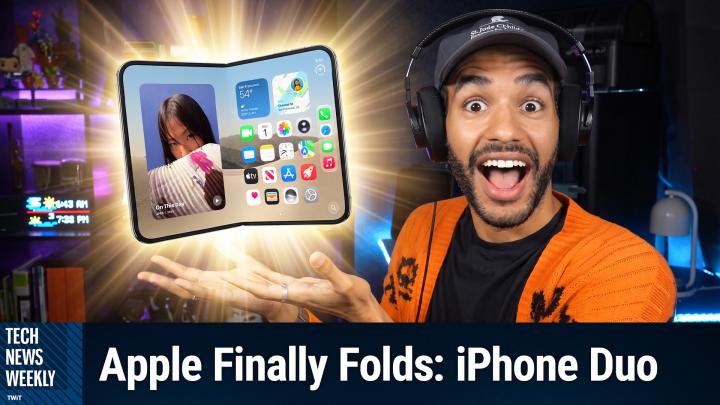
Yeah, we finally got a name too, the iPhone Duo. That was my personal favorite of all the ones that had been thrown around. I think I had put some money down— not real money, but I put some, put some bets down with friends about it. Um, it's very interesting, right? Like, I mean, Android— their Android phone makers have made a bunch of folding phones over the last several years, and I think, you know, to be a little perhaps flip about bit, no pun intended. I think Android phone makers have been like, okay, it's a phone with a second screen inside, bam, let's just throw Android on it and it, you know, don't worry about it. It's the same phone inside and outside, just inside has a bigger screen. Apple, to their credit, is not going to take this approach. They are viewing it, I think, very much as a device in its own category.
Dan Moren [00:45:11]:
Yes, it is an iPhone. It's not an iPad, but it's, it's somewhere in between. It kind of blurs the lines a little bit, I think, between iPhone and iPad in the same way that the iPad has started to blur lines between the iPad and the Mac. So you get that iPhone experience on the outside. They've made some tweaks that accommodate its particular form factor, right? The camera's in one corner, in the top corner. And so they've put the little status bar below that and come up with this unified status bar. The dock is on the right side. It's this really big, beautiful external display.
Dan Moren [00:45:41]:
And then of course you fold it open and you've got this very large, was it 7.6-inch display on the inside? It's pretty close to an iPad mini size, though not quite. And it is, you know, a very large, beautiful display in Apple fashion. And what you get on the inside is, again, it's a bigger iPhone. It's not an iPad, but it does allow for some interesting affordances like being able to run, you know, 2 phone apps side by side. And Apple talked a lot about the software. And I think this is what's exciting about this as a device, is that it taps into that element that makes Apple so successful, which is the ability to do the software and the hardware and to have them work in concert. This isn't just let's slap iOS on it and call it a day. It's let's really think about what the implications of having a device that can open and close are.
Dan Moren [00:46:34]:
And so we saw a bunch of different little demos of things, including like, what if you open it partway? What if you put it down like a little tent? And you can watch video on it. Or if you put it in portrait while it's open, you can pin a video to the top while you're still running another app below. And so to me, that really says like, hey, we are really thinking about how people might use this and what capabilities we want to unlock. And these are things an iPhone couldn't do before. So I'm very intrigued by this device. I think it's one of the more exciting Apple devices that we've seen in many years because even though it is an iPhone and it's riding the coattails of the iPhone, it also feels like a different new thing.
Mikah Sargent [00:47:15]:
Yes.
Dan Moren [00:47:15]:
Now the question is, you know, how much of the software, you know, will be there. Uh, reportedly developers have not got a lot of time to adapt their apps to it. Um, so we're gonna see it maybe a while before we get, you know, iPhone apps that are adapted to work with the new folding design. But I think I'm very intrigued myself. I'm looking forward to giving it a try.
Mikah Sargent [00:47:36]:
Yeah. So before we say goodbye, I wanted to ask you, um, before going into the event, how interested were you in a foldable phone from Apple? And then after the event, how interested are you in a foldable phone from Apple?
Dan Moren [00:47:53]:
You know, going in, I was really intrigued to see what the story they would tell would be. And that would be kind of for me, whether that sold me on it was like, Like, what are you doing that only Apple can do? Because that's a phrase they love to trot out. But I think it's one that does make the device, their products most compelling is like, we did this in a way nobody else can do it. And I think having seen the event, I think they really managed to deliver on it. I mean, having not touched one at all or seen one in person, I can't say more than what they showed out in the video, but the time and attention and like to detail and the thought about how this device works and how it's constructed is the best of Apple. It's the thing that we really love to see from them is like really well thought out, um, you know, carefully integrated and versatile, uh, you know, hardware. And that's got me interested. I think it's, um, I think it's, you know, as far as foldable phones go, I think it's going to be a hit.
Dan Moren [00:48:49]:
Um, foldable is not a big part of the market, but I think the foldable iPhone will be the best-selling foldable inside by the end of the year, no questions asked.
Mikah Sargent [00:48:58]:
Yeah, I have to agree. I was a little bit— I was also curious how Apple is going to do it. And I was talking to Anthony Nielsen after the event and we both were kind of like, well, we didn't want to like a foldable phone from Apple, but especially for that price tag. But yeah, especially for that price tag. But Apple's gone and done it, especially for that price tag when I can trade in the 17 and get a huge hefty chunk of the cost taken off.
Dan Moren [00:49:25]:
Yeah, I will say, uh, $1,999, expensive, but not as expensive as honestly it could have been, especially given the current economic environment.
Mikah Sargent [00:49:34]:
Exactly. Yeah. Um, a little sad to see, um, the other older iPhones go up in price. Uh, but alas, that is, is what has happened. Uh, real quick, any other things that happened at the event or after the event that people might want to know about? And if not, anything else that we should be looking, looking to this year from Apple?
Dan Moren [00:50:01]:
Yeah, I mean, there's definitely stuff. I think the biggest question a lot of people had coming out of the event is there had been other things that were rumored that we did not get any part of, like this big home strategy supposedly that's waiting in the wings. Um, you know, I understand why we didn't do that. This was a very chock-full event. And oftentimes, though the iPhone event is Apple's biggest event and can be a really good opportunity for Apple to put the spotlight on other products, there's always the risk that they get drowned out by something as big as the iPhone. So I think looking at it in retrospect, you can say very clearly, like, okay, it's clear that we wanted to— the Apple wanted to spend a lot of time on the iPhone here, and they felt Like we don't wanna introduce too many other new products because people will forget about them as soon as we show them the foldable iPhone. So I would be interested and I'm probably pretty confident that we'll see an October event at some point, maybe with some of those home devices, maybe with some new Macs. We'll have to see, but that's kind of where I'm thinking right now.
Mikah Sargent [00:50:57]:
All right, Dan Moran, thank you so much for taking the time to join us today. If people would like to follow you online and keep up to date with all the great work you're doing and your books, where do they go to do so?
Dan Moren [00:51:06]:
Uh, well, you can find all everything I've been writing about Apple over at sixcolors.com. Uh, you can hear me weekly on the Clockwise podcast over at Relay with Micah. Uh, and you can also go and buy my science fiction and fantasy novels over at demoren.com. It's my website. I've got a new one coming out in November called Eternity's Tomb. Uh, go to demoren.com. You can pre-order from all your favorite bookstores. There's links there.
Dan Moren [00:51:28]:
Check it out.
Mikah Sargent [00:51:29]:
Awesome. Thank you, Dan.
Dan Moren [00:51:31]:
We appreciate Thanks.
Mikah Sargent [00:51:33]:
Alrighty folks, that brings us to the end of this episode of Tech News Weekly. The show publishes every Thursday at twit.tv/TNW. That is where you can go to subscribe to the show in audio and video formats. And don't forget to follow me online. I'm @micasargent on many a social media network, or you can head to chihuahua.coffee. That's chihuahua.coffee where I've got links to the places I'm most active online. Check out my other shows on the network. They published this morning, latest episodes, iOS Today, Hands on Apple, And Hands on Tech, of course, publishes on Sundays.
Mikah Sargent [00:52:05]:
And of course, right around the corner, October 1st will be the introduction, the first episode of Hands on AI. So stay tuned for that as well. Thanks so much. And I'll catch you again next week for another episode of Tech News Weekly.
Dan Moren [00:52:21]:
Bye-bye.