This Week in Space 208 Transcript
Please be advised that this transcript is AI-generated and may not be word-for-word. Time codes refer to the approximate times in the ad-free version of the show.
Tariq Malik [00:00:00]:
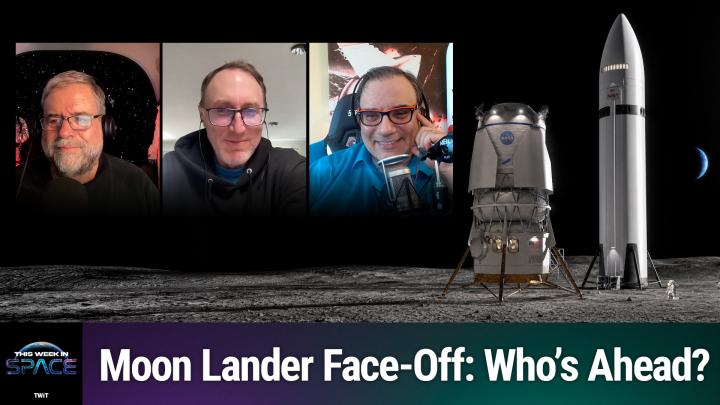
Coming up on this Week IN space, the Artemis 2 astronauts are making the rounds from the White House to the Tonight Show. A private company wants to get in on asteroid rendezvous with the big one, Apophis. And what's the deal with NASA's Artemis moon landers? Are they even going to be ready in time with Blue Origin and SpaceX? Well, Space.com's Mike Wall is here to tell the tale and clue us in. Check it out,
Rod Pyle [00:00:24]:
podcasts you love from people you Trust. This is TW. This is this Week in Space, episode number 208, recorded on May 1, 2026. Lander, Lander, who's got a Lander? Hello, and welcome to another episode of this Week in Space, the Lander Lander who's got a Lander Edition, where we're going to talk about, yes, you guessed it, lunar landers, because it's an important topic as we get closer to 2028 when we want to land American astronauts on the moon. I'm Rod Pyle, editor in chief, Bad Aster magazine. I'm here with the one, the only, the inevitable, Tariq Malik of Space.com Happy
Tariq Malik [00:01:04]:
National Space Day, Rod.
Rod Pyle [00:01:06]:
Happy birthday, Tarek.
Tariq Malik [00:01:07]:
Oh, yeah, that's right.
Mike Wall [00:01:08]:
Happy birthday.
Tariq Malik [00:01:09]:
How old are you?
Rod Pyle [00:01:12]:
Give it away. How many years?
Tariq Malik [00:01:13]:
I am 49. 49 as of last week.
Rod Pyle [00:01:16]:
Man,
Tariq Malik [00:01:20]:
I love it.
Rod Pyle [00:01:21]:
Well, I got almost exactly 20 years on you and I, of course, Rod Pyle, editor in chief, Adeist magazine. And I already said that. So let's go on to what I'm supposed to be saying, which is this week we're going to be chatting once again with Mike Wall because we love Mike. He's a member of the of the Space.com and this week at Space Family, he's also the spaceflight tech editor for Space.com we're going to talk about the human landing systems of Space.com and Blue Origin. Where are they, when are they going to happen and what's going on? Because there's not as much in the news as we would like about either of these programs. And it's a little bit of a head scratcher. You know, when it was Apollo era, you knew it was going to be the Grumman lunar module. And you could follow that news relatively easily with this.
Rod Pyle [00:02:11]:
These are private companies, as I've often said. SpaceX is the Soviet Union and Blue Origin is North Korea. And if you want news, it's going to be on their terms, though, you
Tariq Malik [00:02:21]:
know, I was wondering where you were going with that.
Rod Pyle [00:02:23]:
We're all kind of Waiting. Yeah. So. So this is 2028 we're looking at, which is depending on how you count and when they're planning on doing it, about two years away. So that's a lot to do with test flights and orbital refueling and all that stuff.
Tariq Malik [00:02:39]:
Yeah, it actually is two years away. 2028, I can confirm. I checked my math and my calendar. It is two years away from now, which is 2026.
Rod Pyle [00:02:47]:
So, speaking of 2028 and possible jokes, here's one from Tucker Drake.
Tariq Malik [00:02:53]:
Tucker.
Rod Pyle [00:02:59]:
Haven't heard that in a while. All right. And it's focused on Star Trek the Next Generation. So Captain Picard says, you know, I never really liked the taste of comets. I prefer asteroids. And number one says, I didn't know either one had a taste. And Picard said, oh, yes, asteroids taste a little meatier,
Tariq Malik [00:03:28]:
I think. And then he got a little overzealous with the rim shots.
Rod Pyle [00:03:31]:
Yeah. Now, I've heard that some people want to chew on our asteroids when it's joke time of this show. But as always, you can help by sending us your best, worst or most incontinent space joke. Ooh. That was left over from the Artemis 2 episode. Two twists at Twist TV. And now, back on track. It's time for headline News.
Tariq Malik [00:03:52]:
Headline News. Nailed it. Nailed it.
Rod Pyle [00:04:00]:
Aren't you awesome?
Tariq Malik [00:04:01]:
Nailed it. I know this.
Rod Pyle [00:04:04]:
Wait, hold on.
Tariq Malik [00:04:04]:
Let me tell you got me here.
Rod Pyle [00:04:06]:
Yes. Your mother said you're awesome. And that makes one. So the Artemis 2 astronauts in the make of the rounds. Thank you.
Tariq Malik [00:04:15]:
That's right, take it back.
Rod Pyle [00:04:17]:
Most remarkably, I suppose, standing in the Oval Office of the White House while President Trump talked about a little bit about the mission, a little bit more about his physical fitness and intellectual capability. And didn't they all think he should be flying to space? And they talked about Jared's ears. So it was kind of an odd meeting, but they had their heroes lineup.
Tariq Malik [00:04:40]:
Yeah, you know, well, you and I were there in Houston when the President invited the astronauts to the White House, and they said that they would be there when their call came. And they were. They actually did do a lot of talking. It seems like it was behind the scenes because Reid Wiseman posted a video, or they posted a video of Reid Wiseman and the crew talking at the White House shortly a few hours after that appearance with the President where he was talking about how they thanked everybody for their support. They really enjoyed seeing how. How wide the support and the reactions were. People that were following their flight the whole time. But during the actual appearance, there wasn't any like, actual direct talking to.
Tariq Malik [00:05:24]:
To the crew themselves, which was kind of strange. There was at least one point where President Trump spoke with. With Jared Isaac been commenting on his ears. He has, I guess, are very, very prominent ears is what the President was trying to say. And that was. It was really strange and awkward. But that was kind of like the hors d' oeuvre of the week. The astronauts are on, like, the Heroes tour right now.
Tariq Malik [00:05:51]:
They are traveling right now, of course, the Eastern seaboard, but also across the country to take the victory lap for the mission. We saw them on the Today show this week. We saw them on the Tonight show as well with Jimmy Fallon. And what we didn't see. And I'm wondering why, Rod, is a ticker tape parade down fifth Avenue, because that would have come right by our office. And these are the first people to fly around the moon of the 21st century. And if anyone deserves a ticker tape parade, I think it's them.
Rod Pyle [00:06:23]:
Well, do they do those anymore? With security concerns being what they are?
Tariq Malik [00:06:26]:
I guess not. I don't know, but I can't remember
Rod Pyle [00:06:29]:
the last time I even heard about a ticker tape parade.
Tariq Malik [00:06:32]:
Yeah, yeah.
Rod Pyle [00:06:33]:
Plus, then you got to spend all that money to clean up.
Tariq Malik [00:06:35]:
Well, yeah, there is that. Jobs, man. Jobs. Right.
Rod Pyle [00:06:37]:
Yeah. So speaking of jobs, let's talk about Colonial Marines and asteroids. And I realize this.
Tariq Malik [00:06:44]:
Well, this is fun.
Rod Pyle [00:06:44]:
Like, you added Stretch.
Tariq Malik [00:06:46]:
You added. You added this one. I mean, so I think I would, like, turn this one over to you. Why don't you tell me about Exploration Labs and this whole plan.
Rod Pyle [00:06:57]:
Well, it was your story, I think so. A private company backstopped by a nonprofit trust, and the company is called Exploration Labs, wants to get in the planetary defense business, which is not exactly a place where private companies have rushed to fill the void. No pun intended. And they want to build a spacecraft that'll rendezvous with asteroid Apophis in 2029 during its close pass with Earth, which will be between geosynchronous orbit and the surface of the planet. So pretty darn close. And apophis is about 1500 by 550ft, so it's no slouch. So the idea here is that they do an asteroid rendezvous and start moving towards actually researching more of the deflection methods we've been talking about. So so far, NASA's the only one that's done any of this with the DART mission.
Rod Pyle [00:07:45]:
And the deflection method was let's smack into the asteroid and try and knock it off its course. If we do that early enough, geometry being what it is, the angle increases and the asteroid misses your planet, you hope, and doesn't smash into the moon or something. But there are other methods, too. There's the idea of attaching small engines to an asteroid again, you got to catch it pretty early out there and start to drive it off course. There's the idea of painting one side of it white so that it. The photons, I guess, cause a little bit of a thrust. I'm sure Jammer B is writing furiously right now to correct me. And also the idea of desperation if it's.
Rod Pyle [00:08:24]:
If it's closer than all that, setting off a nuclear explosion. Not to blow up the atmosphere asteroid, that's the movies. But to knock it off course and cause it to miss Earth. But the idea of a private company getting on this is kind of cool. I don't know where the money is for them ultimately, unless NASA says, okay, we're just going to hire you to do this for us because you're cheaper. But I guess that's their hope.
Tariq Malik [00:08:47]:
It'll be in the. You know, you capture the asteroid, you know, and then you sell off bits and pieces of it. All that iridium, right, that we all need for our electric vehicles in our smart watches and our smartphones and all that fun stuff, right, Rod?
Rod Pyle [00:09:00]:
Because it's so economical to bring it back to Earth, right?
Tariq Malik [00:09:03]:
No, well.
Rod Pyle [00:09:04]:
And you know, when you start talking
Tariq Malik [00:09:05]:
about up there, powered by your orbital
Rod Pyle [00:09:07]:
data centers, talking about moving asteroids, deflecting asteroids, capturing and reconfiguring asteroids, you know, people on Earth start getting nervous because if you do something just a couple of degrees the wrong way, ends up in Omaha or Beijing or somewhere, you know.
Tariq Malik [00:09:25]:
That's right. That's right. So it'll be interesting to see. I mean, Apophis is a really tantalizing target because it's going to come so close and it's so big and, you know, for a long. I'm glad that now we're hearing all these stories about rendezvousing with that asteroid rather than how it's going to actually going to kill us all over and over again, because that was like a story every September it would come out about how Apophis is really going to come and get us in 2029, but then again in 2032 or whenever it comes back around again, you know, like all of that stuff. So. So it'll. It'll be very interesting to see how this starts to evolve.
Tariq Malik [00:09:58]:
And you don't watch for all mankind very regularly, do you?
Rod Pyle [00:10:03]:
Not Anymore. No, I gave up after season four.
Tariq Malik [00:10:06]:
This is like an entire plot point of like the last three seasons of the show is this whole concept of resource utilization, resource capture. Who owns what's right?
Rod Pyle [00:10:19]:
How do we grapple that asteroid?
Tariq Malik [00:10:20]:
Right, exactly. They capture an asteroid and then they do they take it to Earth, do they keep it at Mars? Do they keep it somewhere safe? You know, that whole thing, how do we utilize it? It's very, very interesting to think about once we get to that point as I guess as like a species. Right. Does that make us a type 2 civilization? If we get to that point, we can reshape the solar system to suit our needs well.
Rod Pyle [00:10:43]:
Or it can result in all kinds of self behavior. So I guess we'll find out. Let's get on to our last story, which is the kind of thing you love. 1 of 2, 1st of 2 Full moons rises tonight.
Tariq Malik [00:10:57]:
That's right.
Rod Pyle [00:10:58]:
Oh boy. That almost never happens.
Tariq Malik [00:11:00]:
It's the full flower moon, right?
Rod Pyle [00:11:02]:
Oh it has a name. Flower moon. Why is it a flower moon?
Tariq Malik [00:11:06]:
Well, because it's, it's. They get their names from, from like all sorts of different seasons. I think the ones that we, we typically attribute in the United States are the Algonquin, like Native American names that they've had. So you know, the full thunder moon, the Sturgeon, like that kind of stuff, it comes from that. And this is, it's the season, right? April showers bring May flowers even on the moon. And so for that season that's, that's why it's got that name. But there's every culture has like different names like for every one of the moons. So in Chinese culture there's a different name for it, you know, like that kind of thing.
Tariq Malik [00:11:41]:
So by the way, if you want to know about all those names, we have a full moon name reference page on space.com plug right? So you can learn about all of them there. But, but I point this out because it's the first full moon of, of the month. There are two, which means that this is going to be a blue moon month. We haven't had one of those in a while. So always fun to, to get that, that double moon in a, in a month. Blue moon. There are two different kinds. There's the two moons in a month which we're going to see in May and then there's four full moons within three months, blue moon definition, which is much more boring.
Tariq Malik [00:12:19]:
So but this is the first one. This is going to set it all up. It's going to set the pins and Then the full moon at the end of the month is going to knock them all down, and it's going to be very exciting to see. So take a look at
Rod Pyle [00:12:32]:
big excitement with blue moons. All right, we'll be back in just a moment with Mike Wall, friend of the family and Space Dot com guy, to talk about NASA's Human Landing System for the moon. So stand by. And we are back with the one, the only, the greatest ever. Mike Wall, Space Ace. Although I guess your actual title is Space Flight and Tech editor, space.com. but I like Space Ace better. Hi, Mike.
Rod Pyle [00:12:58]:
Hey, thanks for joining us today. Is there anything you haven't written about?
Mike Wall [00:13:05]:
I don't think I've written about. Like, I know Formula one racing or fashion or.
Rod Pyle [00:13:10]:
Yeah, but in space flight, you've kind of covered it.
Tariq Malik [00:13:12]:
I don't know. You read about spacesuits. That's fashion. Yeah. True space fashion.
Mike Wall [00:13:16]:
Well, yeah. And. And the spacesuit deal that had Prada involved, you know, Axiom. Getting Prada on board with our space suits. That. That involves fashion, too. I guess so. Yeah.
Mike Wall [00:13:24]:
Yeah. No, I mean, I've been here long enough, since 2010. I've written about all sorts of stuff. Yeah.
Rod Pyle [00:13:30]:
Could we call him the up and coming Leonard David of the 21st century?
Mike Wall [00:13:35]:
No, no, no, he's. He's still around. He's in the.
Tariq Malik [00:13:38]:
Yeah, you have to ask Leonard about that. I think he has thoughts about that, Rod. So.
Rod Pyle [00:13:43]:
Okay. All right. So we're here to talk about lunar landers because we're calling the episode Lander Lander. Who's Got a Lander? And I guess that's the core question. You know, we. We've done Artemis 2. It was wildly successful. That's great.
Rod Pyle [00:13:57]:
Artemis 3 is delayed once again. But, you know, on. On the charts, at least.
Tariq Malik [00:14:03]:
Is it delayed? Right. Yeah.
Rod Pyle [00:14:05]:
There's something published today, right? I think you guys put something up.
Mike Wall [00:14:09]:
Well, yeah, it's pretty much. Yeah, It's. It's. It. It was kind of tentatively, it was penciled in for mid-2027. And now. And now Jared Isaacman is saying late 2027. And that's to do with.
Mike Wall [00:14:22]:
With the landers not. Not being ready until then, probably, but it's still all. All penciled in. But that's what everybody is saying.
Tariq Malik [00:14:29]:
I always. I always. I ring it up because you know that NASA will say that if it lands, launches on December 31st of 2027, it is on time, so.
Rod Pyle [00:14:36]:
Right.
Mike Wall [00:14:37]:
Yeah.
Rod Pyle [00:14:39]:
Well. So. So where are we with this? I mean, it just in terms of the big picture and the hand wavy scope, which is kind of all we seem to get in some cases, although Jared's been much better about that in terms of giving specific information. But where are we with the lunar landers? We've got SpaceX, who was contracted first for a smaller amount of money, although still almost $3 billion. And then Blue Origin says, hey, you can't leave us out of this, we're going to sue you. So they do sue and NASA says, fine, fine, we'll let you bid. So now we have these two contenders, neither of whom appear to be ready anytime soon. Although, unless you guys have heard something more recently, Blue Origin does seem to be ahead in the foot race in terms of getting at least a test launch done.
Mike Wall [00:15:24]:
Yeah, well, well, it's, that's kind of the basic lay of the land, you know, I mean, Blue Origin is gearing up for a, for a moon launch with like the robotic version of its moon lander, which is called Blue Moon is the overall design and the robotic version, the test version they want to launch is called the Mark one. The kind of next iteration of that is the mark 2. That's the one that will actually carry astronauts. So what they're gearing up right now, they like hope to actually launch Mark 1 to the south pole of the moon, like later this year. I mean, it originally said maybe middle of this year, maybe, I mean, like, we don't know, maybe later this year. It's still, that's all like kind of to be confirmed, but they at least are sort of targeting a, like a moon launch. And we're like coming up on a starship launch too, like probably in the middle of this month. But that won't be to the moon.
Mike Wall [00:16:16]:
It'll be another test flight that won't quite get to Earth orbit. It'll be another suborbital flight. It'll be like the 13th one, I believe, for the starship program. And so, yeah, both of them still have a lot of stuff to do. You know, we're just talking about, yeah, we're talking about test flights that don't have people on board. We're talking about test flights with vehicles that don't have any life support systems installed or that sort of stuff, which is, I mean, like, you can't just wave that away. Oh, we'll just put life support in and it'll be fine. It's like, that's a pretty big deal.
Tariq Malik [00:16:48]:
Elon Musk told me in, in 2016. Or wait, wait, when was it? No, so when did they unveiled Starship the first one. 20.
Mike Wall [00:17:00]:
20.
Tariq Malik [00:17:01]:
20. 20 2022.
Mike Wall [00:17:04]:
Yeah. By unveiled you mean the concept or the actual project?
Tariq Malik [00:17:07]:
When he showed off Starship 1, was that 2019? It was 2019. Yes. Because it was before the pandemic. That's right. And he said that it was going to be fine, that they had perfected all of the life support systems with Dragon and all of that.
Mike Wall [00:17:25]:
And it's true that actually Dragon does work really well. Dragon is. But Starship is a completely different vehicle. So can you just take the Dragon systems and scale them up to this much?
Rod Pyle [00:17:36]:
And I was going to say Starship's a little larger in terms of.
Mike Wall [00:17:39]:
It is much larger volume. Yeah. And I just wanted to just correct something. Like I said, it's coming up on the 13th Starship test flight. It's actually the 12th Starship test flight that's going to probably launch in the middle of this month. Yeah,
Rod Pyle [00:17:53]:
sorry for jumping in Tarek for the, for the HLS version, at least for the first ones. Are they going to seal off the very top of it where the pilots are going to be from the rest of that massive ISS size, pressurized volume, or is the whole thing going to be pressurized?
Mike Wall [00:18:10]:
You know, I don't know personally. There's also other other things to deal with too. It's so tall, like as you mentioned, it's like 170ft tall. And they're going to have to get the astronauts down from the top section. That's where the crew module, the crew portion is going to be at the very top of that spacecraft and they're going to get them down via like a big elevator down to the lunar surface. And we haven't seen like anything about that being installed yet. Yeah, I mean you've seen some sort. Yeah, some like renders of it, but we don't know where the hardware is in the development phase and we also don't know if there's going to be a backup system to that which, which NASA wants because if, if that elevator fails on the surface of the moon, then how do you get 170ft back up to your crew module portion? It is.
Mike Wall [00:18:58]:
So there are all these things that like as far as we know are still in work, are still being mapped out. So it's not something that you can just sort of wave away. This is real life hardware stuff that needs to be figured out.
Tariq Malik [00:19:11]:
Yeah, I did have a little bit of insight on the timing for, at least for Blue Moon and Blue Origin because they had said, and this was during the new Glenn NG3 launch, which was, I think last week as we're recording this, that they were getting all. They're all excited about Blue Moon Mark one, that they were hoping to launch by quote, unquote, the end of the summer at that point in time. And then, of course, right, Mike, new Glenn 3 does launch and it puts the rocket, the satellite, in the wrong orbit. The mission fails. That's not that great for your plan to launch to the moon. And so, you know, you have to take that, that timing now for folks who didn't see that launch with, with a bit of a grain of salt, because the FAA is getting involved now in terms of the mishap investigation. They have to figure out what went wrong before they can even think about launching to the moon. Meanwhile, though, we did see at least images of the Blue Moon lander being shipped because it was when, when I was at Artemis 2 with, with Josh during that mission, they had finished the vacuum tests in that giant with Josh and Rod and Rod.
Tariq Malik [00:20:25]:
That's right. When Rod and I, everybody, when Rod and I and Josh is what I should say, right. We're covering the mission there. They actually had finished the vacuum test from that big giant vacuum chamber. The one that's in. What is it? It's in the future. The future world. Right, the future world one from Westworld that they filmed that.
Tariq Malik [00:20:49]:
Remember that movie Future World.
Rod Pyle [00:20:51]:
Moving on.
Tariq Malik [00:20:53]:
Don't dismiss me. You all know that everyone that is listening knows that that classic movie, anyway, they use that. They shot it there. It was really good. It's how they go to space.
Mike Wall [00:21:00]:
Westworld the film or the HBO series,
Tariq Malik [00:21:03]:
the movie, like the sequel to that. They actually the, you know, the giant
Mike Wall [00:21:06]:
round vacuum chamber in the actual movie.
Rod Pyle [00:21:09]:
But yeah, brother talk.
Tariq Malik [00:21:11]:
So, so, so anyway, anyway, to quote,
Rod Pyle [00:21:14]:
unquote, Jammer V says he has no clue what you're talking about.
Tariq Malik [00:21:17]:
Oh, my gosh. I'm going to find a picture of it. I'm going to put it in the discord.
Rod Pyle [00:21:20]:
How exciting.
Tariq Malik [00:21:21]:
I mean, it's a giant round door. It says NASA on it, you know, and it's historic. So.
Mike Wall [00:21:26]:
Okay, but yeah, but like what, like you're saying Tarek is true. It's been making the kind of testing rounds both in. Yeah, yeah. Both at that site. And also it's. I think it's now back on the Space coast because it's doing some stuff in Blue Origin's facilities near Kennedy Space center or. Yeah, I mean, so it's been shuttling back and forth like between those two sites for testing to kind of shake it down to see if it's ready for launch and for operations in deep space. So yeah, there is concrete progress that you can point to for the Mark 1 mission, but there is, there are a lot of unknowns, like as you just mentioned, because it's like rocket ride for that mission is currently grounded by the FAA while the investigation into what, what happened on that recent satellite launch continues.
Rod Pyle [00:22:11]:
Well, and I just want to say, you know, if you're just kind of looking for signs of progress and this is kind of irrational, so just bear with me. But we saw nothing of SpaceX at Johnson Space center when we went over to Building 9. But we did see not allowed to photograph, but did see a large round habitation lunar habitation module that had the blue origin feather on the side, which was something I had never seen before. I had seen it as I thought as a rendering of a stage, but this was actually, you know what I'm talking about, Tarek. It looked like a big diving bell on landing legs.
Tariq Malik [00:22:46]:
It's the thing. There is stuff from SpaceX there because the elevator demonstrator is there. We just didn't see it. It's on the other end.
Rod Pyle [00:22:52]:
Oh, is that what that big black rig was?
Tariq Malik [00:22:55]:
No, that's the docking thing that I was telling you about earlier. That's the docking rig for the Moonlander stuff that they were testing as well. But no, it's the habitation module, the crew compartment of, of blue moon that they're cool. It's the kind of thing that they, they do. Like, is this the seats close enough to the control panel here? Or can you reach all the buttons? You know, how many windows do we want that kind of thing.
Rod Pyle [00:23:15]:
Can you keep the journalists from trying to take pictures of it?
Tariq Malik [00:23:18]:
Which apparently they could not, Rod.
Rod Pyle [00:23:20]:
Well, I deleted it once instructed. But you know, the funny thing was. And then we'll go to break. But you know there's those galleries on both sides of Building 9, right? The glassed in ones up at the top where anybody can go, who's got permission to go in there. I didn't see any signs that said don't take pictures. Yeah, but down on the floor level. No, no, no.
Tariq Malik [00:23:42]:
The Johnson Space Center Visitor center, the Space Center Houston. They can take pictures and then go.
Rod Pyle [00:23:47]:
Yeah, but if you're down the floor, you can only take pictures of Ryan capsule. Okay, that's enough beating up of NASA. They were very nice to us. I thought given the constraints they have now, their, their handling of media was quite good. So everything was Great.
Tariq Malik [00:23:59]:
Except for that.
Rod Pyle [00:24:01]:
So speaking of great things, let's go on to a break and we'll be right back. So stand by, Neil.
Tariq Malik [00:24:05]:
I think we should point out really quickly that the, that 2027, like the no later than the end or the late 2027 window that came out of testimony from Jared Isaacman while he's on the Hill trying to work through the NASA budget appropriations process for the fiscal year. I guess it's the 28 budget now, right, that they're trying to do. And it doesn't include 27. Is it the fiscal year 27? Oh, yeah, fiscal year 27. It's not 2027 yet. That's right.
Rod Pyle [00:24:35]:
So why you give the guy a birthday and his brain goes spiraling off?
Tariq Malik [00:24:39]:
That's right.
Rod Pyle [00:24:40]:
That's happy birthday, by the way.
Tariq Malik [00:24:41]:
Yeah. Well, thank you, Rob. Kind of. You've been so nice to me. I was wondering why. And so now I know, don't get used to it. But, but it's, it's, I think it's probably a good time to let people know who maybe aren't familiar with it. I think a lot of our listeners are about what these systems themselves actually are because they, they probably know about Apollo.
Tariq Malik [00:25:02]:
We just saw the orion, the Artemis 2 mission around. We know that that has about as enough space as what, two minivans, Rod?
Rod Pyle [00:25:10]:
That's what they said. But you saw that capsule, that was not too many vans worth of space with the suits and the seats and everything crammed in there.
Tariq Malik [00:25:18]:
Well, you got all, you got all the cargo stuff. I mean, maybe it's empty, right? Yeah, my, my, my Prius looks huge when I take all the, all the stuff out of the back.
Rod Pyle [00:25:25]:
It's kind of like the back two thirds of a Chevy, but, but these
Tariq Malik [00:25:30]:
are very different systems, these landers. And so, you know, I, I don't know how many stats that you have off the top of your hand. I have a graphic, I think it's at line 40, Anthony. That kind of really shows where, where they all rate in terms of, of sizes.
Rod Pyle [00:25:54]:
So that's the Apollo lunar module on the right, I'm guessing.
Tariq Malik [00:25:57]:
Yeah. So on the right is the, is the Apollo lunar module. At tall has 4.5 square meters of space in it. In the middle there is the blue moon mark two lander and it is, I think it's 16 meters tall, if memory serves. And, but it's still single digit square meters, I believe, in terms of like living space. And then of course you've got on the left, the skyscraper that is a starship lander. Has the legs on it and everything. And there's like a ring around the midsection that we haven't seen them test yet, which is the maneuvering system for an upright landing on the moon.
Tariq Malik [00:26:32]:
It's 52 meters tall.
Rod Pyle [00:26:33]:
And what could possibly go wrong with that?
Tariq Malik [00:26:35]:
Has something like. Well, we. That's what Sci fi. That's what, that's what Tintin used to land on the moon.
Rod Pyle [00:26:41]:
Destination moon. Yeah, right. And destination moon, except even that the legs were wider.
Tariq Malik [00:26:46]:
Yeah. And it has 613 square meters of habitable space. That's what they say.
Rod Pyle [00:26:52]:
Cubic.
Tariq Malik [00:26:53]:
Cubic. Cubic. Cubic. Yex.
Mike Wall [00:26:55]:
Then I say, yeah, volume. Cubic volume.
Rod Pyle [00:26:59]:
And we wonder why we became journalists
Tariq Malik [00:27:01]:
instead of square feet. Cubic meters. Anyway, so we can, we'll fix it in post, right, Anthony?
Mike Wall [00:27:06]:
Right.
Tariq Malik [00:27:06]:
So, but, but anyway, I point this out just to show how different these two landers are, I think. And Mike, correct me if I'm wrong, it seems like Blue Origin has taken the more traditional. Well, the traditional approach to what we know worked, which was this, this, this two stage asset landing stage system with the, the crew compartment on top of the landing stuff.
Rod Pyle [00:27:38]:
And excuse me, but let's remind people, I mean, I'm sure everybody listening knows because they love our show and they're well versed and everything, but we've only done this once. Yeah, we landed six times, but we've only designed a lunar spacecraft once and that was the Apollo lunar module. So when you say, or when I say, you know, this is the conservative approach, it's like, yeah, because we only designed it once. So this is kind of a brave new territory. But you're right, it is a more conservative design.
Tariq Malik [00:28:03]:
But is Blue moon design, does it have an ascent stage or is it all one big stage like, like China's and, and starship does it. I don't, I don't know.
Mike Wall [00:28:13]:
Actually, I'm not, I'm not entirely sure.
Rod Pyle [00:28:16]:
I mean, I think it's, I think it is stages.
Tariq Malik [00:28:19]:
I think it stages too. Yeah. So.
Rod Pyle [00:28:21]:
Because that's a lot of mass to haul back up. Starship, on the other hand, and one reason starship needs to be refueled 47 times or whatever the number is this week is because the whole thing's got to come back up.
Tariq Malik [00:28:32]:
Yeah.
Mike Wall [00:28:32]:
Yeah.
Rod Pyle [00:28:32]:
Well, what I don't know about their mission profile, Mike, is once they've flown a starship, once they've flown an Orion crew to starship, no gateway docked, transferred, landed on the moon, come back up, do they then transfer back to the Orion capsule in lunar orbit and leave the starship parked in lunar orbit.
Mike Wall [00:28:52]:
Like, I think that's the baseline mission concept, I think, because, you know, Orion can come back to Earth and that starship can keep doing stuff in lunar orbit. It can do more cargo deliveries maybe down to the surface or kind of
Rod Pyle [00:29:04]:
linger there, but you got to keep refueling it, right?
Mike Wall [00:29:06]:
Yeah, that's, yeah. So that's, we just don't know a lot. We don't even know how many refueling attempts or like how many refueling missions it'll take and all that stuff yet. I mean, there's, there's estimates out there, but they vary pretty widely depending on who you ask and in. I mean, it's probably important too, when we're talking about the different designs of these landers. You know, it is a much more traditional approach that the Blue Moon lander is taking. It's important to mention that, that, that the Starship lander was not initially designed for the Artemis program. Right.
Mike Wall [00:29:35]:
And for, for moon landings. It was, it was originally conceived as like the Mars, Mars opener. Right. For SpaceX. Like, they, they like viewed Starship as the spacecraft that will open up the colonization of Mars and the exploration of the rest of the solar system. It was viewed with much bigger things in mind than just, I mean, just doing crude moon or land. Crude, yeah, yeah, crude sort of moon landings, which is a big deal in itself, but it's, yeah, it's this like, it's a Swiss army knife of a spacecraft, basically that SpaceX one size fits all. Yeah.
Mike Wall [00:30:05]:
As, as like enabling tons of different missions. Also big on its docket is obviously it's, it's also going to be key to the deployment of their next gen kind of starlink generation of satellites. It's, they're depending on that to deploy these big new starlink satellites that are coming online. And so it's, it's, it's not just a lunar lander. They're sort of pressing it into service as a lunar lander.
Rod Pyle [00:30:25]:
So, so I'm a little confused. So, so just to go back to my question, so Starship, you know, DHLS version of Starship does its landing, brings the crew back, they transfer to Orion, come home, because Orion's the only thing that can withstand reentry at this point. And let's say HLS Starship remains in lunar orbit. Well, if it took, let's say, 12 refueling flights to fuel that HLS in Earth orbit, are you then going to send all those refueling flights out to lunar orbit to refuel it for A landing. It gets a little murky here, I don't believe, I don't know if they've even talked about that, have they?
Mike Wall [00:31:01]:
I don't know either. I mean I would think if, if you ask them about the longer term vision, it would be, yes, we can refuel it in lunar orbit, like using, using fuel that we mine on the moon basically, you know, lunar water and stuff like that. And I don't know, I mean it's, it's, it depends on the timescales. I actually don't really know what, what the plan is. We'll have to wait to hear more concrete details.
Rod Pyle [00:31:23]:
There's a lot of infrastructure assumptions here.
Tariq Malik [00:31:25]:
Well, I think it changed a lot because a lot of the original plans to your point, Rod, were based on the assumption that there would be a space station where you could just leave stuff. Yeah, like SpaceX has a contract for a cargo to, or had I guess for a cargo tug to supply that space station with all the fuel that it would need, plus its vehicles that are going to be there, that would need. They were going to build that and now they're not. And, and so not having the gateway there, like that question hasn't been answered because, you know, it's not clear to
Rod Pyle [00:32:01]:
me what the difference is. And this speak of very broad terms between gateway and a well kitted out starship, which is bigger anyway, much bigger if you leave it in lunar orbit for that purpose you'd have to have a docking module, you know, but, well, it has that.
Tariq Malik [00:32:17]:
You would have to have like a hub, right?
Rod Pyle [00:32:19]:
Yeah. So like, like, like the Bishop module, but that could be carried up inside and then moved to the nose, you know, or something like that.
Mike Wall [00:32:26]:
Yeah, I mean I like, I would imagine that people are having these conversations, can we leave like one starship up there or two or three as like space stations? And I mean that would make a lot of sense.
Tariq Malik [00:32:37]:
Could you imagine that like four starships, it's all pressurized inside and they're just connected by like one docking node that has like a, an Orion docked at it that was like connect them with
Rod Pyle [00:32:49]:
cables and spin them to create gravity. We are kind of getting off the bait and path.
Tariq Malik [00:32:53]:
We are. I'm just saying, I'm just saying that, that, that, that could, that could answer the space station need. But that was like the whole plan for the star, the, the space shuttle external tank. Remember they want to just leave them up here.
Rod Pyle [00:33:03]:
Yeah, and yeah, but any of these things would be cheaper than Gateway was going to be. But let's let's spin ourselves into another ad and we'll be right back. Stand by.
Tariq Malik [00:33:11]:
Yeah, so I think, I think we're still all very much confused about exactly how the starship logistics are going to work once they actually get to the moon. You know, what they, what they do with it. I guess we're going to find out because, and this is, I think I'll end with this one. Isaacman has said that we're expecting, he expects like a starship to land on the moon maybe in the next year because they have to fly an uncrewed one there first before they send people there on it. Right. So.
Mike Wall [00:33:39]:
Well, both of them have to do that. Both of them have to do like an uncrewed landing and. Yeah, yeah, yeah.
Tariq Malik [00:33:43]:
So. So I guess we'll find out what they're going to do with it afterward or if they're just going to leave it on the moon. Although I think that that's not a deliverable if, if they just land on the moon and then they don't show that they can take off from the moon as well. So I guess we'll find out. But I did want to ask a little bit about, you know, we, we all know or have seen like the very clear evolution of starship because, you know, in 2016, Elon Musk announces it to the world as the next great thing to reach Mars. And then it gets adapted for this moon program. But like Blue Moon, Blue Origin have like a different approach because it wasn't originally just two companies, Blue Origin and SpaceX. There was like a whole big competition.
Tariq Malik [00:34:25]:
I think Northrop Grumman teamed up with Dynetics or something like that. Right.
Mike Wall [00:34:30]:
Yeah, this is going back because these contracts were first given out. NASA first doled out this contract for the first moon landing with people on board in 2021. I think it is, I think it was April actually too. So we're right on this. It's like five years later. And yeah, they, they like granted that original contract to SpaceX, but that, that made Blue Origin very unhappy and they petitioned for, they said we, we need competition and all this stuff.
Tariq Malik [00:34:55]:
Did they petition or did they sue?
Mike Wall [00:34:57]:
They, they, I believe that they sued.
Rod Pyle [00:34:59]:
I think they pitched first and then sued.
Mike Wall [00:35:01]:
And then sued was going into. Yeah, and eventually after a bunch of wrangling, they did end up getting a NASA contract, but it was to start with Artemis 5. But that kind of got upended this past fall when the previous acting NASA administrator, I believe his name was John Duffy, who's still the Secretary of Transportation. He came out and said some stuff about how he was not happy that starship's development was not proceeding as fast as he would like. And so he said, maybe we'll open up the Artemis 3 kind of contract to another bidder, which would only be Blue Origin. And that did sort of happen. And then there was more kind of tumult in the program because in February, Jared eiseman announced Artemis 3 was not going to the moon after all. It was going to be like an in orbit kind of docking demonstration.
Mike Wall [00:35:52]:
And so now where we are now, it's basically like a lot of twists and turns. But where we are now, it's like either starship or blue moon or both of them could fly on Artemis 3 and do like a docking demonstration in Earth orbit with Orion. Like that's the main purpose of the mission, is to show that we know how to do this. You know, it's like Apollo 9, we're doing this stuff, which is difficult in Earth orbit before we tried at the moon. So if there's any problems, then we can iron them out close to home. And then if everything works out, then on Artemis 4, then we'll actually use one of these landers, we don't know which one yet, and use it to put astronauts down on the moon in 2027.
Tariq Malik [00:36:27]:
They should race. They should race to the moon. And then whichever one gets there first is the one that NASA.
Rod Pyle [00:36:33]:
Well, I wish somebody would start racing because we do have China doing their own thing. They have a lunar lander. Looks, looks kind of like a cross up between the Apollo lunar module and the Russian lander.
Tariq Malik [00:36:47]:
I got, I got a picture of it, I got a picture of it.
Mike Wall [00:36:50]:
Run away, I believe it's called. Right?
Rod Pyle [00:36:52]:
It is.
Tariq Malik [00:36:52]:
Where is it?
Rod Pyle [00:36:53]:
And it's.
Tariq Malik [00:36:54]:
That's also line 4, 44. 44.
Rod Pyle [00:36:56]:
That's also a two launch mission. So they got to launch the crew, they got to launch the lander, get that in lunar orbit, and then they launch the crew. And I think they do lunar orbit rendezvous, right?
Mike Wall [00:37:05]:
I believe so. And, and this is something, you know, I mean, you're talking about racing, and that's a word that you hear a lot from, from U.S. government officials and how we have to win this new space race or this moon race, whatever you want to call it, because China is on target to probably do this by like 2030. So.
Tariq Malik [00:37:23]:
And there's another, there's a, there's another depiction of what you guys are describing on 45 as well, which is that, that lunar orbit rendezvous there too.
Rod Pyle [00:37:32]:
So and like us, they plan to build a moon base and we only recently came out and I mean it's been in the planning for a long time. But the serious announcement was from Isaacman said, okay, we're really doing this. Whereas China and I guess to some extent Russia, but talking turkey about ILRs for years.
Mike Wall [00:37:52]:
Yeah.
Rod Pyle [00:37:52]:
And both those things are needed if you're going to start mining and refining fuel at the moon. And at least on our end, I haven't heard anything about how we're going to get whatever fuel you make back up to orbit to tank up things that need heavier, larger things that need to come down, land with cargo and so forth of you.
Mike Wall [00:38:09]:
Well, no, no, if you read like there is a big sort of SpaceX update a couple months ago where Elon Musk wrote about he wants to have like rail guns on the moon shooting stuff into orbit. And it's like that's because what could
Rod Pyle [00:38:24]:
go wrong with that?
Mike Wall [00:38:26]:
Incoming. And that's, and that's coupled with the company's AI data centers in space kind of vision and kind of lunar infrastructure manufacturing, big footprint offer. It's all big picture, long term stuff, I mean, shorter term. I mean we don't know if that's going to happen. Of course he has big, big dreams. He will try to do that, but that's longer term, shorter term. I'm not sure what the vision is.
Tariq Malik [00:38:48]:
Yeah. And it's interesting that there are other players in the cargo like lunar surface to orbit market. You have the European Space Agency which is pursuing this big heavy lift cargo lander that is uncrewed basically to be the thing that would land a large lander on the surface that's called Argonaut right now. And they're steadily developing that in, in the, in, in the background. But of course like, like they're not part of Artemis. At least that part isn't an official like contribution yet. And I think that they're, they're waiting a lot of partners are waiting to find out what's happening with things like, like the loss of, of Gateway and how that's shaking up because there was a lot of, a lot of partner commitments for Gateway in order to get their astronauts on the ground.
Rod Pyle [00:39:36]:
And so just so you know, I just put a link to a picture of argonaut on line 46.
Tariq Malik [00:39:42]:
Yeah. And argonaut is a potential lever that that ESA could pull to says hey, we have this thing that could, that could get your, your fuel up from the surface or to get you like larger, larger Rover, larger instrument packages onto the surface for astronauts. And that's what Isaacman has promised, right, Mike? He's promised this ecosystem of different types of vehicles, starting with these two landers for astronauts, but also different types of rovers, uncrewed rovers, pressurized rovers.
Mike Wall [00:40:12]:
Yeah, I would say it doesn't start with the HLS landers. Right. I mean, it starts with the robotic American landers that we've already seen land on the moon. Right. I mean, Firefly Aerospace put Blue Ghost down last March, and it succeeded. It lasted like the entire lunar night and had a fully successful mission. And we've seen Intuitive Machines land a few times on the moon, although their craft is kind of tall and it tipped over on both occasions, which makes people a little nervous about starship because it's extremely tall.
Tariq Malik [00:40:47]:
The new Intuitive Machines lander is short and squat. It seems like we're a lot more squat water. They announced a new one during the ignition event. A new mission.
Mike Wall [00:40:54]:
Oh, really?
Tariq Malik [00:40:55]:
Yeah. So, but.
Mike Wall [00:40:57]:
So, yeah, there is a whole ecosystem planned. And it kind of starts with these robotic missions, you know, taking scientific equipment down to the lunar surface and helping pave the way for more ambitious stuff. And all of it is building toward if everything works out right, you know, like a big moon base near the Dan, near the lunar south pole, where there's thought to be lots of water ice and these lunar craters. And that's sort of what the whole race thing is about, is being the first one to build that infrastructure. So you kind of have the ability as a country or as like a coalition of countries to establish norms of behavior on the Moon. Because that stuff, I mean, talk about murky, is extremely murky. I mean, like, we've got the Outer Space treaty. It's almost 60 years old at this point.
Mike Wall [00:41:39]:
There's no enforcement mechanism. It basically says we shall behave responsibly. No. Like, no sovereign nation can claim territory on the moon, but who is going to enforce it? You know, and if, like, China gets there first or this is the rhetoric you hear from sort of military officials, US Government officials, we can't trust that they would do the right thing and allow kind of peaceful coexistence or whatever, we can't take the risk that they would be able to set norms of behavior on the Moon because their norms don't align with ours and so on. So that's what this whole moon race is about, or at least that's what the rhetoric is sort of couching it to be.
Rod Pyle [00:42:13]:
So, so for. For Larry on Discord, that's your Answer. And just to drill down a little bit further, you know, regardless of what the Outer Space Treaty says, it does also codify the ability to declare zones of safety, zones of exclusion, whatever you want to call them on the Moon. We've talked about this before. So if you're the first mover that lands there and gets the first nuclear reactor on the South Pole, you can say, okay, I want a 10 mile safety zone for my, my fission reactor because it might go critical and explode and you've made a de facto land claim and that's all very murky and gooey and there's a lot of wrangling going on at the UN about what do we do about the Outer Space Treaty, how do we update it, how do we revise it? And then of course you got to get everybody to agree and not to beat up on China all the time. But they haven't been the best about observing treaties, maritime ones in particular.
Mike Wall [00:43:07]:
Yeah.
Rod Pyle [00:43:07]:
Or intellectual property rights. So yeah, there's a lot of people worried about those norms being established there by the wrong players. So that, yeah, yeah, I mean that's one side of the race. The other side is it's very useful for the US government to be able to continue spending $4 billion a launch on SLS to say we're in a race with somebody because we do best when we're competing.
Mike Wall [00:43:27]:
Yeah, that's, that's very true. And so, yeah, I mean going back to that, that sort of zone of exclusion, you could see a situation where, well, there is helium 3 on the Moon and that's, that's a valuable resource for, for maybe these future nuclear reactors. So maybe you set up your exclusion zone where the, yeah, like where the highest helium, those deposits are and then you have access to those deposits and there, there's nothing in the Outer Space Treaty that says you can't like sort of like as a private company go in and like access moon resources. You like can't own the actual physical body of the moon, but you can theoretically mine resources and sell them. So yeah, it's very murky, it's very undefined and it's kind of like a wild west. That's what a lot of experts will tell you. And that we really won't know what's going to happen until people go there and start doing things and start pushing these boundaries and say, who's going to stop me? And we'll probably figure that out over the course of the coming decades.
Rod Pyle [00:44:21]:
Well, and we got to go to break, but I would just add there's an analogy that's often used about I don't want to own the ocean, I just want to be able to own the fish that I pull out of it when it comes to the idea of lunar mining or asteroid mining. But what that kind of overlooks is the fact that when you declare these exclusion zones, you're kind of saying, well, I just want to use the fish that come out of the ocean. But I'm controlling this 10 square mile patch of fishing rights, which is where the maritime treaties get, get cranky is, you know, what are the fishing rights off the coast of, of, of the Galapagos Islands where the Chinese showed up and they strayed into what was supposed to be the Galapagos exclusion zone for fishing. And the Ecuadorian Navy, which is, I think two destroyers and a couple of frigates went out and grabbed the ship and took it back and made it into another navy ship for them. So it could get contentious pretty quick. But let's, let's not be contentious and go to a friendly break and we'll be right back. So, so standby.
Tariq Malik [00:45:22]:
You know, one thing we didn't talk about, we talked about refueling this whole time and it's always SpaceX, SpaceX 15, 9, 1832, whatever, whatever the number is going to be to, to gas up a, like a. How many. What is it? It's 120ft tall, right?
Mike Wall [00:45:42]:
It's even bigger. It's 170ft tall.
Tariq Malik [00:45:44]:
All right, so a 17 story building in space is what they have to fuel. But Blue Origin, we think that they're going to need to refuel too. Right? Because if NASA is going to use the Vulcan Centaur stage, the was it Center 5 is what NASA's looking at, right. For Orion eventually. And that's just for Orion to get to the moon eventually. So Blue Origin would have to send New Glenn up a few times I guess to, to gas up some kind of other stage. I, I hadn't read that too much, but Rod, you seem pretty convinced that it's like six or so, is that right?
Rod Pyle [00:46:25]:
I read that. That doesn't mean. That's because it's all guesswork. They're not telling us anything.
Tariq Malik [00:46:30]:
Yeah, tell us anything, Mike.
Mike Wall [00:46:33]:
No, I mean they, they have historically, both of these companies have historically kept, kept some things close to the vest. I mean like obviously SpaceX is very forthcoming with a lot of. Yeah, with a lot of stuff. But they, they won't tell us how many refueling missions they'll need for, for Starship, you know, and. Yeah, I mean I don't know what, what the number is either. I don't think anybody knows necessarily. But they, yeah, they're, they're like, will be refueling missions to the mark to Blue Moon. We yeah, that's, that's part of their mission design too and that's, well, and that's something that we need to talk about too, which we didn't really in the way to.
Mike Wall [00:47:06]:
They still have to do life support. They still have, they still these other things. Now SpaceX has to fill, has to figure out that the big elevator for the HLS starship, they still, they still haven't demonstrated propellant transfer off offer. Both of them have to do that for their lunar missions to be, to, to be a reality. And so that's something that we Hope to see SpaceX do on some of these upcoming test flights. Not this next one necessarily, but they probably need to start trying that relatively soon if they're going to hit hit Artemis 3 2027. And I would imagine, yeah, I mean we'll start, start seeing some of those kind of efforts from, from Blue Moon at some point too.
Tariq Malik [00:47:41]:
It just seems like it would.
Rod Pyle [00:47:42]:
Excuse me, Tarek, just to, to answer your earlier query. Blue Moon Mark one, so the experimental robotic lander is a single stage. And then Blue Moon Mark two, which is the human landing system and so on and so forth is two stage. So there is a descent element stage. So I guess that means every time, you know, starship landing and departing as a single unit means it can be reused. Exactly that way, as long as the engines, everything else are working. Blue Moon's going to need a new descent stage every time it heads down. So I don't know how they're going to handle that.
Tariq Malik [00:48:15]:
Yeah, I guess you'd have to ship it out there. So it just seems that would make more sense instead of like having to refuel every single ship, that it would make more sense to just build a space gas station and just send everything there like regularly like a gas station on Earth and then they could just go there and then they fuel all at once.
Rod Pyle [00:48:36]:
That's been talked about since the 50s.
Mike Wall [00:48:38]:
Yeah, yeah, people do talk about that.
Rod Pyle [00:48:40]:
Still committing to it, spending the money and you know, is Starship the best thing to do that because it's basically a big tank on top of rocket engines.
Tariq Malik [00:48:48]:
Speaking about money, one thing that I had read on SpaceX's site, Mike, is that they want, they want to reduce or set the cost with Starship of delivering payload to the moon down to 100 million per metric ton. Is what. Is what it says. And if I remember right, they were. They were kind of playing with the idea that starship would be able to carry 100 tons of stuff. I would assume a moon lander would be less than that. But we're gonna. For the sake of my math today, we're going to assume that a lander could take 100 tons of stuff to the moon.
Tariq Malik [00:49:26]:
And so that would. If it's $100 million for 100 metric tons, then that's like, what. That's a. That's a billion dollars. Is that right? Is my math right there, Rod? Is that a billion dollars?
Rod Pyle [00:49:37]:
Why do you think I'm doing this podcast?
Tariq Malik [00:49:39]:
100 million.
Rod Pyle [00:49:40]:
Running an apartment at Jet Proposal.
Mike Wall [00:49:42]:
Like a billion dollars of what?
Tariq Malik [00:49:44]:
Well, in terms of cost, amber B.
Rod Pyle [00:49:46]:
Says $10 billion.
Tariq Malik [00:49:47]:
At 10 billion. That's what it is. Okay.
Rod Pyle [00:49:50]:
Which is even more expensive than sls, so. Wow. And this is what happens when you let Rod and Tarek run the space program. It's like, oh, off by a factor of 10. How bad can that be?
Tariq Malik [00:50:03]:
Oh, I can just imagine, like the turn of the month when it comes time to sign the invoices, and it's like. What do you mean it's 10 billion? You said it was one.
Rod Pyle [00:50:12]:
Yeah. And you're running space dot com.
Tariq Malik [00:50:13]:
Oh, man. Oh, shh. Don't tell anybody. Mike, you got paid.
Rod Pyle [00:50:17]:
Can you sign my pay card? Oh, thank you for the extra zero. Appreciate that. Oh, my God.
Tariq Malik [00:50:23]:
So, I mean, do we. Do we know how much they say that they're gonna make it cost? Or is it just like they're gonna be bulk buys at all?
Mike Wall [00:50:31]:
I don't know. I'm not sure. Yeah, I mean, like, the. The sort of selling point for starship has, like, always been. It would fly so often and it would be so powerful that it would. It would. It would bring that sort of cost per kg of launch way, way, way, way down and open everything up. I mean, I'm not sure if those numbers still hold.
Mike Wall [00:50:51]:
Four missions to the moon and getting stuff down on the moon or getting stuff down on Mars. But, you know, he's. They've. They've always talked about airplane, like, kind of operations with starship and flying, I don't know, dozens of times per day from multiple sites. And if that's the future that they end up building, then costs would come way, way, way down.
Tariq Malik [00:51:09]:
It's really interesting because in 2018, and we have a story on this, and I think it's on line 41 in 2018, actually no, it wasn't 2018. It was before 2018. Elon Musk said they announced that they were going to launch a Dragon mission around the moon on Red Dragon.
Mike Wall [00:51:31]:
Is this, is this the Red Dragon?
Tariq Malik [00:51:33]:
No, it was, it was, it was a, it was a moon mission.
Mike Wall [00:51:36]:
Oh, it's like, you know, and stuff.
Tariq Malik [00:51:38]:
And did I put the wrong, the wrong here? It's line 41. No.
Rod Pyle [00:51:45]:
Is it underneath heavy launch?
Tariq Malik [00:51:48]:
Oh, yeah, it's the one underneath it. So 42. 42. That's the one. That's the one. So. So it was in 2017, they, they announced that they were going to fly passengers on a trip around the moon in 2018 on a dragon spacecraft using Falcon Heavy. And then they just skipped it.
Rod Pyle [00:52:07]:
Well, because they were going to do a starship fly around the moon in 2026. Was it?
Tariq Malik [00:52:14]:
So I think it was supposed to
Rod Pyle [00:52:15]:
be 2020 with the Japanese guy.
Tariq Malik [00:52:16]:
Yeah. Maze out.
Mike Wall [00:52:19]:
The Dear Moon mission was supposed to be a couple of years ago originally. Yeah, yeah, Starship.
Rod Pyle [00:52:25]:
Because I remember going down to Hawthorne and watching Elon hike the billionaire up on his shoulders because nobody could see him from the press gaggle.
Tariq Malik [00:52:35]:
That means a lot of Times Jared Isaacman, NASA's chief, bought a flight on starship, you know, before becoming NASA's, you know, he had put it to.
Mike Wall [00:52:43]:
As part of the Polaris program. Right.
Rod Pyle [00:52:45]:
Yeah. It was supposed to be the third Polaris flight.
Tariq Malik [00:52:47]:
It's just weird how the gold posts keep changing for, like, how we're going to get to the moon.
Mike Wall [00:52:53]:
It's tough. It kind of goes back to what NASA has to do with changing administrations and changing funding levels and all that stuff. And, you know, the, they've got a little more direction and a little more consistency now, I think with the infrastructure that's been set and the kind of, the kind of timeline that we see laid out. And they've got the same presidential administration for the next few years and we'll just, we'll see what happens.
Rod Pyle [00:53:16]:
So I guess my last question, and I think, Tarek, I think you actually put this in, is about the moon base. Is there a. Have you seen yet a unified game plan about. Okay, we want a moon base, we want a nuclear reactor there for power and for, you know, possibly claiming certain amount of land and whatever. You know, this stuff's got to be. It's got to be delivered to Earth orbit, it's got to be transited to the moon, it's got to be landed on the moon, it's got to be assembled on the moon. And now we're kind of, you know, talking about Project horizon for the 1950s that was going to do all, all that for $6 billion. Hardy Har.
Rod Pyle [00:53:54]:
Is, is there an eye towards contracts and vehicles and so forth? I know that blue origin's got the blue ring, but I don't know how much mass that can transit from across this lunar space. I mean, what's the infrastructure look like for this?
Mike Wall [00:54:10]:
I mean aren't they going to use parts of Gateway? So they already have some of like
Rod Pyle [00:54:14]:
they're talking about sending that to Mars or landing that on the moon or just not flying it at all.
Tariq Malik [00:54:20]:
Yeah, they can't use the habitation volume because we just found out that they're all corroded. Right. The two habitation modules.
Mike Wall [00:54:27]:
It just sort of shows you how influx everything is. You know, we, we just got this, this big Artemis revamp just a couple months ago. Right. Because yeah, just as we were talking, you know, the original Artemis 3, it was supposed to land on the moon and we found it a couple months ago. No, that's not going to happen. It's going to stay in Earth orbit. This, that and that, that same kind of announcement or like, I don't know, a few weeks later we got the official kind of bye bye Gateway and we're really going all out on a moon base and it's just too early to know what that moon base is going to look like. I think, I mean they're drawing it up right now.
Mike Wall [00:54:57]:
I mean I think if you talk to SpaceX, they'd probably say we can just build it pretty easily with a bunch of starships because they're so big and powerful and they can get huge amounts down on the lunar surface in both volume and mass. And if starship does end up doing everything they say it well then that's, that could well be true. It could unlock something like that. But yeah, it's, it's, it's too early to tell what that's like kind of if that's going to happen and what the timeline might be.
Tariq Malik [00:55:22]:
Well, that's like, I think my last question there, you know, I was, I was thinking a little bit today, pontificating if you will, on what we saw last month with Artemis. Right. It's been one month, one month to the day since it launched, since, since Artemis to launch the first people around the moon. And, and that was, I have to say, just, you know, objectively it was extremely exciting to see because I've been@Space.com for 25 years and have been waiting for Astronauts to go back to the moon for the entire time.
Rod Pyle [00:56:02]:
I've been waiting since 1972. So getting lie.
Tariq Malik [00:56:04]:
And, and Mike. And Mike, you've been with us for what, 15 years now, right? For the same thing, waiting for all of this to happen. And so there's a question in here, I promise, but the, the final setup is that I feel like NASA, I mean, is riding pretty high. They rang the bell at Wall street this week. The astronauts are on Today show. They were on the Tonight Show. You know, they're making the rounds.
Mike Wall [00:56:32]:
Went to the Oval Office the other day.
Tariq Malik [00:56:33]:
They were at.
Rod Pyle [00:56:34]:
And stood silently in the background. Well, Jared's ears got criticized.
Tariq Malik [00:56:40]:
And so, so I guess the question is, are, is it actually happening now? Are, do they have the momentum to keep everything going? Or just the fact that there is so much influx, Are there still too many variables? Because it seems like the ducks are lining up in a way that they're going to eventually converge. But then we have this New Glenn hiccup that then grounds New Glenn. And so we don't know when that, that moon mission is going to launch now. And there's a ripple effect. Right. And so I'm just kind of curious what your take is on that, if you're more confident now than before or if you're still keeping your skeptic hat on until, until you see either one of these get into orbit, at least for the first time. You know, I'm just kind of curious what your thoughts are on that.
Mike Wall [00:57:33]:
I, like, always have my skeptics hat on. Just because space flight is so difficult and this stuff is so expensive. When you put, I mean, this is something that hasn't been done in more than 50 years. You know, landing astronauts on the moon, it's just such a different time. You know, like the Apollo days, it was a real space race for the Soviet Union and that was a national security imperative, et cetera, et cetera. All these arguments that it's so. It's such a different time. It requires so much to do this, so much time and patience and energy and development.
Mike Wall [00:57:59]:
And so I'm always skeptical that it's going to happen at a certain point or that we, we should be excited that it's going to happen soon. I mean, but I am excited. You know, Artemis 2 was so. It worked so well. It was nearly flawless. Like, despite the sort of toilet hiccups and stuff like that, it was, it was, it worked so well. And it was really heartening to see how much the world cared about it. It really did seem to generate this just real swell of excitement, like around the world and in this country especially.
Mike Wall [00:58:27]:
So I think that that does bode really well for the future of the program, for people caring enough about it over the next year to keep it going at this level. And I think we do have a NASA administrator who cares about this stuff and is good at dealing with these problems and has a background in dealing with these sorts of issues. He's a private astronaut and he's well connected to SpaceX and to the current administration. He seems to have the ear and the trust of the President and that sort of thing. Those things all matter too. And I mean, we can talk about what the President's priorities are for NASA. They don't seem to be science related. Right.
Mike Wall [00:59:06]:
Because he keeps trying to cut NASA's science budget.
Rod Pyle [00:59:09]:
Boy, that was a polite way of putting it.
Mike Wall [00:59:11]:
But, but one thing he does really care about is the Artemis stuff because he views it. He cares about human spaceflight because it's high profile and he wants to have it happen under his watch and he wants it to be part of his legacy. And that stuff really does matter. I mean, we saw during the Kennedy years and how important it is to have that sort of backing from a President. I mean, these various NASA science missions may not have that backing from the President, but I think the Artemis program does. So, yeah, we shall see.
Rod Pyle [00:59:39]:
Hey, do you think he'll name it after himself? Doesn't have to be Artemis. Yeah, you can put it in gold leaf on the side. Okay, I'll stop. Well, hey, Mike, thank you for joining us.
Tariq Malik [00:59:52]:
You're gonna get us letters, right?
Rod Pyle [00:59:55]:
Hey, well, if it gets us more fan mail, good or bad, I want to thank you and everybody for joining us today for episode number 208 that we like to call Lander. Lander, who's got a lander? Mike, you have a book in print that we should all go buy. What is it and where do we get it?
Mike Wall [01:00:10]:
It's called Out There. It's about the search for alien life and it's been out there for a little while. But a lot of the basic arguments still kind of hold. I think we haven't found aliens yet, right? We have not. We have not. Although we're narrowing in a little bit. A lot of exciting Mars stuff has come out in the last six to eight months. Talking about all these really complex organic molecules that have been found on Mars and stuff like that.
Mike Wall [01:00:32]:
And it's. It really does. Yeah. I mean, it seems like a matter of time at this point that we at least find something microbial somewhere relatively close. But that's just. That's just my opinion.
Rod Pyle [01:00:43]:
I want to be alive when we discover that we all came from Martian microbes.
Mike Wall [01:00:48]:
That would be amazing. There are a lot of really smart people who think that that is indeed what may have happened.
Rod Pyle [01:00:53]:
And I want to go to church the next day and say, so what about this thing? Okay, Tarik, where should we look for you? Online, Wiling away, wasting your life on video.
Tariq Malik [01:01:06]:
Oh, my gosh. I'm going. Well, I. You can find me@space.com, as always, on the socials at tarajmallog. If you do like video games, you can find me on YouTube at Space Drawn plays. But this weekend, I'm gonna go touch grass, Rod. I'm going camping.
Rod Pyle [01:01:22]:
Wow.
Tariq Malik [01:01:23]:
And so we're gonna go do that. And where are you gonna camp? I'm not gonna tell you. In the hills of New Jersey.
Rod Pyle [01:01:30]:
What, you think I'm gonna show up or something?
Tariq Malik [01:01:32]:
We're gonna. The country I'm taking my scout trip to. We're going to Camp Hoover. And it's got a nice big oval in the front. And with the full moon out this weekend we're going to take my telescope out. It's going to be a lot of fun. A lot of fun.
Rod Pyle [01:01:45]:
Okay. I'll come howl in the distance just to shake up, shake up the girls. And of course, you can find me at pilebooks.com or@astromagazine.com and remember, you can always drop us a line at twistwit tv. We welcome your comments, suggestions, ideas, jokes, insults, whatever you got, but jokes. You know, we're running a little lean on the jokes, so I count on you guys. And occasionally, you know, I got to write you back and say, hey, we use that one already. I don't expect everybody to listen to. I think all in with the beta period.
Rod Pyle [01:02:14]:
We're up at about 220 episodes now. Yeah, so that's a lot of jokes. But. But send what you got and we'll probably use it and we'll blame it on you. New episodes published every Friday on your favorite podcaster. So make sure to like and subscribe and give us thumbs up or whatever the common currency of. Of that player is because we need your love. And you can follow the Twittech podcast network at Twit on Twitter and on Facebook and Twit TV on Instagram.
Rod Pyle [01:02:42]:
Thanks, everybody. Thank you, Mike. It's always a pleasure having you. Good to have the family, the fam together. And we'll see everybody next week.
Mike Wall [01:02:51]:
Bye.
Rod Pyle [01:02:52]:
Bye.