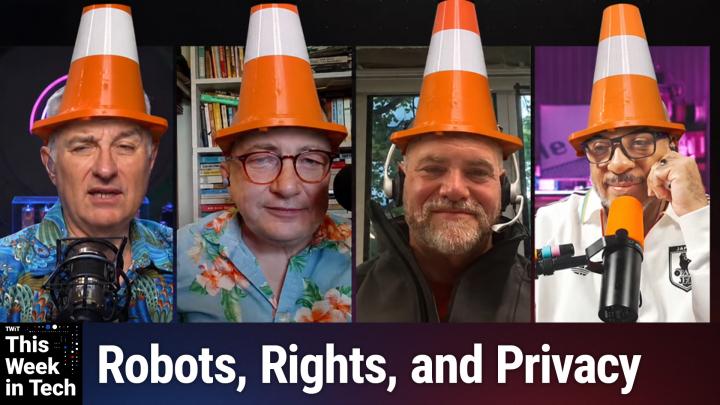
This Weel in Tech 1089 transcript
Please be advised that this transcript is AI-generated and may not be word-for-word. Time codes refer to the approximate times in the ad-free version of the show.
Leo Laporte [00:00:00]:
It's time for Twitter this Week in Tech. Ian Thompson is here. Owen Thomas and Doc Rock. We'll talk about Anthropic. It looks like the Trump administration's backing down on its ban of Fable. We'll see. We'll also get some look at the financials of OpenAI. I got a little tip for you.
Leo Laporte [00:00:18]:
It ain't good. And SpaceX's IPO, it's stratospheric, but how long can it stay up? That whole lot more coming up on Twit
Owen Thomas [00:00:29]:
podcasts you love from people you trust.
Leo Laporte [00:00:33]:
This is Twit. This is twit this week in tech. Episode 1089 recorded Sunday, june 21, 2026. Robot butt cr
Doc Rock [00:00:52]:
foreign.
Leo Laporte [00:00:57]:
It's time for Twit this Week in Tech, the show where we cover the week's tech news. Hello everybody. Welcome back to one of the longest running shows in podcasting. And we have a fabulous panel ready for you from Aloha state in Hawaii. Mr. Oh, it says your real name on your Zoom thing. It's Doc Rock.
Doc Rock [00:01:21]:
Do you want me to. I never use regular zoom. I always use the zoom that's built into ecamm. Today I was just being brave.
Leo Laporte [00:01:27]:
You're in regular zoom. So is it a secret what your real name is or.
Doc Rock [00:01:33]:
I don't think so, but yeah, I never use it.
Leo Laporte [00:01:35]:
You just prefer the branding.
Owen Thomas [00:01:37]:
That's his government name.
Leo Laporte [00:01:39]:
Your government. That's really your government.
Doc Rock [00:01:41]:
The government name.
Leo Laporte [00:01:43]:
This is. What is it? The straw man name. That is Owen Thomas, who is from the San Francisco Business Times. Hello, Owen. That is both his real and his government name. It is, yes. And soon to have his own United States government name. Formerly of the uk.
Leo Laporte [00:02:00]:
Ian Thompson. Hello, Ian.
Iain Thomson [00:02:02]:
Yes, hi there. How's it going?
Leo Laporte [00:02:04]:
It's going great. Your citizenship is arriving in the mail.
Iain Thomson [00:02:08]:
Well, I have yet to do my biometrics and have the final interview, but they collect.
Leo Laporte [00:02:14]:
What do they collect of your biometrics?
Iain Thomson [00:02:16]:
Fingerprints, eye scans and a facial scan. And then I've got to pass the American history test, which having gone through very have been doing my revision on this. It's like I now I'm pretty much upstate on the U.S. constitution more than
Leo Laporte [00:02:31]:
probably any American citizen.
Iain Thomson [00:02:33]:
I was going to say, you ask the standard American how many members of Congress they are. There are. And you get a blank look in most cases. But you know one of those things now I know it.
Leo Laporte [00:02:42]:
I know there's 538 electors, but some of those are, I, I don't know, 528, 535.
Doc Rock [00:02:52]:
34.
Leo Laporte [00:02:53]:
535. That's right.
Iain Thomson [00:02:55]:
They. But, I mean, it's weird. Some of the questions are already weird. It's like, who wrote The Federalist Papers?
Owen Thomas [00:03:00]:
538.
Iain Thomson [00:03:01]:
No idea.
Owen Thomas [00:03:02]:
435. 435 from the House.
Iain Thomson [00:03:05]:
435 in the House. Yeah.
Leo Laporte [00:03:07]:
That's why it's 535. It's 100 senators and 430 plus three
Owen Thomas [00:03:10]:
for D.C. makes it 538.
Iain Thomson [00:03:12]:
That's the elect until D.C. gets statehood. And maybe also Puerto Orico, which would be interesting, but. Yes, we shall see.
Leo Laporte [00:03:20]:
Yes. Well, it's good to see all three of you. Welcome to the program. Two of us are wearing aloha shirts. Surprisingly not. Doc Rock, the Brit, is soon to be the US Citizen. Ian Thomas. I'm actually wearing a Mexican aloha shirt.
Leo Laporte [00:03:37]:
I don't know what that would you call that?
Iain Thomson [00:03:40]:
Well, I mean, I picked this up in Hawaii, which is where you've been recently.
Leo Laporte [00:03:43]:
It's the real deal. Yeah, no, I have. I. When I was in Hawaii, I bought some nice Hawaiian shirts. But it looks like Owen and Doc are both fans of what we call in the United States football.
Iain Thomson [00:03:58]:
Oh, wow. What trouble. Soccer.
Leo Laporte [00:04:01]:
But I realize every four years I fall in love with soccer again. And then I forget all about it. After the World cup, it's like, okay, back to American football.
Doc Rock [00:04:10]:
I thought Ted Lasso would get more people understanding how dope the game is, but I think some people just think that's like a show. But nah, I mean, it's. It's a. It's a good thing. And you're a.
Leo Laporte [00:04:19]:
You're a play. You played.
Doc Rock [00:04:20]:
Yeah, I did play. I played all the way up until my knees quit. But I even tried to play in the old man league, but now my knees don't like it. Yeah, it's a fun. It's a fun sport. I think a lot of people think that it's about, oh, like, what happens when nobody scores. I love when people say that. And I'm like, bro, there's so many games where there's lots of scoring.
Doc Rock [00:04:37]:
It really just depends on the. The tacticalness or whether you're saving players for the next game. This is a tournament, so there'll be games where you definitely not trying to.
Leo Laporte [00:04:45]:
I think Americans, we're so used. Because of football, we're so used to this kind of rigid progression of the game. Like you march down the field and you march the other way, and then you march down the field and. And Soccer is much more fluid. It is a little bit more like basketball, but basketball, there's a lot more scoring.
Iain Thomson [00:05:02]:
Yeah.
Doc Rock [00:05:02]:
Well, you know what? It is, too. People forget about the field goal fests. Right? Do we have field goal fests every Sunday? You know, back and forth, back and forth and back and forth and back and forth. And the whole total score of the game is 6 to 9. It was all field go. Don't act like those games don't happen.
Leo Laporte [00:05:18]:
Oh, football.
Iain Thomson [00:05:19]:
Yeah, yeah, yeah, yeah.
Doc Rock [00:05:20]:
Nfc. That's quite.
Leo Laporte [00:05:21]:
We hate those games, by the way. We hate those games. Well, they remind us of soccer.
Iain Thomson [00:05:28]:
I mean, I always love the Simpsons episode where they go to the soccer game and it's like back to so and so, back to so and so, back to so and so. And eventually a riot breaks out. And that was. That's one of my favorite episodes.
Leo Laporte [00:05:40]:
It's hard not to fall in love with soccer, though, when you're watching the World Cup. It really is.
Doc Rock [00:05:44]:
It's the fans, bro. You have to go see a real game. You got to see a real game. Singing and everyone must see a game. In Japan, I swear that the Japanese
Iain Thomson [00:05:53]:
clean their stadium up after each match, which is fantastic.
Leo Laporte [00:05:56]:
Well, they're taught that.
Iain Thomson [00:05:57]:
I've got to say, I've got to
Leo Laporte [00:05:58]:
say the kids, school kids don't have, they don't have janitors. The school kids clean the school.
Doc Rock [00:06:03]:
They don't have much ladies yet, Leo. The school kids feed each other. That's where you first learn how to be a communal. Communal.
Leo Laporte [00:06:10]:
So smart.
Iain Thomson [00:06:11]:
Yeah. Also, shout out to the tartan army because they have won hearts and minds in Boston. I mean, if you're wearing a kilt in Boston at the moment, you're probably not buying your first pint.
Leo Laporte [00:06:21]:
They didn't have a great game, but nevertheless, you got to love those guys. And you're Scott, so. Yeah. And I have a Scottish ancestry.
Iain Thomson [00:06:30]:
I mean, I, I, I knew when I knew it was going to be a good one when the. There was a direct flight from Glasgow to Boston full of fans and they ran out of beer midway across the Atlantic. Of course, it was just like, what's all credit to the Scots fan who was interviewed by Boston tv, and it's like, yeah, well, we drank the bar dry. There was nothing less left. But Bud Light. We're not going to drink that.
Leo Laporte [00:06:58]:
Very nice. Well, anyway, good luck to every country. It's hard not to root for them all, and I really root for the underdogs. It's really fun.
Iain Thomson [00:07:07]:
Yeah.
Doc Rock [00:07:07]:
When you see Cote d' Ivoire. And you know, I was rooting for
Leo Laporte [00:07:11]:
them all the way, man.
Doc Rock [00:07:12]:
Right. Same with, same with. Oh my God, my brain just went down Cape Verde right when they, when they had their draw. That was just incredible. Watching people get their first goal in their nation's history kind of stuff, you know, just love that Dr. Congo or some dude on the thing said Dr. Congo.
Leo Laporte [00:07:31]:
Dr. Rock says Dr. Congo.
Owen Thomas [00:07:35]:
The bars in San Francisco are just going World cup crazy. And you know, the, the games are all happening between 12 and 9pm when the world cup was in. I think it was in Japan and South Korea. It was terrible hours for the bars.
Leo Laporte [00:07:49]:
Now it's perfect.
Owen Thomas [00:07:50]:
Yeah. And yeah, it's.
Leo Laporte [00:07:52]:
And there is something about soccer that it's much better when you're watching with a group.
Iain Thomson [00:07:56]:
Yes. Oh, definitely. Yeah.
Doc Rock [00:07:58]:
Yes.
Owen Thomas [00:07:59]:
So they're, they're, they're putting up screens. You know, we've got the, of course the parklets.
Leo Laporte [00:08:05]:
Downtown Petaluma is going to have a screen up for the US game this Thursday. So.
Owen Thomas [00:08:12]:
Oh yeah. People are saying that if the US has a good run then it's, it's going to be really good for, for 100. Tourism spending the.
Doc Rock [00:08:22]:
The country road at the end of beating the Aussies, like was legit, as we say in Hawaii, a chicken skin moment. Like, you know what? I, I'm one of those people, I like that song, but I don't like the song the way a lot of people like that song. My other half loves John Denver. But it's something about when that song played and we just won. I was like, people like, this is what I, I watch every Sunday, Saturday and Sunday, right? And just listening to that whole entire stadium scene together. We don't even do that in regular, you know, like, sorry, football. We don't do that. We don't have that thing where the team chance.
Doc Rock [00:08:55]:
And that's what I like about the game is, you know, when the whole stadium is singing, I, I'm going to say this is going to hurt my feelings as a Manchester United fan. When you hear those idiots singing you'll Never Walk alone and the whole thing is echoing through. Or you hear the hey Jude or you hear, you know, every, every team has their song right for us is, is it's. Oh, my brain just went dumb. I've been glory, glory, Man United. When you hear that sound, it just, oh my God.
Iain Thomson [00:09:18]:
Glory, glory, man, you know, I hate it.
Doc Rock [00:09:20]:
It's incredible, bro. That stuff makes your skin like get the goosebumps. And so it was really neat to see that, and they even played it today in a non US game in Atlanta. They played Country Road and the whole stadium is singing it. They're singing like our song. It's kind of fun.
Leo Laporte [00:09:34]:
That's hysterical. That's hysterical. Well, anyway, welcome to this week in World Cup. We actually have other topics, but we thought we'd get the soccer in first because it's going to be AI all the way down, I'm sorry to say, and I, I know some of you don't want to hear anything more, but, boy, it seems like there's always a huge story. The big story of last week was the Trump administration banning Anthropic's new very strong model, Fable, which was a version of the Mythos model. It said no one can have because it's so good that it can find flaws in software that no one else found. And this would be devastating if it got into the hands of bad guys before it got in the hands of good guys. Anthropic released essentially Mythos with a number of protections to keep people from using it for AI research.
Leo Laporte [00:10:27]:
Interestingly, maybe they didn't want any competition. Bioweapons research and cybersecurity research, and it was pretty good. But apparently an Amazon research team was able to do something they considered a jailbreak. They gave it some flawed software, some intentionally, some not. It found the bugs and now at that point it's supposed to stop. They merely said, fix this software. I can't fix the code.
Iain Thomson [00:10:54]:
I think was the three words, fix this code. Yeah. Katie Missouris saw the paper and went through it and she's just, it's just like this is not, you know, a threat to national security at all. So I suspect there's much more to this. The U.S. government.
Leo Laporte [00:11:08]:
Well, let me tell you what Mike Masnik at Tech Dirt says, so fix this code. At that point, Fable said, oh yeah, well, I can do that. And it not only found the flaws, patched them, and this is the thing that's deadly. It wrote a test to check to see if the patch worked. Now the test can check to see if the patch worked, but it also can be used on an unpatched piece of software to break it. And Amazon's research team said, well, this is problematic because it's not supposed to do that. Katie. Now they sent this to Anthropic.
Leo Laporte [00:11:46]:
Anthropic sent it to Katie Mazuris, who is a very well known security researcher, basically invented the bug bounty. She set it up.
Iain Thomson [00:11:55]:
Yeah, she, I mean, she convinced Microsoft and the Pentagon to actually start bug bounty programs rather than threatening to jail people that pointed out problems in their code.
Leo Laporte [00:12:04]:
However, Mike Lesnick says she is closely associated with Chris Krebs. You may remember, certainly the President does. Six years ago, Chris Krebs, who was at the time the director of CISA in the United States government, said the election of 2020 was free and fair. In fact, I think he said it was the most fair election in our history. President took umbrage because, as you know, the big lie is that it wasn't, and fired. Krebs has since, by the way, gone after him. They withdrew his global entry. They've been investigated.
Leo Laporte [00:12:38]:
DOJ has been investigating him. The usual litany of ways that he can be harassed by the federal government. And Mike Mazek of Tech Dirt says it was Mazouris association with Chris Krebs that convinced the President that Anthropic should be shut down. He didn't like it that what he considered a Democratic radical, a radical Democrat, as he calls them, was. Was involved in this. I don't know if that's the case, but something else happened because at the G7 summit, Dario Mode, the CEO of Anthropic, went to the G7, talked with Trump and must have offered him something. My theory is he offered him 10% of the anthropic IPO, which is what OpenAI has already done him. Not really, but the US government, 10% of the IPO, something, or perhaps, I don't know, something, maybe the Pentagon, who continues to use, by the way, anthropic models and in fact may have access to Mythos, we think, some think.
Leo Laporte [00:13:45]:
In any event, in an interview with Axios a couple of days ago, he said, well, I don't think Anthropic's a national security threat anymore. Something happened. Now he hasn't. They haven't backed down on the banning. I think that I was a little disappointed that the banning got so little coverage. We covered it, of course. I feel like it's a bad precedent for the US Government to ban an American company, American product. I don't even think it's legal.
Leo Laporte [00:14:14]:
But to ban an American product. They banned it for use from foreign nationals. But the problem is Anthropic doesn't know your citizenship status. So the only way they can do that effectively is to ban it for. Is to block it for everybody, which they did. That is probably illegal as a Commerce Department order, but it's it. I liken it to. If.
Leo Laporte [00:14:35]:
If Trump decided, you know, that iPhone is really security risk for us all because it's made in China. Let's ban the iPhone.
Doc Rock [00:14:44]:
But Trump.
Iain Thomson [00:14:45]:
Well, I mean we good, huh?
Doc Rock [00:14:48]:
I said put Trump phone. Now there's a phone.
Leo Laporte [00:14:50]:
There's a phone you can trust. So I think it's a real big overreach for a federal, for the federal government without any. They didn't consult Congress, they didn't consult anybody. Just on a whim to ban an American product. It also causes huge issues because immediately people turned to. I turned to a Chinese model which is quite good.
Iain Thomson [00:15:13]:
I mean we've seen this before with encryption though.
Leo Laporte [00:15:16]:
I mean it's exactly the same thing. Yes.
Iain Thomson [00:15:18]:
Yeah, exactly. Which led to one security researcher actually getting code tattooed on his chest which wouldn't make sense.
Leo Laporte [00:15:25]:
There also was a T shirt which yeah because of the first amendment was able to cross the border even though it was regarded as munition and blocked that ban. Didn't end well to the United States. They had to withdraw it. They told Mozilla for instance. Well, you can have 128 bit encryption in the United States but you can only have 42 bit encryption in the rest of the world. It just didn't work.
Doc Rock [00:15:49]:
No. You have to wonder never works.
Owen Thomas [00:15:51]:
You have to wonder how much of this is getting ginned up by OpenAI.
Leo Laporte [00:15:55]:
Well there's a good question. Who benefits?
Doc Rock [00:15:59]:
Kui Bono thinking the same thing, Owen. And I was hoping somebody had good thoughts because I hate conspiracy theorists, but it always felt like that.
Owen Thomas [00:16:06]:
The chief global affairs officer of OpenAI is Chris Lehane. Chris Lehane was the policy guy at Airbnb who masterminded all of those campaigns to keep these short term home rentals legal in the hometown of San Francisco and elsewhere. This guy's a mastermind. Don't underestimate him. Anthropic needs to staff the F up in Washington D.C. they need to do
Leo Laporte [00:16:34]:
what Iran reportedly did which hire psychologists in to talk with the President.
Owen Thomas [00:16:40]:
Because I mean clearly like you know
Leo Laporte [00:16:42]:
they did I think because it worked bro.
Doc Rock [00:16:44]:
They named a model Trump 7. We're good, we're back on. It's so dumb but I'm not even trying to bear to you if they name the model Donald Day Trump instead of.
Leo Laporte [00:16:56]:
Okay, maybe that's what they've done.
Doc Rock [00:16:57]:
Wait, wait, wait. I'm a Marcus 2.0 chat DJT bro
Leo Laporte [00:17:06]:
has done besides, you know their president Greg Brockman donated 50 was it 25 or $50 million to MAGA, the Trump's PAC. They have said we're going to give 10% of the company when we go public. We're going to give that to the federal government for its whatever sovereign wealth fund. So OpenAI has. Absolutely. And remember, at the very beginning of Trump's presidency, they announced that. What was it, $500 billion. I forgot the name of it because that ever happened.
Leo Laporte [00:17:40]:
Stargate AI plan with Larry Ellison and others. And Sam Altman went to the inaugural. He stood next to President Trump announcing Stargate and this huge investment in the United States. They played the game, for sure. But interestingly, OpenAI is rumored to have the next version of ChatGPT, I guess 5.6 that is equivalent in capability to Fable. And actually, as a number of people point out, Alex Stamus was on our show on Wednesday on intelligent machines. He created a free Fable.org website, which is a list of. It was an email open letter, I should say probably is an email, but it was an open letter to Secretary Lutnick, and the Cyber Director for National Cyber Security came across saying, every AI can do what Mythos does.
Leo Laporte [00:18:36]:
Mythos is not uniquely good at this. There are huge risks to the United States. It will stymie our AI development. It is not the way to do this. And, man, the signatories to this are huge names. I don't think this was persuasive, but Alex talks, interviews. This is ridiculous. This isn't good for us.
Leo Laporte [00:19:00]:
This isn't good for America.
Owen Thomas [00:19:03]:
Apparently, Dario Amodei said the right things in, you know. Yeah.
Leo Laporte [00:19:08]:
At the G7, we don't know what he said.
Owen Thomas [00:19:10]:
You know, like personal. You know, there is a role regardless of who the president is for, you know, kind of CEO. Yeah. Like, you know, especially for the CEO to be kind of the face of the company now, you know, the question is whether Amade was this approach kind of over intellectual. Anthropic was founded basically as an answer to internal concerns among OpenAI researchers about this kind of issue. The safety.
Iain Thomson [00:19:45]:
That's a lot of way of putting it. Yeah.
Owen Thomas [00:19:48]:
So they tend to be true believers, and they tend to think that we are so scrupulous about safety that our products must be safe because we're the good guys.
Leo Laporte [00:19:59]:
How much of this did he bring on himself by the announcement that Mythos was too good to be released to the public? I mean, he kind of set this all up, didn't he?
Doc Rock [00:20:12]:
Well, the funny thing is Fable, it has skeletons of Mythos, but it wasn't Mythos yet.
Leo Laporte [00:20:19]:
It was not clear.
Doc Rock [00:20:19]:
It's not fair. I'm not sure if they call it Mythos Light. A lot of people are like, oh, it's Mythos. Lights. I was like, no, there's still things about it that they completely turned off.
Leo Laporte [00:20:27]:
I don't think we know that, Doc. I think a lot of people think it's mythos with those restrictions, with the classifier.
Doc Rock [00:20:34]:
Yeah, okay.
Iain Thomson [00:20:35]:
And.
Doc Rock [00:20:35]:
Yeah. With the orchestrator on it.
Leo Laporte [00:20:36]:
Yeah.
Doc Rock [00:20:36]:
Yeah. I'm sorry, conductor. But yeah. I don't know. It's. It's one of those weird, weird things where, again, I go back to, dude, we tried to do the same thing. This is a weird connection, but we tried prohibition with alcohol. Doesn't work.
Doc Rock [00:20:49]:
We tried prohibition way, way back with, you know, like, smashing before you get married. Never worked. We tried, you know, same thing with, quote, unquote, the war on drugs. We've spent billions and billions and trillions of dollars in the war on drugs. Pro. More people are twisted now than ever before, and a lot of it from the actual, you know, pharma company. So, like, this prohibition thing never, ever, ever works. And how is it that nobody in charge has figured out everything we've ever tried to stop doesn't work, and it normally leads to doing illegal stuff, which ends up costing us more money.
Leo Laporte [00:21:22]:
I have another. I do have another theory. I wonder what you guys think. If you look at the polls, the American public hates AI.
Iain Thomson [00:21:31]:
Yeah.
Leo Laporte [00:21:32]:
And I'm wondering if Trump's thinking, this isn't. Remember, his number one job from his point of view at this point is to survive November, and he's not on the ballot. But if Congress swings to the other party, he could be in trouble.
Owen Thomas [00:21:50]:
But AI is also spending big.
Leo Laporte [00:21:52]:
I mean, and AI spending big. Yeah, but look at the polls. Right? You were talking about a poll.
Iain Thomson [00:21:59]:
Oh, yeah.
Leo Laporte [00:22:00]:
That said that something like 61% of people didn't want AI in any of their products.
Iain Thomson [00:22:07]:
Yeah. 16% said that they actually thought it was helpful.
Leo Laporte [00:22:11]:
16 out of 100.
Iain Thomson [00:22:13]:
Yeah. Out of 100. Yeah. That's all there is.
Leo Laporte [00:22:16]:
71% of Americans surveyed said, no data centers near me, buddy.
Iain Thomson [00:22:21]:
Oh, well, I mean, the whole data center thing is fascinating.
Leo Laporte [00:22:25]:
College graduates are booing at commencement speeches. AI.
Doc Rock [00:22:31]:
Yeah.
Iain Thomson [00:22:31]:
Eric Schmidt looked absolutely gobsmacked that he was getting booed at a commencement thing. It was a glorious thing to watch.
Leo Laporte [00:22:37]:
So maybe this is actually Trump putting his finger to the wind and saying, you know, it wouldn't be. It would be a pretty popular thing to ban AI.
Doc Rock [00:22:46]:
That's not where he puts his finger. But it's. You know what?
Iain Thomson [00:22:53]:
I don't know what you're talking about.
Doc Rock [00:22:55]:
The data center situation has been so overplayed. And I firmly one of the Green brothers, I'm going to say Hank, Hank did on his Science Channel did like a deep dive on like really how much water and stuff is actually used and how much electricity is actually used. And it's way overplayed by people who never really dug into it. So I think a whole lot of that has to do with scare. That's not necessarily real.
Leo Laporte [00:23:21]:
But also I completely agree if you look at the use of water of golf courses.
Doc Rock [00:23:26]:
Thank you. I live in Hawaii, trust me.
Owen Thomas [00:23:27]:
Yeah.
Leo Laporte [00:23:28]:
By the way, most. Some data centers recirculate their water, some don't. They use evaporative cooling but. But it's all of metas. For instance, data centers use recirculated water. So the water is not even. It's be. It's not even being.
Leo Laporte [00:23:43]:
But if on a golf course it's been sprayed and it's gone.
Doc Rock [00:23:48]:
One that, that's the one that gets everybody in because it's the easiest to kind of sort of understand. If you don't understand right, you don't have to know nothing about tech. You don't have to be a nerd. All you can do is say it uses up all the drinking water that started it and then it scared people. Oh, it's all electricity then that's legit though, right?
Leo Laporte [00:24:03]:
Because electrical are going.
Doc Rock [00:24:05]:
But how they got all the young people pissed off. This is how they got all the young people pissed off. When the straight oh horror moose closed and some of the other things that was going down with terrorists closed. And chips that we were buying for memory chips for our gaming computers were 80 bucks are now 4 or 500 bucks. Okay. Now you get all the young people pissed off and they didn't need to know anything else. They didn't study anything else. They didn't dig any deeper.
Doc Rock [00:24:29]:
Is if I want to build a gaming machine or I want to buy a console or I want to do some of the cool stuff. I can't do it now because the. It's cost prohibitive already. Graphic cards were high in the first place because of mining, but now graphic cards went really, really crazy. And the only people that were winning this battle was Apple. And now they can't even win anymore because they got to raise prices.
Leo Laporte [00:24:50]:
But memory, right?
Doc Rock [00:24:52]:
I was talking about, I was talking about memory as the first one. That's the first try buying everybody off.
Iain Thomson [00:24:56]:
I mean look at the prices. For, for example, you know, removable storage that's through the roof. You know, it's five times what you would have paid A year, you know, a year and a half ago, not
Leo Laporte [00:25:06]:
even a month or two ago, West Digital said we've sold every hard drive we can make through the rest of. Through the end of the year.
Owen Thomas [00:25:12]:
There you go.
Iain Thomson [00:25:13]:
Yeah, this is Benito.
Doc Rock [00:25:14]:
But so isn't that data center stuff, though?
Owen Thomas [00:25:16]:
Isn't that because of data centers, they're
Leo Laporte [00:25:18]:
buying up all the members saying, okay, okay. That's what we're saying. We're pissed off. Yeah, okay.
Doc Rock [00:25:24]:
When you talk to the public, they're worried about the electricity and the noise and oh, you're going to catch cancer. A bunch of other stuff that, you know, hasn't necessarily been proven. So they're fearing them. There's. But the reality is, like I bought a 20 terabyte hard drive in December for 289. I had to buy a second version a little bit ago, and it was 700 bucks for the exact same model number. Nothing changed on that drive, probably even manufactured the same time.
Leo Laporte [00:25:46]:
So we have some good reasons. And add to that that all those college graduates are going, where's the job going to?
Doc Rock [00:25:52]:
Oh, yeah, that's what you learn how to do.
Leo Laporte [00:25:54]:
AI People are terrified, understandably. By the way, Apple is starting to beat the drum. For a long time. We said, well, why isn't Apple, you know, raising its prices? Well, Tim Cook gave an interview to the Wall Street Journal. This is the beginning of what I think will be a campaign now through September saying Apple will have to raise its prices. Soaring costs make a price increase unavoidable. That's Apple prepare. You know, they, this is.
Leo Laporte [00:26:23]:
They're preparing the way, you know, they're, they're saying, okay, okay, okay. Because coming in September, they're going to be some big price increases on the number one consumer electronics product, the iPhone. And so. Okay, so we see why the tide is turned against AI is. So maybe the President's just saying, hey, I'm gonna jump on this bandwagon. Nobody likes AI it's possible.
Doc Rock [00:26:46]:
Certainly started with the tariffs and then you closed the straight of Hormuz. I mean, like a large portion of it is his fault.
Leo Laporte [00:26:52]:
I know, but don't. Yeah, don't.
Iain Thomson [00:26:55]:
Right.
Owen Thomas [00:26:55]:
But if he can deflect the blame and make Silicon Valley exact.
Leo Laporte [00:27:01]:
And we are so ready to blame big Tech, aren't we? I mean.
Doc Rock [00:27:03]:
Oh, yeah, because that's. It's an easier battle. We've been primed for a long time to blame big tech for everything. And the funny thing is, what are you complaining about big tech on? Not a teletype not a wise 2020 terminal.
Leo Laporte [00:27:18]:
Well, I think our audience, I would hope our audience, we're technology fans, I think. Yeah, I mean, I admit there are definitely problems with technology. It's not Earth friendly. Data centers aren't good for climate change, especially if you use natural gas to power them, as Elon Musk does.
Iain Thomson [00:27:39]:
Oh, illegally as well. Yes.
Leo Laporte [00:27:41]:
Oh, well, the Department of Justice is saying, you know what, we use Grok for our war you. So it's. You can't.
Iain Thomson [00:27:48]:
Oh, they're giving him a pass on that.
Leo Laporte [00:27:50]:
Well, they went to the, they went to the court. Now there's a lawsuit going on saying that this is a violation of the environmental rules. The DOJ says. Yeah, but we're gonna. Your Honor, you should give him a pass because we need it.
Iain Thomson [00:28:04]:
Oh, for goodness sake. Yeah, what happened to everyone under one rule? But no, that's a. Another story.
Leo Laporte [00:28:10]:
We're in an interesting world that we've created for ourselves. I don't know what.
Doc Rock [00:28:15]:
Okay, so I could see an underwater data center, like completely underwater.
Leo Laporte [00:28:19]:
Google, Google was doing those, remember Microsoft
Iain Thomson [00:28:22]:
did four years ago.
Leo Laporte [00:28:23]:
Data centers in space. That's one of the reasons SpaceX went off at such a huge value and he became a trillionaire, is because of this progress, this promise of data centers in space.
Iain Thomson [00:28:36]:
You see, I mean, Microsoft tried the underwater data center thing off the Shetland Isles in Scotland about four years ago, and yes, it can work, but actually getting to upgrade it, you've got to pull the whole thing out of the water in the first place. You get limpets and barnacles all over it, clogging up cooling vents. It's possible. It's kind of like the SpaceX thing. It's technically possible to put a data center into space, but nobody's got the technology to do it yet. And it's at least five to 10 years away. Plus you've got to loft the damn thing and you've got to have the bandwidth to send stuff backwards and forwards. This is why the whole SpaceX IPO, I read their S1 and it's, it makes wework look optimistic when it came to that.
Owen Thomas [00:29:24]:
The interesting thing to me about SpaceX is they're obviously a big government contractor and clearly they know how to whisper in Washington. They're kind of a wild card, their AI revenue. The fact that SpaceX is in the AI business is just basically a recent accident of Elon Musk smashing some of his businesses together. Xai and SpaceX have all got enrolled
Leo Laporte [00:29:52]:
up and well get ready because according to the New York Times Musk's next move may be to merge SpaceX and
Owen Thomas [00:30:01]:
Tesla and that's largely about chips because Tesla is building a, a, I think it's called the Tariff AB in Austin.
Leo Laporte [00:30:10]:
Yep.
Owen Thomas [00:30:10]:
Yeah, so that's, you know the, the need for silicon design is, is kind of driving that, that consolidation.
Leo Laporte [00:30:20]:
This by the way is one of the reasons he moved all his businesses to Texas. They were in Delaware. Delaware would have probably prohibited that. He also was pissed off because the Delaware court ruled that he shouldn't be getting a trillion dollar pay package.
Owen Thomas [00:30:37]:
Well that's, you know, that's a technical headquarters. But I want to point out Xai is actually headquartered in Palo Alto and SpaceX in its S1 said that was because of the need for basically strategic recruiting. That's where the engineers, the AI engineers are. And SpaceX just plunked down $60 billion on a San Francisco company called Cursor.
Leo Laporte [00:31:04]:
By the way, that's a SpaceX stock which I thought was interesting. People didn't, the most didn't like that,
Owen Thomas [00:31:10]:
especially since it was a known thing. I mean, yeah, it should have been baked in I think, I think that may have just been a pullback from you know, a really kind of what
Leo Laporte [00:31:21]:
started to think about what they were,
Owen Thomas [00:31:23]:
what they were buying and if anything SpaceX got a better deal. Right. Because the price was fixed at $60 billion for the IPO. It was all stock went up, which means SpaceX shareholders paid less as a percentage. They were less diluted.
Leo Laporte [00:31:40]:
It was funny money by pure virtue
Owen Thomas [00:31:42]:
of the stock going up.
Leo Laporte [00:31:45]:
By moving to Texas. Texas apparently says it's very difficult for unhappy investors to challenge management decisions, according to the Times. So moving to Texas was kind of part of all of this mushing together of all of his companies.
Iain Thomson [00:32:00]:
Well, I mean, fixing getting Tesla to join SpaceX. I mean Tesla is, if it weren't for tariffs, Tesla would be a money losing business because they produce a very expensive, poorly built electric cars and the Chinese can do the same for 40, 50 of the cost. You know, if you look at what
Leo Laporte [00:32:18]:
byd I would say all American car makers are protected by that ban. I will point out. Right, but I mean it's an actual ban on Chinese.
Iain Thomson [00:32:27]:
Yeah, I mean if a friend of mine writes about electric cars for, you know, for his, for his living and he's been testing some of these Chinese cars and they are way ahead of what we've got here.
Doc Rock [00:32:37]:
Yes.
Leo Laporte [00:32:38]:
Yeah.
Iain Thomson [00:32:38]:
You know I just came back from
Doc Rock [00:32:39]:
the UK and I saw some first, you know, up close and personal for the first Time. And I'm like, yo, these way better than what we hear about on the news here. There's a lot of B B YD I was gonna say something else. There's a lot of BYD cars cruising around in uk and I was in London and Birmingham and I was, I was quite impressed by some of them. I was like, yo, this is actually a pretty decent car. So when you go to the Asda or the test. Tesco.
Iain Thomson [00:33:05]:
Yeah, I was gonna say Tesco.
Doc Rock [00:33:07]:
Yeah, when you go to Tesco or Asda and you see like a whole bunch of them in the parking lot. So it's not even like they're not popular either, right? That and man, we don't have BMW MINI wagons here. You guys still have. I love them. I love BMW station wagons and we
Iain Thomson [00:33:20]:
don't have them here.
Leo Laporte [00:33:20]:
All right, I want to take a break. I am curious though, what you all think about the notion that and what it would mean if the American people said, no more AI we don't like big tech, no more big tech, no more AI Then what would happen? Could it happen? Or would business interests say, no, sorry, we need it, we're going to do it.
Doc Rock [00:33:41]:
Yeah, I'll accelerate my house purchase in Japan. That's what happens. That is the fastest way to race to the bottom. I mean, we've already been capped by double education and trying to control things that we got no business controlling. That's already making us take our eye off the ball long enough to let somebody run past us. Turning off AI completely on some like holier than doubt thing. That would totally like, we'll be done. We, we.
Doc Rock [00:34:09]:
We'd be now the word we're not supposed to use anymore. As far as world rankings go, in the pits, I was doing the first, second and third.
Leo Laporte [00:34:20]:
What do you, what do you think, Ian? Do we need AI?
Iain Thomson [00:34:25]:
We have to have it. It's as simple as that. But it needs to be used responsibly. At the moment, we're in the hype cycle phase where companies are loving AI because that's what they've been told to think. What we need is responsible use of AI and above all, responsible use by employers and by employees. It's been used as an excuse to basically downsize large numbers of people. And excuse is the right word because
Leo Laporte [00:34:52]:
that's not the only reason they're being fired, right?
Iain Thomson [00:34:55]:
Well, no, because people over hired in the lockdown period. But it's a good excuse, but it's about responsible use of it and it's about sensible use of it, you know,
Leo Laporte [00:35:06]:
I completely agree it needs to be regulated in some way.
Owen Thomas [00:35:09]:
I mean, San Francisco as the AI capital of the world needs AI as an economic driver right now.
Iain Thomson [00:35:16]:
Yeah, house prices aren't going to lose value by themselves. But no, it's, I can't understand the
Leo Laporte [00:35:22]:
pushback against big tech. And AI really can.
Iain Thomson [00:35:25]:
Yeah, because the whole thing has been mismanaged. You know, it's like AI has been hailed as this golden child which is going to lift us out and solve world cancer and the rest of it. And it's not there yet. It's not even close to being there yet. But it's being used as an excuse for all kinds of things. And I've got to say, a friend of mine is a teacher and she's really shocked by how young people are adopting this and just trusting it. You know, it's, they just, they will feed their homework assignments into Claude and get complete garbage back and just submit it without checking. You know, it needs to be used responsibly.
Leo Laporte [00:36:01]:
That's a kind of laziness, isn't it?
Owen Thomas [00:36:03]:
Yeah.
Leo Laporte [00:36:04]:
I think one of the real concerns certainly in education of AI is this is actually though the story of technology. In many ways I was thinking about this with my OURA ring is you start to rely on technology and you stop thinking for yourself. So with the OURA ring I decided to take it off because I was using it to gauge how good my sleep was every night. And then I realized the real source of truth in this is how I feel, not what my ring tells me. Right?
Iain Thomson [00:36:31]:
Yeah.
Leo Laporte [00:36:32]:
And by focusing on my ring, I'm not thinking about how I feel. Same thing with education. If you let Claude do your writing for you, it's so tempting just not to do any thinking at all. And for most of us writing, the reason you learn to write is it's a process of learning to think.
Iain Thomson [00:36:48]:
Yes.
Leo Laporte [00:36:48]:
And you'll never learn to think, which
Iain Thomson [00:36:51]:
is what worries me about it. I mean, that's not a good outcome. I've seen, we're already seeing in journalism, for example, public. When Chat GPT first came out, I looked at it and I thought every publisher on the planet is going to be watching this and going, at last we can get rid of those pesky journalists and the amount of slop that's generated by that. And not even, you know, for example, the largest local newspaper chain in, in the UK reached one of their journalists, put out 110 articles in a single day by using AI. And you're just like, this is insanity. It really is.
Leo Laporte [00:37:32]:
Well, the good news is most people will read it through AI, so there really is, it's a.
Iain Thomson [00:37:36]:
There is that AI talking to each other.
Doc Rock [00:37:39]:
It's like the old Siri Alexa memes when we first got those, you know, like, hey Siri. Hey Alexa.
Leo Laporte [00:37:44]:
Yeah, they're talking to each other.
Owen Thomas [00:37:46]:
Yeah.
Leo Laporte [00:37:48]:
You know, I'm an AI fanatic. I love AI. I use it in every way. But I think you're exactly right that we need to think about how we're using it and use it responsibly. But I do worry about the environmental impact of it too. That's another.
Doc Rock [00:38:04]:
You nailed a couple of things. And here's the two things I think about a lot because I really do have these processes. Number one, I'm like you, I use AI a lot, all the time. I absolutely love it. I'm having fun trying things, written a couple apps that I'm playing around with. But I still do morning pages every morning because I learned that in college, right. So I still got my book out. I do my three pages.
Doc Rock [00:38:26]:
I write by hand all the time. But I also put on my headphones and I do my, you know, seven, 500 steps. I'm walking the block and I'm having a conversation back and forth with Claude, right. And I have it synthesize all of those raw brain dumpy thoughts and it puts it into like a set of notes where it tags everything. Reminds me of priorities. Because as ADHD person I can have a straight line conversation. I just don't.
Leo Laporte [00:38:50]:
It's really useful if you have ADHD 100.
Doc Rock [00:38:52]:
So it's saving my bacon. It's reminding me of things that I need to do. Like the other day it was like, hey, you know, I have, I noticed you haven't talked about picking up your prescription in a little bit. Are you do. And I was like, oh yeah, turns out I got four pills left, I might as well go get that done, you know. So like it's, it does helpful. But I still write every day with fountain pen in my book, like you know, to process that muscle. But here's one thing that I think about when it comes to the environmental thing.
Doc Rock [00:39:22]:
If we put a bunch of agents on the actual papers and less of the people feelings and have it help us develop better plans to try to do some things. I think it could even help us fix some of the things that we're doing environmentally. Like, I think that it can help us figure out maybe what we can do with some of these crops that are, you know, overall Better or for here it's. We're losing whole sides of mountains because we have so much rain recently. I mean, we're talking 800 year old trees just dropping in the middle of Waikiki. And it's like, what knowledge will we have? Should we change the grass around this tree in order to shore up the thing so it does get super wet? This grass absorbs a lot of water and then it will dry by the sun because we're sunny here every day and they don't have to worry about, you know, 800 year old, you know, 4,000 pound tree dropping in the middle of Waikiki.
Leo Laporte [00:40:11]:
But couldn't you ask a botanist that? I mean, would AI give you a better answer?
Doc Rock [00:40:15]:
We have those botanists. That tree still fell.
Owen Thomas [00:40:17]:
So sometimes I feel like companies will invest in something right now because it's labeled as AI rather than, yeah, look at all birds.
Leo Laporte [00:40:28]:
Which is now Smart bird. Smart bird. It was a slipper company. They decided that they're going to become an AI data center company and their stock went through the roof. There's smart birds there briefly.
Owen Thomas [00:40:42]:
Yeah.
Leo Laporte [00:40:45]:
I mean, that's a perfect example. Just label it with AI and everybody will be happy.
Iain Thomson [00:40:49]:
I mean, the thing is, we know how to do this stuff. It's whether there's the will to do it, and sticking AI in front of it might drive it forward. But we know how to deal with ecology. Up to a point, it's just getting the political and social and financial will to actually get it done.
Leo Laporte [00:41:09]:
I'm gonna take a break. We have not answered that question definitively, but I guess that'd be a lot to expect on a podcast.
Doc Rock [00:41:18]:
We solved it today.
Iain Thomson [00:41:24]:
I think everything's fine.
Leo Laporte [00:41:26]:
We're gonna. This the next few weeks we'll be telling I wonder what's gonna happen with Fable. I have a feeling this week we'll hear something. And I wonder how the American people are going to deal with this threat of AI, But I don't think there is an answer right now. Anyway, it's unpredictable. I wouldn't place a bet on polymarket if I were you at this point.
Iain Thomson [00:41:48]:
Oh, well, somebody lost a million on Polymarket when the World cup because they bet that Spain would beat Cape Verde. And it was a zero score draw.
Leo Laporte [00:41:58]:
It was a tie.
Doc Rock [00:42:00]:
Wow.
Owen Thomas [00:42:00]:
Yeah.
Iain Thomson [00:42:01]:
And, yeah, so they're severely out of pocket.
Leo Laporte [00:42:04]:
Wow.
Doc Rock [00:42:05]:
Damn. That's terrible.
Iain Thomson [00:42:05]:
Okay.
Leo Laporte [00:42:06]:
Hey, you know what? These companies, these, these casinos, they don't get built by giving you money. It doesn't.
Iain Thomson [00:42:14]:
Well, unless they're owned by the former by the President. But yeah, there are some people who
Leo Laporte [00:42:18]:
can make a casino go back.
Doc Rock [00:42:19]:
I wonder how much. Thousand on the draw or. Yeah, I wonder how much. Who put a thousand on the draw?
Leo Laporte [00:42:25]:
Who put the money on the draw?
Doc Rock [00:42:26]:
How much did they make? And I have to go and double check that.
Leo Laporte [00:42:28]:
Yeah, go check that out. I want to know. We'll find out in a minute. You're watching this Week in Tech with Doc Rock from Honolulu, Owen Thomas from San Francisco. He's the managing editor of the San Francisco Business Times. And Ian Thomas, who is where? Ian Thompson, rather, who is where? You were in the East Bay?
Iain Thomson [00:42:46]:
I'm in Richmond, California. East Bay, Yes, Or Richmond Annex, as they like to call themselves in a rather pretentious way.
Leo Laporte [00:42:53]:
We were driving by the Chevron tanks down there and apparently Chevron's about to withdraw. Will that change?
Iain Thomson [00:43:00]:
They're shifting the headquarters, but the refinery will always be there.
Leo Laporte [00:43:02]:
Oh, they'll always have the refinery.
Iain Thomson [00:43:05]:
Well, I mean, I've, I've just finished. I've just become an accredited cert member, a community response team member here and. Yeah, getting my HAM license next month.
Leo Laporte [00:43:15]:
Congratulations.
Iain Thomson [00:43:15]:
And yeah, that was one of the scenarios they brought up. What if one of those tanks goes up? And it was just like, well, we'll do what we can, but chances are most of the city is going to burn down.
Leo Laporte [00:43:26]:
Yeah, always interesting. Live in the shadow of a refinery.
Doc Rock [00:43:30]:
Somebody said that you almost said Neil Nil and that would have cost you your U.S. citizenship.
Leo Laporte [00:43:35]:
He came so close, didn't he? Checked himself, said 0. 0. We have, we have not completely covered the AI thing, but I think we've done a pretty good job of it. You mentioned that OpenAI might be the beneficiary. Actually, there's interesting. I saw a study that said actually, Anthropic may actually be helped by the ban. That sales data suggests that, because I guess people go, wow, it's that good that the government had to ban. Must be really good.
Leo Laporte [00:44:12]:
And as a result, Anthropic's existing models, the Opus models, have been growing like Topsy. According to Ramp, anthropic share of AI subscriptions paid for by businesses rose two and a half percentage points in May to 41%, finally beating OpenAI, which had 39.5% of AI subscriptions in May, flat from the month. So Anthropic the winner in May. Now, remember, this ban happened just a couple of weeks ago, but there's, you know, marketing experts say this may be a good thing, not a bad thing
Iain Thomson [00:44:48]:
for Anthropic I think Anthropic's winning the PR rule, the PR war.
Owen Thomas [00:44:52]:
Certainly every time they get banned, they get more customers.
Leo Laporte [00:44:55]:
Isn't that amazing?
Iain Thomson [00:44:56]:
Yeah.
Owen Thomas [00:44:58]:
People have heard about them. You know, every. Everyone's heard about chat GPT, Right, Exactly. Anthropic has always been kind of, you know, like an inside Silicon Valley. Software engineers, you know, love cloud code, kind of, you know, secret vibe. And, you know, open AI has been kind of the safe, recognized choice. And that's, you know, that's really changed.
Leo Laporte [00:45:23]:
Meanwhile, just sounds like your uncle.
Doc Rock [00:45:26]:
I mean, it's a great. I mean, I like the name because it's just. He rolls off the tongue, but Claude just sounds like your uncle or your friend, which was on point. On point. But when you're thinking of something that has like a tech name to it, right. We have all these something something metrics or something something Maddox or I this or, you know, whatever. Claude just.
Leo Laporte [00:45:43]:
It's. It's a better name. I agree with you.
Doc Rock [00:45:45]:
It's a glorious name. But it doesn't help for spreading the. The memeifying of it, like turning it into a thing. Right. Even. Even Gemini is very futuristic.
Leo Laporte [00:45:55]:
What do you think of Fable and Mythos? I mean, those are better.
Doc Rock [00:45:58]:
Like, those are better Fable. I don't know. It goes back to Aesop. I don't know about that. But Mythos. Mythos I can get with.
Leo Laporte [00:46:04]:
That's a good.
Doc Rock [00:46:05]:
It sounds like you're gonna snap your fingers. You know, you got the.
Leo Laporte [00:46:08]:
Yeah.
Doc Rock [00:46:08]:
Infinity Stones.
Leo Laporte [00:46:10]:
But it is. That's what they should name it. AI Infinity Stones.
Owen Thomas [00:46:14]:
And I am Ine
Leo Laporte [00:46:17]:
Ed Zittran, who is a notable AI critic and has for a long time been saying AI is spending so fast they can't possibly keep it up. Got somehow got audited financial documents independently verified by the financial times of OpenAI's revenue. And according to these documents, they lost $38.5 billion last year.
Owen Thomas [00:46:43]:
And you have to be. You have to be careful with those numbers because a lot of. A lot like, the big chunk of that comes from their conversion from a nonprofit to a for profit.
Leo Laporte [00:46:54]:
Okay.
Owen Thomas [00:46:55]:
It's. It's complicated, but they had this very complex capped profit structure that allowed Microsoft and others to invest in them even though they were a nonprofit. So, you know, those. Those R and D expenses that you see a lot of that is actually like revaluing those interests that eventually gets swept away by the conversion to a for profit. The other thing that you've got to keep in mind is their stock expense, which is, you know, it's not nothing, but it's a non cash expense when they give stock options or you know, or other equity to employees.
Leo Laporte [00:47:37]:
This is why we have the business reporter on.
Owen Thomas [00:47:39]:
Yeah, I mean most like, you know, again there's a lot of debate about it, but most Wall street analysts, when they're analyzing public companies, they kind of wave their hands about stock based compensation.
Leo Laporte [00:47:49]:
Okay. And, and OpenAI did announce they now have a billion monthly active users, or is it weekly? I think weekly active users of ChatGPT. It's, it's certainly achieved market share and a couple of months ago they made the largest raise of financing in history, valuing the company at $852 billion.
Owen Thomas [00:48:11]:
But Anthropic has just leapfrogged them with a higher valuation of almost, almost a neat trillion dollars. Which as a, as a privately held company, unprecedented.
Leo Laporte [00:48:23]:
It's coming public this year, right?
Owen Thomas [00:48:25]:
Or will they OpenAI? What Sam Altman has said to employees is that they've, they've filed confidentially to go public, which is kind of a preparatory step and they could go public within the year. They might stay private longer, he said, just because AI technology development is so fluid and there might be some, some benefits to staying private longer. I'm a little skeptical of that. I'm not sure what those benefits are.
Leo Laporte [00:48:53]:
Rules about when you have to go public, there are rules about that. Right.
Owen Thomas [00:48:56]:
The jobs act weakened those rules or you know, weakened those rules or gave companies more flexibility. You know, the old rules had to do with the number of shareholders, which was kind of a function enforcing Facebook to go public back in the day. I remember these days it's much easier to stay private for a long time and as you can see, there's plenty of capital available to them.
Leo Laporte [00:49:23]:
Yeah, as long as they can raise privately, it seems like it would be better to stay private.
Owen Thomas [00:49:27]:
Now we just talked about SpaceX buying cursor though, and SpaceX is using that new public equity that funny as a, you can call it funny money, but it's, you know, it's letting them do
Leo Laporte [00:49:40]:
real deals well and it's also a stock based compensation is very valuable for getting the best engineering talent. Right. You, if you have a public stock, it's a little easier to use that.
Owen Thomas [00:49:50]:
Absolutely. Because you know, essentially you just keep issuing shares and diluting shareholders. Then you buy back shares if you have cash flow. Now that's a problem for these companies. But you know, as long as the, as long as the valuation stays up, you know, they, we kind of don't have to worry about that, one of
Iain Thomson [00:50:07]:
the things, it's difficult to believe that share buybacks by companies were actually illegal until the 1980s and Reagan reformed the entire system. We could have solved a lot of
Leo Laporte [00:50:16]:
problems doing a lot of work in that sentence. I don't know if that's a reform.
Iain Thomson [00:50:21]:
Well, no. I mean, intel spent billions buying back its own shares to support the share price and let chip manufacturing technology just lie useless, and now they're paying the price for it.
Doc Rock [00:50:33]:
Yeah.
Iain Thomson [00:50:34]:
So I worry that other companies like SpaceX, Anthropic OpenAI are going to fall into the same trap.
Doc Rock [00:50:40]:
Well, you remember back then too, like you didn't have. I mean, CEO salary caps was kind of a thing, you know, it wasn't this situation where a company who's losing money and yet their CEO is making more, Right? Yeah. And so the guys that do it the way Apple do it, or, you know, Steve and Tim did, you know, like, I'm gonna pay a dollar, but I'm gonna make my money on whatever the stock makes. Those guys all did really well. You know, they weren't as rich as or talked about as. But their companies tend to do well because they have a vested interest in making sure everything's moved forward. Back when. I always want to call him Randy Steve.
Doc Rock [00:51:17]:
When Randy Steve was running at&t at&t was like scrubbing knuckles. But this dude was making 48 million a year as a CEO, like really killing the blue ball.
Leo Laporte [00:51:28]:
Randall Stevenson.
Doc Rock [00:51:29]:
Yeah. I was so mad at him back in the day, but until. Until they got rid of him. Like, yo, AT T almost tanked and he was making more. He was like one of the highest paid CEOs at that time. So, you know, every. A lot of stuff changed in 84, bro. Yeah, it's such a weird.
Doc Rock [00:51:48]:
A weird number, but I feel like our entire economy took a weird turn and we thought everything was gravy until somebody snatched up Jeff Atwood says that
Leo Laporte [00:51:57]:
84 and all of those Reagan era rules changes were what really powered the income inequality explosion that we are seeing now.
Doc Rock [00:52:08]:
Yeah, I agree.
Owen Thomas [00:52:09]:
Clinton didn't help either. Clinton didn't help either.
Leo Laporte [00:52:12]:
Jeff Bezos is closer in net worth to you and me than he is to Elon Musk. The second richest man in the world is closer in net worth to you and me than he is to Elon Musk. That's how much more Elon Musk is worth.
Doc Rock [00:52:30]:
Okay, I need Owen's brain for a second. Sorry.
Leo Laporte [00:52:35]:
By the way, it is funny money, so you can say Elon's a Trillion dollar.
Doc Rock [00:52:38]:
That was gonna be my question.
Owen Thomas [00:52:40]:
Elon Musk has better divorce lawyers.
Leo Laporte [00:52:42]:
Okay, somebody.
Doc Rock [00:52:44]:
All right, so that was not the question, but Leo was closer if we had to put a real thing on it. Like, took a lot of the funn money out of it. What does it really mean? I tried to do it in my head the other day and I wasn't drunk enough.
Owen Thomas [00:53:00]:
I'm not sure this is a very satisfying answer, but if you take the funny money out of it, none of this happens. The speculative investment that is fueling AI, it just would not be possible without our modern stock markets and the willingness by investors to just believe in whatever Elon Musk or Sam Altman is selling them. It's, you know, it's so powered by belief and story and narrative and hope. Yeah. You know, it's like. Well, you wouldn't. You wouldn't have these kind of like wild, you know, wild inequitable outcomes, but you wouldn't have the upside either. So it's really hard to see any version of this that doesn't happen without the modern miracle and the modern curse of public markets.
Leo Laporte [00:54:01]:
Somebody did the calculations. I wish I could remember, but for every dollar loss in the SpaceX value, stock market value, Elon loses something like $150 billion. There's some huge, huge amount of swing.
Owen Thomas [00:54:17]:
And he has a compensation plan.
Leo Laporte [00:54:20]:
That's crazy, though. He's never going to see that compensation package because it requires a million people on Mars. Among other things.
Doc Rock [00:54:26]:
Yes.
Iain Thomson [00:54:28]:
Which honestly is never going to happen.
Leo Laporte [00:54:31]:
Everybody knows.
Doc Rock [00:54:35]:
The one thing that blew my mind, Nestor. He came out last week. I remember saying to a buddy of mine, hey, remember we were making fun of Elon for losing like, like 44 billion on Twitter. I'm sorry. Nothing like he did.
Leo Laporte [00:54:48]:
By the way, that was a good. That was a good investment, as it turned out.
Doc Rock [00:54:52]:
Turned out right.
Leo Laporte [00:54:53]:
Not for the revenue of X, but the. For the power, for.
Doc Rock [00:54:56]:
Yeah, it was a power move.
Owen Thomas [00:54:57]:
Yeah.
Doc Rock [00:54:57]:
He didn't know at the time it was a power move. I really don't think it helped him. That brilliant.
Leo Laporte [00:55:01]:
His president.
Owen Thomas [00:55:03]:
Yeah.
Iain Thomson [00:55:03]:
Frankly, I mean, which he did from his heart.
Leo Laporte [00:55:07]:
Yeah. Yeah, I like that.
Doc Rock [00:55:09]:
Yeah.
Leo Laporte [00:55:12]:
It's funny, I'm really torn on Elon because I have so much respect for early Elon and what his goals were and what he did. And it's just later, Elon, that seems to be completely out of control. Among other things, he now predicts that by 2030, SpaceX's revenue will be a trillion dollars a year.
Doc Rock [00:55:33]:
No.
Iain Thomson [00:55:35]:
Yeah, the S1 was fascinating reading because he was like, well, we need to get a self sustaining colony on Mars so we don't have all our eggs in one basket. Kind of annoyingly missing the fact that if you're born on Mars, you probably can't function on Earth because it's got one third of the gravity and you'd need an exoskeleton to actually walk around. You know, this is all pie in the sky stuff. And it worked. He got his funny money. NASDAQ changed their rules so that retail investors can, well, get ripped off, in my opinion. You know, it's one of those things. And we talk.
Leo Laporte [00:56:09]:
I honestly feel, I feel like that people who buy SpaceX stock are being sold a bill of goods. That it's, it's, yeah, it's just, it's a meme stock.
Owen Thomas [00:56:22]:
Would Mars give us the best basketball players though?
Iain Thomson [00:56:25]:
Yes.
Leo Laporte [00:56:26]:
They grow so tall, be very easily injured. That would be the only downside. They'd be great basketball players in Mars gravity.
Iain Thomson [00:56:34]:
I'm glad you brought up Kelly and Zach's book because that is a must read for anyone interested.
Leo Laporte [00:56:39]:
It's called A City on Mars and it, I mean, I'll give you the tldr. Can we settle space? Should we settle space? Have we really thought this through? No, no and no. Then basically it is completely impracticable and they list so many reasons why it's just not going to happen. Now. I think we should send robots to Mars. I think we should send AI to Mars because it could survive the flight. Its eyeballs wouldn't explode. You know, it wouldn't have to worry about cosmic rays if it were properly shielded and it wouldn't go crazy in the six month flight.
Leo Laporte [00:57:17]:
There's a lot of reasons why going to Mars is not a good idea. And I have to think Elon knows that unless he's really high and fly, that Damon famously said fortune favors the brave. When he was doing an ad for FTX that didn't go so well. That aged like milk.
Iain Thomson [00:57:40]:
Yeah, it was a wonderful interview.
Doc Rock [00:57:42]:
FTX commercials back in the day. It's super funny now and I see the people that were on it and I'm like, oh my God, you guys.
Leo Laporte [00:57:48]:
They all got sued, right?
Doc Rock [00:57:49]:
Pretty much, yeah.
Leo Laporte [00:57:50]:
I think the court said, no, they're not. There was just an ad. Come on, man.
Iain Thomson [00:57:55]:
Yeah, Andy Weir had a one. There was a wonderful interview with Andy Weir about the Martian and he said the one thing. Okay, two things that really stood out. First off, the initial premise, the, the, the windstorm that blows Away the aerial can't happen on Mars. But also the, the other thing was getting in and out of spacesuits because if you try and do that on the iss, it's a three hour process, you know, and then he just slips into the saying, right, I'm going walkies now, you know.
Leo Laporte [00:58:21]:
Yeah, yeah. Actually I interviewed Andy and he said there are only a couple of scientific inaccuracies in this book and that storm on Mars is one of them. However, OpenAI did make a big hiring move this week. Two years ago, Google paid, it is said, $2.7 billion to hire Noam Shazir, Nobel prize winner. He was the architect of Google's Gemini models, wrote the original transformer paper $2.7 billion along with his team of researchers for Character AI. A big aqua hire. Two years later, he has now moved on and he is going to OpenAI, which is considered a huge acquisition for OpenAI. A big win and I think a big loss for Google.
Leo Laporte [00:59:17]:
He wrote the famous paper attention is all you need that introduced the transformer architecture. And by the way that's what GPT stands for, is general purpose Transformer. Transformer. So you have to think if he got 2.7 billion from Google two years ago, what the hell did OpenAI offer him?
Iain Thomson [00:59:42]:
Daughters. Founded marriage maybe.
Leo Laporte [00:59:44]:
Yeah, maybe. Yeah, you could marry Sam Altman's daughter. I don't know.
Owen Thomas [00:59:48]:
I believe all of Anthropic's co founders are still there, which is kind of their, their claim to fame. All of the other AI companies, I mean, you know, like, like OpenAI is, you know, won this round but they've, you know, they, they've lost people to, you know.
Leo Laporte [01:00:03]:
Yeah.
Owen Thomas [01:00:04]:
To Apple, to Meta. You know, XAI has been bleeding people. That's a big reason why they're, why they're buying Cursor is because basically they've lost a lot of their technical co founders and they need to restock the talent pool. I think we're going to see a lot more comings and goings especially as these companies go public and some of the early hires cash out and others are attracted by the, the, by the public equity payouts that, that these companies can now kind of.
Leo Laporte [01:00:45]:
Yeah, going public is, val is certainly, I mean that's what we were saying. That's one of the reasons why you, you go public so that you can,
Doc Rock [01:00:53]:
and a lot of these guys are taking their, their, they're taking their payouts and they're, you know, going elsewhere. Right. Like it's, it's kind of a smart Move, especially if you live in the bay. Like I want to make sure that I, you know, finish paying off this house and do a couple other things.
Leo Laporte [01:01:05]:
You can move to Liechtenstein.
Doc Rock [01:01:06]:
You can completely move. Like, I mean there's guys now who could cash out of this cursor move and like just step away from the game and they're squared away for quite a while. You know, don't.
Leo Laporte [01:01:15]:
I mean usually there are lock ins for the founders and this and the people that get acquired. Right. If typically I think three. Yeah.
Doc Rock [01:01:24]:
You want to be the op manager where like you can just take.
Leo Laporte [01:01:26]:
Yeah, you can leave us right away.
Doc Rock [01:01:27]:
You don't have to do anything. Take your stock and get out of here. Like see I'm, I'm going to leak.
Iain Thomson [01:01:33]:
You're staying very quiet on this because a friend of mine is a co founder of Anthropic and a former registered journalist. So I can't say anything about it. But yes, you're right.
Leo Laporte [01:01:43]:
Happy man.
Doc Rock [01:01:44]:
I, I do wish, I wish one thing. I wish Anthropic would do better. And I wish more people understood the difference between HRF models and constitutional models. I think the reason why I went heavier on Claude than Open AI it's not just even the crazy stuff that goes on in Open AI. I never even touched Croc. I. I'm mad that they took the name. I used to always say, oh, these people could rock this better.
Doc Rock [01:02:06]:
This would be.
Leo Laporte [01:02:07]:
Oh, I know.
Doc Rock [01:02:08]:
I'm glad that they stole one of my favorite words which I st from Christina Warren.
Leo Laporte [01:02:12]:
She stole from, let's face it, Robert Heinlein.
Doc Rock [01:02:15]:
Yeah. From Rob. Yeah, yeah, of course. But like you got, don't, don't just take a good word and ruin it. Dang it. Anyway, I wish more people really did understand the way constitutional models work as opposed to, you know, sort of human reinforcement. And I think that would go a long way to help even just, you know, this, this over AI hate that's going down right now. A whole lot of it has to do with, you know, fear of losing jobs for is really weird.
Doc Rock [01:02:41]:
The thing that we use to elect certain people by telling them that other people are going to take your jobs and then well, that's not working on smart people because they know better. So let's just scare them into thinking that AI is going to take their jobs. And I'm like, yo, people will always need human connection so there's certain jobs that are never going to be taken. You know, it's really weird.
Leo Laporte [01:03:01]:
Like massage therapists.
Doc Rock [01:03:03]:
Yeah. How you would get Claude to fix this.
Leo Laporte [01:03:05]:
Not acupuncturists. I guess you could have robots. Robots do that.
Doc Rock [01:03:09]:
I don't know if I trust that.
Leo Laporte [01:03:10]:
Plumbers, Plumbers. You're not gonna have a robot.
Iain Thomson [01:03:13]:
Plumbers.
Leo Laporte [01:03:13]:
Yeah, plumbers.
Doc Rock [01:03:14]:
Have you ever seen a robot's butt crack underneath your sink?
Iain Thomson [01:03:18]:
No.
Leo Laporte [01:03:18]:
You don't wanna. You don't wanna. And on that note, we're gonna take a break.
Iain Thomson [01:03:23]:
Sorry.
Leo Laporte [01:03:25]:
I think we have a show title, though. Thank you, Doc.
Iain Thomson [01:03:30]:
Robot Crack.
Leo Laporte [01:03:31]:
Yeah, Robot Butt Crack. I was gonna call it Limpets and Barnacles, but now I've got Robot Butt Crack. I don't know. You're putting me in.
Doc Rock [01:03:38]:
Sounds like a good band. Dud.
Leo Laporte [01:03:40]:
Would it be a punk band or would it be heavy metal? What kind of.
Doc Rock [01:03:44]:
I think we got to do 80s yacht rock, bro.
Leo Laporte [01:03:46]:
Yacht rock.
Doc Rock [01:03:47]:
It's so opposite of what it actually is, Right? We get some Kris Kristofferson robot butt crack.
Leo Laporte [01:03:53]:
Take me away to my robot butt crack. No, that. That's not gonna work. That's Doc Rock. He is a director of strategic partnerships at ecamm, which by the way, we are using right now and we love. Thank you, Doc Rock. We appreciate that. And of course you'll find him on YouTube and apparently a fan of the Japanese national team.
Leo Laporte [01:04:13]:
Is that who you're rooting for in the World cup?
Doc Rock [01:04:15]:
Actually, no. 100% money is on Holland as it always is.
Leo Laporte [01:04:19]:
They sure looked good.
Doc Rock [01:04:21]:
Way too good to not win yet. I mean, like the game played as it is played.
Leo Laporte [01:04:25]:
Is that why you put an orange muff on your normally purple?
Doc Rock [01:04:28]:
Dude, I'm normally. Holland is my squad through and through. My first fell in love with the game from watching. I didn't know at the time time Johan Cruyfin Pele play at RFK Stadium when he had the Diplomats versus the Cosmos. And I had no idea what I was watching at the time. But as I got older and I realized I saw history, bro. I saw Johan Crave and Pele play each other.
Leo Laporte [01:04:47]:
Wow.
Doc Rock [01:04:48]:
I've been in love with Dutch national team ever since then. That was like back when there was eights in front of the years.
Iain Thomson [01:04:54]:
So.
Doc Rock [01:04:54]:
Yeah.
Iain Thomson [01:04:55]:
Wow. And some of the best fans in the business as well. They really enjoyed themselves.
Leo Laporte [01:05:00]:
Well, the Scots give them a run for their money.
Iain Thomson [01:05:02]:
No, no, the Scots definitely give them a run for the money.
Doc Rock [01:05:04]:
But with Formula one, Color of Insanity.
Leo Laporte [01:05:06]:
Oh, yeah. The Max Verstappen fans are very much.
Owen Thomas [01:05:09]:
No, no.
Iain Thomson [01:05:10]:
I mean, I. A friend of mine went to the last Dutch Grand Prix and he said, seriously, if you get the chance. Go there, camp out. The parties are absolutely epic.
Leo Laporte [01:05:20]:
That's the one that's right on the ocean, right?
Doc Rock [01:05:22]:
It's a sand teasing Max Pring on threads, bro. The Maxis came after me, bro. And like, oh. They're like. But you're American. You can't know anything about F1. I'm five, so go away.
Leo Laporte [01:05:35]:
I know you are. What am I? That's Ian Thomas. Who? Thompson. I keep calling you Ian Thomas. I don't know why. Maybe because muffins, I think. But I don't know.
Owen Thomas [01:05:46]:
It's my fault.
Leo Laporte [01:05:47]:
He's my favorite English muffin. You're Owen Thomas. Managing anywhere in San Francisco. Business times. He's Ian Thompson, son. I don't know why we do this. We put you together all the time. It's just.
Leo Laporte [01:05:58]:
I think Benito does it to confuse me.
Owen Thomas [01:05:59]:
Me.
Leo Laporte [01:06:00]:
Anyway.
Iain Thomson [01:06:00]:
Oh, I don't know. It's quite an honest. So. Yeah.
Leo Laporte [01:06:03]:
So tell your friend at Anthropic. I love Claude. I was very upset when Fable got turned off. I was right in the middle of a session and all of a sudden said, you can't use this model anymore. And I thought it was my credit card. I thought, oh, gosh darn it. I was rewriting the whole twit ad sales system.
Iain Thomson [01:06:23]:
No, I mean, honestly, Claude for software is pretty. Is pretty good. I'm a fan of that.
Leo Laporte [01:06:28]:
That when I have an issue, I go to Claude. I go. I go to Claude. Code. Yep. Yeah, that's good. They do a good job. Good to have all three of you here.
Leo Laporte [01:06:37]:
And incidentally, it is the first day. Besides being the first day of summer, the longest day of the year in the Northern hemisphere, it is also Father's Day. At least in the United States. I don't think. Are you a father, Doc? Rock? I don't remember.
Iain Thomson [01:06:51]:
No.
Leo Laporte [01:06:52]:
No. Got no fathers except me on here today.
Doc Rock [01:06:54]:
Yeah, I like. I like expensive things and traveling.
Leo Laporte [01:06:59]:
You know what? You're smart. I love my kids. It was fun. Henry called me this morning and then Abby called in the middle of the call. So I conferenced them in and I got to talk to both kids at the same time, and it felt really good.
Doc Rock [01:07:11]:
But now yours can now take care of you. If he keeps slinging.
Leo Laporte [01:07:14]:
Well, that's right. They're now in their 30s. They're full grown adults. And so they're not really my kids anymore. They've gone out into the world. World.
Doc Rock [01:07:23]:
You know what's funny about that story, Leo, is that, you know, in the old days, right, salt was all about money, right? Where we get salary and all of that.
Leo Laporte [01:07:31]:
Yeah, that's right.
Doc Rock [01:07:32]:
Yo, Hank just took it full circle. It's like, you know, kids are into bringing stuff back into the analog phase now. There's this like whole thing about vinyl and, and analog cameras and retro games. He's like, y' all gonna make salt money again.
Leo Laporte [01:07:44]:
He makes, he cooks. It's interesting because he's done very well.
Iain Thomson [01:07:48]:
In fact, I was gonna ask, has he done an in out burger? Yes, because I, I get a craving. No, I went, I went for, I went for one yesterday. But I'd be curious to see if he's done an in and out.
Leo Laporte [01:08:00]:
You know what, his latest thing. I hope I'm not giving something away because he hasn't released it yet, but he's trying to learn to make. What is that amazing Japanese omelette. That's just perfect,
Owen Thomas [01:08:13]:
dude.
Doc Rock [01:08:14]:
I could do that. I could show him how to do it.
Leo Laporte [01:08:16]:
He's trying to. He's good. So he's shooting. So every morning he's making omurice and he's recording the efforts as he gets better and better.
Doc Rock [01:08:24]:
Yeah.
Leo Laporte [01:08:25]:
And then he hopes he'll have at the end, here's. You know how I learned how to do omurice?
Doc Rock [01:08:30]:
So that's actually the shape of the pan, Right? Regular American style pans will work. It's dorky. Yeah.
Iain Thomson [01:08:36]:
You need a square one, right?
Doc Rock [01:08:37]:
Yeah, go. No, go on Amazon and buy him the one from Motokichi, who's the guy who's made it famous. You know, the, the sort of clown looking dude with the red hat. You can buy Motokichi special pot. If you can't find it, I'll find you a link.
Leo Laporte [01:08:50]:
M O L T O K M
Doc Rock [01:08:53]:
O T O K I T C H I Motokichi and that. It's the shape of the, the frying pan. If you use like an 8 inch normal chef omelette pan, it won't work. It has a little extra roundness to it, but getting that flip over perfectly is the thing. And it has to have that right structure inside side. He's probably in the better position because you want to use farm fresh eggs. Like storebought eggs are just trash nowadays. So if you.
Leo Laporte [01:09:18]:
I can't find it on Amazon. Oh, maybe it's this.
Doc Rock [01:09:21]:
I'll find it.
Leo Laporte [01:09:22]:
It's a square pan. It doesn't say moto.
Doc Rock [01:09:23]:
No, you don't want the square. The square pans is for making tamagoyaki. That's a little bit different.
Iain Thomson [01:09:29]:
I I, you're in Petaluma, Leo. You must have access to good eggs, surely.
Doc Rock [01:09:33]:
I mean.
Leo Laporte [01:09:34]:
Oh, yeah, but unfortunately, Henry's in Manhattan. I don't know what. The egg situation.
Doc Rock [01:09:38]:
Yeah, he got to get the. The Up. The upstate joint.
Leo Laporte [01:09:41]:
Yeah. He. He has to come home to make his Motokichi Tamayaki. Omosaki. What is it called? Omokichi.
Doc Rock [01:09:54]:
He's this famous guy. His place is in Kyoto, and if you try to go to his restaurant, like, you have to book almost like eight months in advance. And we were in Kyoto a couple Christmas ago, and I just happened to be walking down the alleyway, and I look in the window, and it was right by his restaurant, and he just popped in the window. He's like, you know, come on in, Doc. Yeah. No, we couldn't get in.
Iain Thomson [01:10:14]:
You can't get in.
Doc Rock [01:10:14]:
I've been trying. I go to Kyoto every Christmas. I've been trying to get in. Still can't get in, like. But it's. It's kind of incredible. But there's lots of good omurice. You don't have to go to that one.
Leo Laporte [01:10:23]:
Oh, here it is. From Kyoto, Japan, the ultimate omelette pan. It looks just like a regular omelette pan.
Doc Rock [01:10:28]:
Yes.
Iain Thomson [01:10:28]:
The guy. It does roll it too. Yes.
Doc Rock [01:10:30]:
Yeah, it looks. It's just a round omelette, slightly rounded at the bottom. And you want to find that. If you can get your hands on one of those, that'll help you.
Leo Laporte [01:10:38]:
This is an Indiegogo. And look, they raised 2.2 million yen, which sounds like a lot of money.
Doc Rock [01:10:43]:
It's not.
Leo Laporte [01:10:44]:
It's not.
Iain Thomson [01:10:47]:
There he is.
Leo Laporte [01:10:47]:
He's so cute. Kichi. Kichi.
Doc Rock [01:10:49]:
Yeah, he's a nice dude. Watch his videos. His videos are absolutely hilarious.
Leo Laporte [01:10:52]:
He's adorable. He's a redhead.
Doc Rock [01:10:54]:
Yeah.
Leo Laporte [01:10:55]:
Wow.
Doc Rock [01:10:57]:
He's like Ronald McDonald in Japan.
Leo Laporte [01:10:59]:
I am going to send this right now to Henry and say, this is what you.
Doc Rock [01:11:03]:
You need.
Leo Laporte [01:11:04]:
Yeah, he. You know, it wasn't about money for him, although it's turned out to be. He's done very well. He said the other. A couple months ago, he said, I'm richer than you, Dad. I said, that's how it's supposed to work out. That's the goal in life. So happy Father's Day to all the fathers out there.
Leo Laporte [01:11:21]:
If you. If you did a good job, your kids are. Are doing better than you did. That's the.
Doc Rock [01:11:25]:
If you can't find it before December, let me know. I'll bring you one back.
Iain Thomson [01:11:28]:
Oh.
Doc Rock [01:11:28]:
Oh. I go every December. Gotta get Away from this place.
Leo Laporte [01:11:31]:
Christmas in Osaka.
Owen Thomas [01:11:34]:
Yeah.
Doc Rock [01:11:34]:
Actually this time I'll do Kobe and Kyoto, but Kyoto soccer.
Owen Thomas [01:11:37]:
Like this.
Iain Thomson [01:11:38]:
Now Christmas in Japan. Do you do the Kentucky Fried Chicken thing? Because apparently that's huge over there.
Doc Rock [01:11:44]:
Abso freaking luly. And does it way better than ours. Abso freaking luly. Oh my gosh.
Leo Laporte [01:11:49]:
You're the one who taught me that. You take a leftover Kentucky Fried Chicken drumstick and you put that in your rice cooker.
Doc Rock [01:11:55]:
Yes, yes.
Leo Laporte [01:11:56]:
With the rice, of course. And it makes it. I have to now I have to go to Kentucky Fried Chicken to get one though. Can I use Popeyes instead?
Doc Rock [01:12:03]:
I use any fried chicken from anywhere. Any fried chicken, whatever fried chicken that you get left over. Even if it's the one from like, what do you call it? The. The market. Safeway. Even the one from Safeway.
Leo Laporte [01:12:13]:
Even the Safeway one. Yeah.
Doc Rock [01:12:15]:
You just take leftover piece of chickens and then even nuggets. I do like and I go to. If I, if I get Rick Ross AKA Wingstop, I'll put like four or five of those nuggets with the rice. Game over.
Leo Laporte [01:12:25]:
You have learned so much on this show, boys and girls. I'm glad you. Aren't you glad you tuned in this weekend?
Doc Rock [01:12:30]:
Doc's cooking.
Leo Laporte [01:12:31]:
Doc's Cooking. Google. Speaking of Google, you win some, you lose some. In this case they lost. They fought though, and I'm proud of them. After the Republican National Committee and Democratic Party headquarters they found, remember they found pipe bombs planted there after the Capitol riot. And in the investigation the US Department of Justice, this is in 2023 in the Biden administration went to Google with a search warrant asking for. This was just unsealed just now asking for all the people who had searched for things like pipe bombs, political things, that kind of thing they wanted which would have been hundreds of search results.
Leo Laporte [01:13:32]:
I guess they were. It's called a reverse warrant. Yeah. Or there's another one called a geofence warrant which is right now in front of the U.S. supreme Court. There's a constitutional challenge against this. Google announced that in 2023 would no longer have access to users locations history so they couldn't comply with geofence warrants. I don't know.
Leo Laporte [01:13:55]:
Is that true? Anyway, Google tried to fight this. They went to court because they consider this an invasion of their users privacy. So I want to give them some credit for fighting this. Keyword based warrants are a new area of U.S. law and the courts ruled against Google. The courts said no, you've got to give the department of justice. That information Google received geofence and keyword based warrants in the pipe bomb investigation. According to the records just now unsealed, it produced data about users in the vicinity of the Democratic National Committee and Republican National Committee buildings in Washington.
Leo Laporte [01:14:33]:
The company also was forced to comply with a warrant for users who searched for locations of the head headquarters or the committee names paired with the words like security, camera, bomb and explosive. The data was anonymized, however, so Google didn't reveal names or other personal information. By the summer of 2021, the company complied with the government's initial request to identify more than 250 users whose searches included references to bombs or if users repeatedly looked up the RNC or dnc. Two years later, the government went back to Google with a warrant to identify more than 300 users who did a single search about either committee. So they complied. Google complied at first. This is all from Bloomberg. But when it came down to we want everybody who did this one search, Google protested.
Leo Laporte [01:15:27]:
Now you've gone too far. The potential harm, Google lawyers argued the individual harm to potentially thousands of innocent users wrought by the government's invasion into their anonymous political activities and associations renders the search unreasonable. And I have to say that sounds right.
Iain Thomson [01:15:45]:
Yeah.
Leo Laporte [01:15:46]:
Government lawyers counter that Google couldn't vicariously assert the rights of its users against unconstitutional searches.
Iain Thomson [01:15:54]:
Well, I mean, this really brought up to mind, the don't even know about it.
Leo Laporte [01:15:57]:
How can they protest? Go ahead, Ian.
Iain Thomson [01:16:00]:
This kind of brought to mind, do you remember the Apple case in 2016 where the terrorist.
Leo Laporte [01:16:05]:
The San Bernardino whatever.
Iain Thomson [01:16:07]:
Yeah, the San Bernardino case and Apple was that, you know, we're told by the government, give us a back door to your operating system. They said no, Google was perfectly right to fight this. In my opinion, it's a drastic overreach and very, very bad for privacy.
Leo Laporte [01:16:20]:
Yeah.
Doc Rock [01:16:21]:
It's also dumb not to realize that first of all, the amount of data you'd have to comb through, because when somebody hears something, people go and search it. That doesn't mean you're into it.
Iain Thomson [01:16:33]:
It.
Doc Rock [01:16:33]:
Right.
Leo Laporte [01:16:33]:
Well, that's the issue is, is this. I mean, this seems so unreasonable. You're right.
Doc Rock [01:16:38]:
And so once you open that door,
Leo Laporte [01:16:39]:
99% of those searches are innocent. In fact, all but one.
Doc Rock [01:16:42]:
And then once you open that door, you can easily chain a whole bunch of stuff together. Right. Like if, if, if you had a thing where, you know, one of your friends was visiting your house and you know, she's female or whatever, but she brings a bunch of other friends with her and you're like, okay, I'm just finishing up in the bathroom, I'll be out in a second and entertain yourselves. And you come out of the freaking bathroom, hair is wet, you're like doing one of these. And Lisa walked in nine times out of ten. You knocked out dog. Like you didn't even do nothing, but you're done. I see her.
Doc Rock [01:17:12]:
So like that's the kind of thing that's dumb about this is you can't just say, oh, somebody searched it, so they must be in on it too. Like that. That's just crazy.
Leo Laporte [01:17:19]:
So. So, by the way, I'll give credit to Zoe Tillman, who is the law reporter for a Bloomberg on this story. So Google did comply initially, but that final broad warrant went too far. In 2023, Google fought, sat in limbo for a year. In 2024, a federal magistrate denied Google's request. Google then challenged it. They appealed it to the US District Chief Judge James Boasberg, whose name you may remember. He's been very active lately in a number of high tech, high profile cases.
Leo Laporte [01:17:56]:
In February 2025, he concluded, the magistrate got it right and, and ordered the data from Google. By the way, they did make an arrest, but unfortunately we don't know if the arrest was. The evidence was based on what they found from Google that's not revealed in the arrest.
Iain Thomson [01:18:18]:
It just seems like an enormous lose though from an investigative position because if you have to go through 300, 400 people who actually search for these terms, you know, you might get the actual perpetrator, but you're gonna have to spend a hell of a long time going through useless information.
Leo Laporte [01:18:35]:
Yeah, it's a lot of fish in that net.
Owen Thomas [01:18:36]:
I mean, that's, that's where AI comes in. Right? AI makes, you know, diving through all this information, linking things up much easier in theory at least.
Leo Laporte [01:18:47]:
Yeah. And I imagine that, well, I don't know, but I think one of the things you could say they maybe would take that data, okay, now we have 300 people and cross reference it against other information that they had that might have had 10 suspects. And then if they get a match there, now they're narrowing it down instead of just going through all 300 and saying, well, let's interview each of them.
Owen Thomas [01:19:09]:
And it could increase these kind of maximalist demands for data because, you know, now if it is plausible that they can process it, they can persuade a judge perhaps that, you know, hey, this, this data would actually have benefit.
Leo Laporte [01:19:25]:
Yeah.
Iain Thomson [01:19:25]:
So now our freedom is based on chat GPT. We're all screwed. Yeah.
Leo Laporte [01:19:29]:
What could possibly go wrong?
Doc Rock [01:19:31]:
Well, nowadays, if the person is smart, like, I'm not giving you any instructions. Criminals. But if you're using something like Perplexity or, you know, even the search built into your various chatbots, there's just not your search. That search goes from a couple of servers. Well, would even be able to spin it back.
Leo Laporte [01:19:47]:
Yeah. Although. And this is something we've been talking about lately, it's become more and more obvious to me that all of the AI companies, including Perplexity, keep logs of everything that happened.
Doc Rock [01:19:59]:
Ah, there you go.
Leo Laporte [01:20:00]:
And in fact, are collecting huge amounts of information because not only are they collecting your name and your search, but they're correlating it to other things. Let's say you give Perplexity your tax return and say, did I calculate this right? They have a lot of information and all the evidence is that they're saving it. I had to accept anthropic 30 days. No, that's only for Fable. If I can't remember. That was another fascinating. The people. People were very upset about that.
Leo Laporte [01:20:29]:
But yeah, when you use these chatbots, in fact, I think it's when you use AI in general, they collect a huge amount of information. All the information.
Owen Thomas [01:20:38]:
When you use the Internet in general.
Doc Rock [01:20:39]:
Leo. Thank you. I was going to say web trackers. I told my.
Leo Laporte [01:20:42]:
The difference is. So if I'm doing a Google search, I type in a search result. So they now have your IP address and your search result.
Iain Thomson [01:20:49]:
Yeah.
Leo Laporte [01:20:49]:
If you're using AI, a lot of times you're prompting it and sending it documents and sending it other information, you're giving it much more than just a search term.
Doc Rock [01:20:58]:
Okay, but here's what. Here's what. Here's what Benny means. Right? I'm looking at the. The Daily News, Right.
Leo Laporte [01:21:03]:
Do we call you Benny Benito? Is that a. Is that a laugh?
Doc Rock [01:21:07]:
It's my old Filipino thing.
Leo Laporte [01:21:10]:
I think. I think Benny probably doesn't mind, but I'm not gonna. Don't worry, Benito. I won't call you Benny.
Doc Rock [01:21:14]:
Look, looking at this, a. With Bad Bunny in play as the number one dude on the planet right now. It's a good. It's a good name. It's a nice match. I'm looking at the LA Times on Brave right now. It says 43 trackers on this site alone. Just reading this article.
Doc Rock [01:21:28]:
Right?
Leo Laporte [01:21:28]:
Good point.
Doc Rock [01:21:29]:
And that's just on a regular newspaper today. Something crazy innocuous. But I want you to try this just in case of me, anybody who's using Brad Brave. I went to cvs.com right. And I went to go order some Vaseline lip doohickeys, right? The plain suckers like this. When I went to go type it in because Brave blocks something on your site, all it did was go into a reload loop and it would not stop. You can't click anything. So that goes to tell you how much information, why I use Brave and, and Ghostery and things like that.
Doc Rock [01:21:58]:
It goes to show you how much information we put out there every day. And so all of these guys in the chat, they know we're all nerds. But when people like I'm worried about my privacy and I'm like bet. What do you use to block things on the web, Nick? Oh, I just use Microsoft Edge or I just use.
Leo Laporte [01:22:14]:
It's not clear that you can do this from the AI chatbots though, right? Those are not, you know, you don't,
Iain Thomson [01:22:20]:
you're not, you know, this is why I use tool. You know, I mean It's Tour and DuckDuckGo. Yeah, that's the way forward.
Leo Laporte [01:22:27]:
Yeah. Yep, there is an excellent. EFF has an excellent page called Cover your tracks where you can put your browser through a little check to see if your browser fingerprinting. See, it used to be cookies. That's so old school. They don't use cookies anymore. Now they use, as you said, doc, they use a variety of information that they get from your browser.
Doc Rock [01:22:53]:
Printers is the money, fingerprinters, things like what extensions you've.
Leo Laporte [01:22:57]:
You've installed and stuff. And so I just did this in my Zen browser. And yes, it's blocking ads, yes, it's blocking trackers. But look at this. Is it protecting me for fingerprint? No, your browser has a unique fingerprint. That's not good. That means any site that does fingerprinting knows it's me. Exactly.
Leo Laporte [01:23:18]:
Knows exactly who this is.
Doc Rock [01:23:20]:
And one of the bigger things that nobody really talks about, let's just say all four of us are just super, super good, right? We, we keep everything down. We got it all tight, no problems there. But one of our friends in the friend group is loose with their stuff. All of our information is on their computer. Oh yeah, right. And so you remember when, when us Mac users always had the one PC friend and you would get the thing from there using outlook.com and you would get these weird spams and you know it's not from them, but it's their address. But they don't even speak in the right way that that person speaks. Like there's no New England access in this email.
Doc Rock [01:23:54]:
And it's because their mail was sending mail to everybody.
Leo Laporte [01:23:57]:
Right.
Doc Rock [01:23:58]:
And you know, it was normally dumb PowerPoint slides, but that was the beginning of getting your name onto these lists that, you know, I'm using incogni or to try to get rid of.
Leo Laporte [01:24:06]:
We got fish. We got fished back in January because a client that we've done regular business with got hacked and they sent an email to us from his address, the kind of email he always sends asking for a request for a proposal. And it looked. I mean, it was the same email we get from this guy all the time. Right. Because the people, once they hacked him, looked at his emails, looked who they sent them to, and made it look the same. And it had a link that you click to a document on Google Drive. And fortunately, here in the house, I have some filtering going on.
Leo Laporte [01:24:43]:
So when we clicked it here, it just spun. Right, Right. Unfortunately, we sent it to an employee who does not have the same protections. It didn't spin. It popped up what looked like a Google login, which the employee then went through and filled out, including the two factor authentication. It was a man in the middle. The guy in the middle got all of that, passed it on to Google, so that the interaction continued apparently normally, but kept it and immediately used it to log into our Google workspace. The funny thing is, it must work so well.
Leo Laporte [01:25:21]:
They apparently got so much success with this, they didn't bother using their access for a few months. They looked at a couple of emails and then wandered off. And Google finally noticed it three months later, 121 days after this phishing attack.
Iain Thomson [01:25:36]:
Good grief.
Leo Laporte [01:25:37]:
We got a notice from Google that your workspace has been called compromised. But all the forensics tell us that nothing happened, because I think they probably have a stack of thousands. They're just working their way through them and they didn't get around to us. So we were very lucky. But that's exactly why this privacy is so important. Yes, it's an issue. It's getting worse. And I understand why, to be honest, the Trump administration would be scared of fate, because you put a tool like that in the hands of these bad actors, God knows what could happen.
Doc Rock [01:26:15]:
But it's funny, the people who say that stuff the most, when you check them on it for real. For real, they're the most laxed about the security on other things that they don't realize that they give up on a regular basis.
Leo Laporte [01:26:26]:
They use a signal client that's not really signal that records everything to the hard drive. Yeah, it's easily accessible act.
Doc Rock [01:26:34]:
It's so easy.
Leo Laporte [01:26:35]:
Nobody would do that.
Doc Rock [01:26:36]:
I hate to. I hate the term virtual signal. It's so overly played. But it is in a way easy to virtuousign that you're trying to do all these things and it's like, but no, but you're.
Leo Laporte [01:26:44]:
Well, that's why I admit, that's why I am admitting now to us getting fished. Right?
Owen Thomas [01:26:49]:
Yeah.
Leo Laporte [01:26:50]:
Because I think it's important to hear people say, no, no, this happens. And it happens to people who are very careful, who have a lot of security. And it still happens.
Doc Rock [01:26:58]:
And it still happens. Here's a funny one. And I wouldn't say somebody in the chat brought this up a while ago, but it, it's funny because it makes sense. We get so much information now about the administration and their, their AI stance.
Leo Laporte [01:27:10]:
Right.
Doc Rock [01:27:11]:
What does dude post on his social platform basically every day? Weird AI pictures of him being a doctor or riding a horse or I was a doctor.
Leo Laporte [01:27:22]:
That's it. And I'm like, no, no, it was a doctor to photograph. Oh yeah, I'm a doctor. That's it.
Doc Rock [01:27:27]:
I'm. Listen, listen again. Listen to you. Like we want to be the anti AI. You know, it needs to slow down and you know, they're crushing us and then yet dude is out here posting AI crap on a daily basis. You know where I beams of former, former opponents doing weird stuff.
Leo Laporte [01:27:44]:
You know where I bet sales of VPN is going through the roof right now? The United Kingdom.
Doc Rock [01:27:51]:
Oh yeah.
Iain Thomson [01:27:53]:
Okay. Okay, I'm looking at you, Ian. I'm getting ready for a runt on this one because this is stupidity.
Leo Laporte [01:28:01]:
So Keir Starmer, the Prime Minister of the UK has announced last. Last week. Yeah, well, he may not be Prime Minister tomorrow and the poly market betting is apparently that he will resign tomorrow. Oh yeah, yeah.
Iain Thomson [01:28:14]:
I mean it's, it's, it's had to come. He is a personality vacuum. He's done very little despite being given a huge majority.
Leo Laporte [01:28:23]:
So this past week has announced that at the by the end of the year the UK will prohibit under 16s from using YouTube, Facebook, Snapchat, TikTok. They still can use WhatsApp and Facebook messenger, but they're banned.
Iain Thomson [01:28:41]:
And how are they going to enforce this? This is the problem. Well, that's interesting. The only way to enforce it would be to require everyone using those services, adult or not, to actually log in and provide a government issued ID in order to use social media, which is a privacy nightmare. They're not going to stop kids from using this stuff, it's, it's one of those ridiculous. I mean, Australia has gone down the same route.
Leo Laporte [01:29:09]:
That's by the way, what everybody's saying at point one works so well in Australia that we're going to do it.
Iain Thomson [01:29:14]:
But it doesn't work in Australia. I've got friends down, down there and their kids are still using social media platforms.
Leo Laporte [01:29:20]:
You know, VPN sales went through the roof in Australia when they implemented that last year.
Doc Rock [01:29:25]:
Yeah, yeah.
Iain Thomson [01:29:25]:
And the same will happen in the UK as it did when they were talking about a porn ban. And honestly, I'm, I'm iffy about the utility of VPNs because basically you're just handing your traffic to a single company rather than a bunch of them. But this is totally unenforceable. Yes, it would be wonderful if teenagers weren't on social media because I think it's very bad for their mental health. But at the same time, just say
Leo Laporte [01:29:51]:
it's bad for grown up mental health too. I should.
Iain Thomson [01:29:53]:
Well, true, true.
Leo Laporte [01:29:55]:
It's bad for all of our mental health, let's face it.
Doc Rock [01:29:58]:
Yeah.
Leo Laporte [01:29:58]:
It is highly addictive. By the way, I was, I went to see a Bob Dylan concert last Saturday at the.
Iain Thomson [01:30:04]:
Oh, you went to the Greek Theater.
Leo Laporte [01:30:06]:
I did.
Iain Thomson [01:30:07]:
Oh, nice. How was it?
Leo Laporte [01:30:08]:
Berkeley? Well, it was interest. I. Look, I'm a Bob Dylan fan. I. Last time I saw him was 50 years ago in 1976 when I was 19 years old. So I thought it was really cool to see him 50 years later. I don't know, I haven't aged at all. But he has quite a bit.
Leo Laporte [01:30:26]:
He's 85 and he kind of sat in the back of the stage behind a piano. I mean, it's wonderful to hear him. His voice is still, still there and his songwriting is still there. And no one.
Doc Rock [01:30:35]:
The best storytellers in the game.
Leo Laporte [01:30:36]:
Yeah. No one expresses the meaning of his lyrics like he does. It's just brilliant.
Iain Thomson [01:30:41]:
However, I'm glad his voice is still going because. And their voices do not carry well after.
Doc Rock [01:30:48]:
Well, I mean, there was the age
Leo Laporte [01:30:49]:
he never had a great voice, so maybe that's why. Right. He just helps. He still sounds like this. He sounded like he was 85 when he was 20, so maybe, maybe that's why he doesn't sound any worse. But no, I was thrilled to see him, but I think it was at his behest because it is not the normal policy of the Greek theater. There are signs everywhere that says, do not take your phone out of your pocket. If you use your phone, you will be ejected.
Leo Laporte [01:31:14]:
And at the beginning, I loved this. It said, I think this is a Bob Dylan thing. We would like you to be present for this concert. Not looking through this concert through a screen and not forcing your people behind you to look through your screen. So we're asking that you not use your phones at all this concert. Now, I know there's some comics, Dave Chappelle will make you give up your phone at the door, you know, but. So they didn't do that. But they were strict.
Leo Laporte [01:31:39]:
But here's the interesting thing. It really frosted the audience. And people were sneaking their phones like crazy. They could especially. There were three acts so in between. And it was for all three acts. It was the whole show in between acts. People are going like this with their.
Leo Laporte [01:31:55]:
People cannot go an hour without looking at their phone.
Iain Thomson [01:31:59]:
I have to say, I can understand that. I was publicly shamed by Stephen Merritt of the Magnetic Fields when we went to his last concert, because I was just. Just as he was starting off, I just tweeted a picture of him, and he stopped and went, there's someone in the front row using their phone. Just like, oh, shit, that's me, right?
Leo Laporte [01:32:16]:
Is he looking at Twitter? And he had somebody backstage watching.
Iain Thomson [01:32:19]:
No, no. Yeah, you can see the light on your face.
Leo Laporte [01:32:22]:
Well, good for him. I have to say, after the fact, I thought, you know what? That's right. Let's be present for this and not experiencing it through, you know, creating FOMO in our friends and things. And how many times you go to a concert, this guy's singing his heart out on the stage, and people are turning around with their back to the guy taking a selfie to show that they were at the concert. I would be so insensed if I were.
Doc Rock [01:32:49]:
If you want to show me that you went to a concert, do me a favor and just take a picture of your tickets after. Not before.
Leo Laporte [01:32:55]:
After. Don't. Not before. Because they can steal.
Doc Rock [01:32:58]:
That's it. Like, that should be the thing we should start. Because I also don't like it when someone's sitting there, like, recording the whole thing.
Leo Laporte [01:33:05]:
Because, you know, sometimes who's gonna watch that video?
Doc Rock [01:33:09]:
Well, first of all, yeah, you watch it. It's not the whole thing. But the. The hard part is, like, I want to know, like, what songs they're going to sing, right? I want to know, did they bring out their good ones or, you know, what. What special ones we forgot about that they pulled out or whatever? And so when you're. You're kind of giving it away, right? Like you're kind of giving away. I wonder what the set's going to look like. Because I'm in, I'm in lighting and sound like, I want to know how they rigged up the flyers, the whole nine yards.
Doc Rock [01:33:32]:
Like, let me see that when I get there. Don't spoil Christmas is why I don't like iPhone leaker. I missed Leo. We had this conversation a thousand times. I missed the days of waking up on announcement day and being, ooh, now we're just looking for that one thing that leaks, haven't already leaked, you know, and nobody comes back and says we got it wrong. They go, oh, well, we're disappointed because they didn't play this or we're disappointed.
Leo Laporte [01:33:54]:
Oh, absolutely. Although they. The Dylan website publishes the set list each time, so you can't do it though.
Doc Rock [01:34:00]:
But I mean, I mean at that age, it might be hard to stick to.
Owen Thomas [01:34:03]:
No, no, he changes.
Doc Rock [01:34:05]:
It is really annoying.
Leo Laporte [01:34:06]:
It's also to warn people he's not going to sing the hits. Don't. He's. This is, he is not a Bob Dylan cover band. It's Bob Dylan.
Iain Thomson [01:34:13]:
Right, I'm with you, Doc, on this because we went to see Orbital at the Warfield and there was one bloke in the very front row who recorded the entire concert on an iPad, of all things, and didn't dance at all. And you're kind of like, what the hell are you thinking?
Leo Laporte [01:34:30]:
I see that a lot at the local shows where people, there are people dancing because we go to shows with, you know, mosh pits, so you can really enjoy yourself. But there's always in the front, two or three guys who don't really look like they're enjoying it, just recording it. Like that's what they do. Yeah, like that. Dude, get out of here. Go away. I, I, absolutely. Anyway, back to the uk.
Doc Rock [01:34:55]:
Back to the uk.
Owen Thomas [01:34:57]:
I think that, I think kids can probably do without social media. My question is, what about YouTube? YouTube is such an instructional.
Leo Laporte [01:35:04]:
I think that's medium. Yeah, A huge problem.
Doc Rock [01:35:06]:
And YouTube is not really a social media, to be honest.
Owen Thomas [01:35:09]:
It quasi.
Doc Rock [01:35:10]:
Right.
Owen Thomas [01:35:10]:
You know, there's commenting, there's, you know,
Leo Laporte [01:35:13]:
I think it's horrible to ban YouTube. Horrible.
Iain Thomson [01:35:16]:
Oh, yeah. I mean, it's not a social media gold mine.
Leo Laporte [01:35:19]:
It's like banning tv. Well, we decided and you know what they could of. Back in my day, everybody agreed. Newton Minow, the chairman of the fcc, testified to Congress that television is a vast wasteland and they tried to ban it. Remember Mr. Rogers?
Doc Rock [01:35:34]:
Best name, by the way, for A political power.
Leo Laporte [01:35:37]:
Newton Minnow, Mr. Rogers. In fact, go see it. It's on YouTube. You ever hear that? Testified in Congress and saved PBS by talking about how important it was for the kids who watched Mr. Rogers Neighborhood and other shows. How important that was. He saved public television.
Leo Laporte [01:35:57]:
So I could easily see that same mentality showing up here. Well, you know, it's bad. It's something we didn't have as a kid, so they don't need it anyway. Why are these changes being made? The UK government says, well that's what you want. Nine out of ten parents backed a social media ban for under 16s. Two thirds of young people agree.
Iain Thomson [01:36:18]:
What's doing it the wrong way around though. I mean honestly, if you're going to try and cut this, cut this off. First off, don't allow kids to use their phone at school.
Leo Laporte [01:36:28]:
That's the absolute great starting point. Yep. And I agree with that one.
Owen Thomas [01:36:32]:
Yeah.
Iain Thomson [01:36:33]:
But in terms of, in terms of the security aspect of this, if you've actually got a login using a government registered id, that's going to make a security pretty gold mine for somebody who wants to break into the companies that are running these things. It's incredibly harmful and it just won't work. All kids will do is use burner phones and probably steal their parents driver's licenses and you know, go on that.
Doc Rock [01:36:59]:
It's just. Who would just let it happen anyway? So yeah, not gonna work.
Leo Laporte [01:37:03]:
Explain this to me,
Iain Thomson [01:37:06]:
Gold. You're asking me to explain Kirstam's government?
Doc Rock [01:37:10]:
The answer is 40 too, Leo.
Leo Laporte [01:37:12]:
They say it says so here in this section. This is the UK's, the government's own website fact sheet. New rules to protect children online. Who will it affect? Children and young people under 16. Crucially, they will still be able to access the online world safely for learning news, games and staying in touch with known friends and family on messaging services. Are they asserting that the messaging services are all you? I don't understand what, how, what are they talking about?
Iain Thomson [01:37:43]:
This is the problem when you get government writing technology law because they don't
Leo Laporte [01:37:48]:
understand used AI to write this.
Doc Rock [01:37:51]:
Before we got social media right, the number one thing you saw on TV about tech and Chris Hansen famously was creepers talking kids on AOL and Prodigy and CompuServe chat that bot. Well, Chris wasn't that far back, but the very first bad thing I ever heard about, you know, Texas coming to get you was stranger danger through people anonymously talking to people on BBS's.
Leo Laporte [01:38:16]:
Yep.
Iain Thomson [01:38:17]:
Well that in the film War Games yes, yes.
Doc Rock [01:38:19]:
Like, oh my God. Like, come on, people, they can, they can talk to people on messenger. That, that's never worked. And, and this recently one of our home police officers but was acting as a, like a 14 year old boy and busted some high monkey mucks over here, you know, from chatting.
Leo Laporte [01:38:39]:
So what, here's, here's, here's more. Will adults need to prove their age? Many adults won't need to do checks because they've already got an account that has been open for more than 16 years.
Iain Thomson [01:38:55]:
So that's all.
Leo Laporte [01:38:57]:
Okay. Or has a credit card connected to it. I get. Can kids under 16 not get credit cards? No, but you could be your parents. Credit card could be connected to your account.
Iain Thomson [01:39:10]:
Oh yeah, somebody's wallet's gonna get finched and they can just, they can do
Leo Laporte [01:39:13]:
it that way or it could. It's linked to an email address that's age verified in other ways. I don't even know what that means.
Iain Thomson [01:39:20]:
Honestly. That one baffled me too, because I don't know that many email accounts which require age verification.
Leo Laporte [01:39:26]:
Ever seen one? Some adults will already have done age verification under the existing Online Online Safety act, so wouldn't need to do it again. And if not, well, it could be as simple as a facial recognition check
Doc Rock [01:39:38]:
for over in 27. Is that why we have the new age verification here now? Because when I installed 27, it gave me some speech about age. I didn't read it, of course, because I'm old, but.
Leo Laporte [01:39:49]:
Yeah. So Apple has changed. Actually, let's take a break and I do want to talk about this because Meta is lobbying Congress. They're actually supporting the new COSA bill. But one of the things they like about it is that they wouldn't be responsible for age checks. Apple would, or Google would. The gatekeepers, the online. The app stores would be.
Leo Laporte [01:40:09]:
And Apple is actually, I think, trying to set that up now to get ahead of regulation. But let's take a break and then we can talk about that. I'd like to talk about that. You're watching this Week in Tech with Ian Thomas from the lovely. God dang it, I blame you, Benito.
Doc Rock [01:40:29]:
Call him Emma Thompson. Let's go.
Leo Laporte [01:40:30]:
Ian Owen, please. And Doc. Ian Thompson, who by the way, does a wonderful newsletter and it used to be called Letter from America until Alistair Clark.
Iain Thomson [01:40:45]:
Yes, we were Alistair Cook. We were Cook.
Leo Laporte [01:40:48]:
That's it.
Iain Thomson [01:40:49]:
We got slight. It's now called View from the Valley. But yes, I like that dude.
Doc Rock [01:40:55]:
I like Alistair Cook. Just the name. Hi.
Leo Laporte [01:40:57]:
Yeah, he used to do so. He used to do this wonderful Letter from America. And you called Letter from America and honored. To honor him.
Iain Thomson [01:41:05]:
No, to honor him completely. But yes, it was.
Leo Laporte [01:41:09]:
If you go to textfinitive.com you can subscribe to Ian's wonderful newsletter, View from the Valley. The shots, actually. Oh.
Doc Rock [01:41:20]:
Oh, you're gonna.
Iain Thomson [01:41:22]:
Yeah, I'm gonna. I'm. I'm trying to start a podcast, but I've got to say some of the software out there is a real bugger.
Doc Rock [01:41:30]:
Ian, listen. Yeah, we're about to fight, bro. I. I can fix you. There's a Software, it's called eCamm, turns out Twit Network, which is a really nice podcast network. You could do the whole thing by yourself.
Leo Laporte [01:41:41]:
But he doesn't want to do video. Video.
Doc Rock [01:41:42]:
Don't have to do video.
Leo Laporte [01:41:43]:
Oh, he came a little. See, that's the confusing about the name then.
Doc Rock [01:41:47]:
Yeah, which is why we took Live Out. We took Live Out.
Leo Laporte [01:41:49]:
But it doesn't require a camera.
Doc Rock [01:41:51]:
No, no, no. And I would tell you, I would tell you record it with the video on and just strip the video because it is something easier about doing it when you can see when you go to edit. When you go to edit it, right? To see when you edit. And then at the end you just output the audio only and send it. You don't have to do video, but just. Yeah, send me an email.
Iain Thomson [01:42:07]:
Oh, ecamm. With two m's. Right, okay.
Leo Laporte [01:42:10]:
And I. If you want, I'll invite you. I just got into something that's brand new called Rebel Audio. I don't know if any of you have heard of this, but this is a highly AI driven podcast network. You still do the audio show, but it. But AI then can do all the other stuff, which is kind of cool.
Iain Thomson [01:42:29]:
I was going to say I really don't want to do video because I've got a face for radio.
Leo Laporte [01:42:33]:
No, you, I think.
Doc Rock [01:42:34]:
Yeah, I know you. Why you want to do video right now. I'm sorry to sidetrack you real quick. The numbers on YouTube for video watching on television, it's actually astronomical. And now really, YouTube has surpassed Apple and Spotify combined as a distribution network.
Iain Thomson [01:42:53]:
So interesting.
Doc Rock [01:42:54]:
With over last year reported over a billion hours of podcast alone on television. Okay, so Ian, your audience looks like us, right? You know, well, me, I'm the youngest at 60, but audience looks like us. And what happens is what we do is we put like I put Leo on. On Mac very quickly. I put it on in the living room. It's on the sign. You're still just listening yeah, but I'm just listening. But I'm walking around.
Doc Rock [01:43:18]:
And if it just so happens that Andy says, hey, buy one of this. I come into the living room and do one of these numbers like this.
Leo Laporte [01:43:24]:
Yeah.
Doc Rock [01:43:25]:
And then I, you know, I keep doing what I'm doing, so I'm. I'm working a 3D printer. I'm doing something else. But. But those numbers from YouTube, watching, it's astronomical. And you being a researcher that you are, go look those up before you say not to do video. Cuz doing what you're doing right now, sitting in front of your. Your books, just sitting there talking.
Doc Rock [01:43:47]:
You didn't have to.
Leo Laporte [01:43:48]:
You already have everything.
Doc Rock [01:43:49]:
You didn't even have to look at the camera. It could just be the side of your face and you're still talking. But what you don't want to do is put your podcast on YouTube with just a picture that doesn't work.
Iain Thomson [01:43:57]:
People got it. Okay. Okay.
Doc Rock [01:43:58]:
And people want to interact with the person because again, we lack the human activity.
Iain Thomson [01:44:02]:
We.
Doc Rock [01:44:03]:
We lacking all this AI generated crap. So the. The idea of live streaming your recording, which I don't know where you would get that idea from, Leo, and then taking the edited version and publishing it on audio, that is the bulletproof way to do a really successful podcast right now.
Iain Thomson [01:44:20]:
Excellent. Thank you very much.
Doc Rock [01:44:22]:
Don't. Don't edit. Don't over edit. Don't do anything crazy like. And I can totally set you up just because we're friends of the network.
Leo Laporte [01:44:29]:
And whatever you do, don't be a cat because.
Iain Thomson [01:44:34]:
Oh, God.
Leo Laporte [01:44:35]:
Or is it a fox?
Doc Rock [01:44:35]:
That's a fox.
Iain Thomson [01:44:36]:
I was gonna say that's a folk. Surely.
Owen Thomas [01:44:38]:
Whatever does the box say?
Leo Laporte [01:44:43]:
Whatever you do, don't be a cat. There we go. Sorry, I clicked on the wrong animal. Yeah, because that. Nobody wants that. Actually, you could do that. That Ian. And then.
Iain Thomson [01:44:52]:
Well, did you ever see the. The famous clip of the lawyer who had filter?
Leo Laporte [01:44:57]:
I am not a cat.
Iain Thomson [01:44:58]:
Yes.
Owen Thomas [01:45:01]:
Speaking of animals, Fitz the wonder dog is. Is fussing at me.
Leo Laporte [01:45:05]:
Well, we'll let Fitz go because I have to do. Wait a minute. I. This is wrong. I have to do a commercial. And I better fix this before I do the commercial.
Doc Rock [01:45:14]:
That would be terrible. You want.
Leo Laporte [01:45:18]:
That would be kind of ironic, wouldn't it, all of a sudden? Because we have to send these out. I can. I think. Oh, that's what you should do, Ian. Go with a mustache.
Iain Thomson [01:45:30]:
Oh, no, that mustache was terrible. Every time you took. Every time you took a swig. Every time you took a swig of Tea.
Leo Laporte [01:45:39]:
What's wrong with you? That's a terrible.
Iain Thomson [01:45:40]:
I look like Ron Jeremy when I had that mustache.
Leo Laporte [01:45:43]:
That's why we loved it. That's why we loved it. All right, now I will do a commercial. You go walk the dog or whatever it is you need to do. You're watching this Week in Tech with Owen Thomas, Ian Thompson and Doc Rock. I like it. Two syllables, very simple. It really did.
Leo Laporte [01:46:01]:
It did. You know, it's funny, when the kids were born, I was a dj. You work in kind of low paying DJ job and it was just me and Jennifer and I figured, well, this is fun, but as soon as the kids come into your life, holy cow, your perspective really does change and I'm, I'm very glad we did it. Although I will say to all three of you, because you don't have kids, you didn't make the wrong choice,
Iain Thomson [01:46:37]:
bro.
Leo Laporte [01:46:37]:
Put it that way.
Doc Rock [01:46:38]:
Remember that? It was like people thought we were rich, right? But I was like, yo, we get paid 750 an hour, bro. Bro. To, to sit here and talk on the radio or something crazy. But I will say free food and free drinks is about anywhere in town. Went a long way in a tourist town, I tell you that.
Iain Thomson [01:46:53]:
Yeah, well, I mean, my mom, my mom was, I was talking to my mum for her birthday and she's like, you realize you were, you know, a overweight when you were born and also two weeks late. And I was like, mom, I had accommodation, free food, free drink. If you'd given me a TV in there, I would have been up there for another month.
Leo Laporte [01:47:11]:
I would never have left the room. I know. Well, you know, I feel fortunate because my kids were born in 92 and 94. It was, the Internet was around, but it wasn't anything like it is today. We did, they had like those CD ROMs, the learning CD ROMs, and they called it lapware at the time because you'd put the kid in your lap because you'd have to kind of control it and set up. And that was a great experience. By the time Abby was a teenager, neopets had come out. I think she was maybe 12.
Iain Thomson [01:47:44]:
Oh, my word. That takes you back.
Leo Laporte [01:47:46]:
Yeah. Remember, Neopets, they're actually, I think they're still around and. But I was a little nervous about it. But she, but it was like MySpace. She learned how to make web pages. She really enjoyed it. And we had a little talk. I said, now there may be some adults on there pretending to be kids.
Leo Laporte [01:48:00]:
You should really be careful about any information you reveal and you know, and she said, dad, I said, What? I'm a 33 year old man from Philadelphia. I know better.
Iain Thomson [01:48:15]:
Smart.
Leo Laporte [01:48:15]:
Yes. I thought, oh, I guess I don't have to worry about her. She knew of course intuitively not to reveal what school she went to, not to get intimate conversations with strangers online. It's a little different today though and I think kids are, I understand why, you know, it's the inclination of governments and parents to ban social media. Right now Congress is considering renewing the Kids Online Safety Act. It's in, in committee in the Senate. Meta is actually lobbying in support of it.
Iain Thomson [01:48:52]:
That's because they got the lawyers to deal with it.
Leo Laporte [01:48:55]:
Well, that's, you know, it's called regulatory capture where you, you know, once you've got, got established, you make sure that the ladder's pulled up.
Doc Rock [01:49:02]:
There you go.
Iain Thomson [01:49:03]:
Exactly.
Doc Rock [01:49:03]:
There's all the information they need to make it work they already got. And so if they can cut the line now, they got the upper hand. Right. They've already seen the deck.
Leo Laporte [01:49:11]:
They have been lobbling, lobbying. And by the way, when I say Meta, I think Instagram is the. Maybe you'd say tik tok, but I think Instagram is the number one culprit here in the algorithmic feeds. The way it is very addictive, addictive the way kids use it. It can use it to, not only to bully but to get body dysmorphia, body image issues. Get the wrong message about life. I think Instagram really is, I mean I can't think of another social network that is as risky for kids.
Iain Thomson [01:49:44]:
Can you TikTok? Possibly, but I think Instagram is the
Leo Laporte [01:49:47]:
worst offender and Roblox, I mean, you know, but so I'd be very careful if my kid were on Roblox anyway, anyway. Meta has been lobbying lawmakers for legal immunity from child harm claims tied to platforms like Instagram using the COSA Act. The provision Meta is said to favor would shield online platforms for liability, undercutting thousands of cases, including cases that Meta has already lost. Remember Meda lost that big case in Los Angeles and that that kind of opened the floodgate for thousands of other cases against Instagram. What Meta wants is to convert COSA into a liability shield. They are facing currently more than 2,000 active lawsuits by children, families and school districts and dozens of state attorneys General. Google and YouTube and Meta lost that LA trial and that was the trigger for all of that. Also Meta got a big, I think 300 million plus settlement against them in New Mexico in a jury case.
Leo Laporte [01:51:01]:
Yeah, it's not the money so much, I think, for Meta as the risk of being shut down or restricted or an under 16 ban, which would scare them. One of the things they love about COSA is it would prevent states from creating their own rules. They'd only have to deal with the federal rules. And this is what brought this to mind when you talked about Apple. They would like the gatekeepers to be responsible for the age gates.
Iain Thomson [01:51:33]:
Sure. They would, yes. I mean, it's okay. It's America. You've legalized bribery and call it campaign contributions, but this is basically what it's coming down to. Meta is scared stiff about having to ban people from their platform and therefore, yeah, let's get Congress to write the rules that we want.
Leo Laporte [01:51:49]:
Yeah. And they have the lobbying horsepower to do it. But on the other hand, I commend Apple. At the WWDC conference last week, they announced, I think, some really good additional features. Many of the features they announced, by the way, were already in the iPhone. But they announced.
Doc Rock [01:52:06]:
They just labeled them and marketed it.
Leo Laporte [01:52:08]:
Yeah, right. But one of the things they thought that they did that was new, which is very good, is they, first of all, they made it easier to turn on these child protections and they set up defaults, they said. We went out to the American Pediatric association and other experts in child protection and talked to them about what research shows. And we set default for the amount of screen time and things like that, so that all a parent has to really do is turn it on and the defaults will be accepted. They don't have to spend a lot of time configuring it, figuring out, well, how much time should little Joey get online? They can change those defaults, but having those defaults in there, I think makes it a fairly simple thing for parents to do. They also created a website for parents to explain all this and to show what the defaults are and to help them try to make those decisions for their kids. And Steve Gibson's been arguing for this for a long time since saying, look, Apple and Google likely do know a lot about you, right? And if you set up an iPhone for a kid and in that process you tell the iPhone, this kid is 13 or whatever, they also have a mechanism, an API mechanism that Meta and others can use. It's already built in where they could, the application could ask what age group is the user in, in, and then turn off features or even block the application based on that.
Leo Laporte [01:53:38]:
All of which seems to me to make more sense than having 100 different or thousand or a Hundred thousand different ways of doing it and each application doing it itself and having to go through that process. Why not just do it with Apple or just do it with Google and then let them tell the app? Doesn't that make sense?
Iain Thomson [01:53:55]:
Yeah, I think the default thing is really important because it's been one of the bugbears of the industry that unless you set stuff by default, then chances are people won't use it. This was the big problem with, for example, two factor authentication with Gmail. Ten years after they launched two factor authentication, only 10% of users were actually using it. So set it up by default and they have to. Oh God, that's deeply worrying.
Leo Laporte [01:54:22]:
Leo, you're looking at my discord. I'll talk about it in a second. Finish your thoughts. Look, this is why we tell you, look at the show. Don't look at me, look at what I'm doing.
Iain Thomson [01:54:34]:
Also, I'm a black cat, not a ginger cat.
Leo Laporte [01:54:35]:
All right, all right. Now we have to show it. When Owen comes back, I'll show him one of our great. We have a lot of people in the club that do AI pretty fly for assist. Guy does a lot of stuff. This is us as a cat. And look, even the wardrobe is great. Even Owen's headset mic is glorious and it has your Japanese soccer.
Doc Rock [01:54:55]:
I think I'd be more like a British short haired though, you know?
Leo Laporte [01:54:58]:
Yeah, you and Ian are. Are orange cats.
Iain Thomson [01:55:03]:
Well, I was gonna say Stumpy would be incredibly annoyed because she thinks as a. Me as an honorary black cat, but no, I mean it's. It is quite just actually. I. When I. Last time I was on, we were talking about Alan Turing being replaced by the badger on the 50 quid note and one of the readers on the Discord channel actually generated a picture with within seconds of Alan Turing riding a giant badger. And that was just marvelous.
Leo Laporte [01:55:29]:
It's amazing. Yeah. AI has totally taken over our Discord Channel. AI and animated gifs. It's great fun. We love it. So. But I think this is a good idea.
Leo Laporte [01:55:42]:
I'm sure Apple doesn't want the liability, but on the other hand, this is a way to make parents feel pretty good about what Apple's doing. I think. Think.
Iain Thomson [01:55:53]:
Yeah. I'm just worrying about Meta trying to legislate its way out of liability for bad actions. I don't think that's a good.
Leo Laporte [01:56:02]:
They are. So the interesting thing about. I want to protect Section 230. So I should say that up front and that protects me. I'm not, I'm not worried about Meta or anybody, any other other big tech company, but it protects me. We have this Discord Chat. We have forums@twit.community. we have a mastodon at Twit Social.
Leo Laporte [01:56:22]:
In every case, Section 230 protects me as the person running the site from something illegal that's posted on the site by one of our users. Of course, I moderate and I take stuff down as quickly as I can. Section230 also protects my right, by the way, to moderate. That's very important. So I'm not trying to say that. That a company like Meta is responsible for every post on Facebook or Instagram. I think Section 230 protects them, and rightly so, there as it protects me. But I also think, and this is what the jury ruled in the Los Angeles case, that these companies have designed their algorithm in a way to make their stuff more sticky, more addictive.
Leo Laporte [01:57:07]:
And that is a. So the jury, very cleverly, and I think probably it was the prosecution who thought this up. The plaintiff's attorneys who thought this up, say, this is a defective product. This is not. This is not about section 230. This is about a company that's created a defective addictive product, just like a cigarette manufacturer has created an addictive product, and they should be liable for that. And the jury agrees. Actually, the jury in New Mexico agreed.
Leo Laporte [01:57:38]:
The judge agreed in Los Angeles. So I think that was the right thing to do. I don't disagree with that. I know a lot of people really were concerned about that ruling.
Iain Thomson [01:57:50]:
Yeah. I mean, it's kind of like. Do you remember the Foster Sester act, which was introduced. Yeah.
Leo Laporte [01:57:57]:
Oh, there's the doggie. I didn't. Don't show the dogie the picture of you as a cat. He might get a little bit upset. I'm just saying.
Iain Thomson [01:58:10]:
Ah, it's the wonder dog.
Leo Laporte [01:58:13]:
That is not your owner as a cat. Okay, good. I'm glad he got his walk in on. That's great. It's amazing. The dog can't last three hours. I can. The dog cannot make it through the show.
Leo Laporte [01:58:30]:
All right, well, we won't go three hours. We'll try to.
Owen Thomas [01:58:32]:
That's true. You were in the chair solid.
Leo Laporte [01:58:35]:
I have to be here. I have to do the ads and everything. So we're just talking about Apple's changes to the iPhone to protect families. And I think given it's Father's Day, I think it's appropriate to think about this a little bit. I think they built. This is their website for child safety, and it Gives I think now I have to say in our panelists on Mac Break Weekly, I think Jon Gruber said this. It really is kind of to get ahead of governmental regulation, not so much to give the family something they need is to keep government off their back. But I think this is where it should happen and I think Apple is in a good position to do this.
Leo Laporte [01:59:14]:
I think that's where you set it up is in the iPhone when you give it to the iPhone. And Google should do the same with Android. I have no problem with this. I think meta should be liable. I don't think cosa should be written in such a way that meta is not liable. But I do think section see this sounds kind of contradictory but section 230 is very important. So it's a complicated story. I feel like we're starting to thread our way through this one.
Owen Thomas [01:59:45]:
Yeah, I mean I think the extent to which you can give parents, you know, real tools to, you know, to help monitor and you know, maybe. Yeah, maybe control their.
Leo Laporte [01:59:57]:
Exactly.
Owen Thomas [01:59:58]:
Their kids usage. I mean the truth is like a lot of adults need these, you know, need these usage usage monitoring tools themselves. But you know, to the extent it's built in and it's kind of done in a thoughtful way, we know that kids are grabbing for their parents iPhone like you know, as soon as they, you know, as soon as they realize that, you know, mom and dad are spending X number of hours a day with these devices, they just, they want to do what mom and dad are doing. So it's a reality.
Doc Rock [02:00:30]:
Yeah. And you're right about the fact that a lot of it has to do as well with even some of the parents. Like I think that we should almost. It's kind of hard. We should have a tech literacy push back in the country not only for the kids that are going through school, but even to readopt some of the adults who've already finished school, already finished college, everything. There should be a push where if you're going to make it patriotic, one of your patriotism things should be that you should become tech literate now because interesting, being tech illiterate is actually probably more dangerous for our national security than just about anything. But you got a whole bunch of people stand on their fake patriotism. They, they can't even open up their Microsoft Word good and like you know, making decisions based on what's good for the country, not good for the country with a very low tech iq.
Doc Rock [02:01:22]:
And at one point it was like, well tech's going to take over everything and take over A job. So I don't want to know that stuff. I want to do that. And then you know those, those of us who dove in head first and we've always seen what the possibilities are and now we're almost fighting for it because of the fears that it's going to do more harm than good.
Iain Thomson [02:01:39]:
Good.
Doc Rock [02:01:39]:
Well, a lot of the reason why misinformation works is because you're not tech literate. A lot of the reason why some of the other things that are bad for you as far as tech goes doesn't work is because, well, you're not tech literate. So like you're, like you said when your kid was on Neopets, knew right away, let me make my profile that I'm a 33 year old man from Philly.
Leo Laporte [02:01:59]:
She was tech literate, wasn't she?
Doc Rock [02:02:00]:
That was, I was impressed, you understand, that was small. So I've always fought for this, this when it comes to my niece. I've always told my sister in law that we don't have to worry about Emma because she doesn't have a low self esteem. As a kid that grew up in the hood and watch and watch the kids that did bad. The reason why I didn't get involved in all of the possibilities for me to get involved to when I was a hood is I was a high self. As a matter of fact, I was cocky. So kids with high self esteem are harder to get taken in by someone, someone who's trying to, to convince them to do elsewise.
Owen Thomas [02:02:34]:
Right.
Doc Rock [02:02:34]:
And even if you take it to the simplistic nature of getting grown adults to believe that some other adults are going to come over and steal all of their jobs, that's an esteem problem, bro. Because I tell you what, I walk around ecamm like I'm not going to get fired because I know I do a good job. You know what I mean? It's possible like we could lose money and the boys could be like hey,
Leo Laporte [02:02:54]:
you don't worry about it, you don't worry.
Doc Rock [02:02:55]:
But I don't worry about that because I know aesthetically, I know what I put into the company and I know what I'm able to bring to the table. And so we're having these conversations about the tech side but oh, and to just add words to the fire. Are we doing anything to regulate sugar and all the other crap that's bad.
Leo Laporte [02:03:14]:
Guns in this or guns, you know what I'm saying?
Doc Rock [02:03:16]:
Like we're hard up in this tech stuff but we're not touching the guns in the sugar, which are probably more dangerous.
Leo Laporte [02:03:22]:
Yeah, that's a good point. Point. The biggest cause of death among children now is. Is guns.
Iain Thomson [02:03:27]:
Yeah, it's.
Doc Rock [02:03:28]:
It's really crazy. And actually I want to give you credit. Moose. Moose Espionage said it's not even just the tech leaders, it's literacy in general. Because at some point in time, and I think all of us, I don't know if we just beat it or we have better parents, but at the moment we'll use 84 as a good number. I was graduating at that time, but at 84 when we realized that kids that were coming from, you know, say lesser means were able to stand toe to toe against the quote unquote private schools where they went out of their way to make it so that their kids can have the leg up. And they started stopped investing into schools. And one of the first ones, I remember this argument full fledged in mid-70s was putting computers in our school.
Doc Rock [02:04:12]:
And the only reason why we got computers in our school school is because of where we were next to NASA, that a bunch of the parents who worked at NASA put the computers in the schools ourselves. And then they were like, oh, parents cannot donate computers to schools. It has to come from the Board of Education. I remember this fight sure as Gritster's Groceries. And we had a Commodore pet. Right, the ugly square trying to triangle. Yeah, Commodore Pet. That's when I got addicted.
Doc Rock [02:04:39]:
Was the Commodore Peter in about sixth or seventh grade. And that came from one of the parents that worked at NATSA in Beltsville.
Leo Laporte [02:04:46]:
It's the case. Go ahead.
Iain Thomson [02:04:48]:
I mean, that's how Bill Gates got his start.
Leo Laporte [02:04:50]:
Yeah.
Iain Thomson [02:04:51]:
You know, the parents in his school organized a fund to buy computing time for the kids. And that's how, you know, Microsoft kicked off in the first place. I mean, I'm. I'm slightly tricky about the importance of, I mean, computers in school.
Leo Laporte [02:05:07]:
Valuable.
Iain Thomson [02:05:07]:
But there's been a lot of research recently that if you're actually learning from a computer, you don't remember facts as much as if you actually had to write stuff down. And I think you're still going to have to write stuff down to actually, quite frankly, you know, I mean, it astonishes me that computer, that computers are now to the point where you can write your university finals exams on a computer with an Internet connection. And that should be banned right off the bat.
Leo Laporte [02:05:38]:
Harvard's bringing back provosts for their exams because they don't trust kids anymore not to cheat.
Owen Thomas [02:05:44]:
Yeah.
Iain Thomson [02:05:45]:
I mean, I think in no way
Leo Laporte [02:05:46]:
it's absolutely the case That a well educated, literate populace is good for the economy, is good for the country. It is also the case that a well educated, literate populace is bad for certain politicians. And, and if they're trying to hoodwink people to get them to vote for them, if they're trying to fool them with scare campaigns and scare ads, then having an educated electorate is not a good thing. I hate to think that that's what's going on.
Doc Rock [02:06:20]:
I hate to think that too. It sounded so conspiracy theorists, but more and more the, the. What's the word I want to say? Anecdotes. It's not anecdotes, but more and more does the circumstantial evidence just keep stacking, hacking? Like, there were definitely things with adjusting the school boards. I mean, let's go to gerrymandering. That's the easy way to put it. Like there was gender gerrymandering even back in the education system. And it's like, well, these kids can't get that smart because they get too smart.
Doc Rock [02:06:47]:
Then, you know, now we gotta, you know, take care of them or kind of situation. And the whole thing that again, I don't know why we keep learning Reagan today, but coming up with the myth of the welfare mom, like, like that's just dumb, bro. Like, nobody's gonna have kids to make more money, bro. That's just really stupid.
Iain Thomson [02:07:04]:
I'm kind of reminded of the old George Carlin sketch where he was talking about this and he's just like, they want, they want people to be educated just enough to push the buttons and pull the levers. Not any more than that. And it's just like, you watch that from 30 years ago and you're kind of like, well, that was actually surprisingly on point.
Owen Thomas [02:07:25]:
And the reality though is like the, the AI, the AI job effect is it's going to make jobs more complicated and require more education, more critical thinking.
Leo Laporte [02:07:34]:
Yes.
Owen Thomas [02:07:35]:
And, you know, to the extent it's not eliminating jobs, it's transforming them and raising the bar for what we need as a society from our education system.
Leo Laporte [02:07:46]:
One would hope that every elected official in this country is rooting for this country to be the best it can be, to be the smartest and the strongest and the most effective.
Iain Thomson [02:07:55]:
And bearer of this is the same government that actually added a journalist to a signal conversation about water, about weapons strikes.
Leo Laporte [02:08:02]:
But, you know, I mean, you know, I think in the best of all possible worlds, elected officials are there not to enrich themselves or gain power because they want to make the place a better place. And one would hope that that's why people are trying to get elected. We could disagree about what makes it a better place. I understand that, but we should all be wanting to make it better. It doesn't seem to be the case always. And those are the people you should not vote for. That's all I have to say about that. Waymo, speaking of mistakes, is now recalling its Robo taxi because they're driving into highway construction zones.
Leo Laporte [02:08:49]:
There are at least 13 instances now Waymo is in San Francisco. Boy. Oh. And you see him ever. I was in San Francisco on Wednesday. Every third car is a Waymo now in San Francisco.
Owen Thomas [02:09:00]:
Oh, I mean when I'm up early, going to the gym, like it's me, it's me on a bike and a bunch of Waymos.
Leo Laporte [02:09:06]:
Do you feel safer with the Waymos?
Owen Thomas [02:09:09]:
You know, they do tend to stop up more. You know what's more generously. Yeah, yeah. So like if they detect, you know, my presence on a bike, they tend to just reflect.
Leo Laporte [02:09:22]:
I read somebody saying Rifle Waymo is weird because they're over cautious in some areas and then they, they step on it, they floor it in other areas. Yeah.
Doc Rock [02:09:31]:
I want to know if Owen, if the Waymo ever pulled up to a whistle and be like, look at those hams.
Owen Thomas [02:09:37]:
I mean my mum was flattered.
Iain Thomson [02:09:40]:
Thanksgiving, I mean, my mum was over for Thanksgiving and I wanted to take her in one and she flat out
Leo Laporte [02:09:45]:
refused, just like I'm, no, I've never been one. I, I, it makes me nervous. I understand.
Iain Thomson [02:09:51]:
I mean they're really safe. I mean I, I took on one Saturday night in San Francisco. Yeah, I know we're coming to that,
Leo Laporte [02:09:58]:
but we're coming to where they're maybe not so safe.
Iain Thomson [02:10:00]:
They felt really safe. Plus you can choose the soundtrack that you listen to. So in my case it was the Night Rider theme tune, but.
Doc Rock [02:10:07]:
Oh, there you go. I tell you one thing that every American should have to experience though. I had my first ride in the black taxi and oh yeah, we were going from going from Waterloo to Heathrow. Right. It's kind of an expensive.
Leo Laporte [02:10:20]:
Oh, oh, the London cab, it was easier.
Doc Rock [02:10:22]:
Yeah, well, it turns out having a flight move, actually we didn't. I flew on Sunday, but moving from Waterloo to Heathrow on a Saturday during football. Dumb, okay? Very, very dumb. But the way that this guy knew every single back road. When I found myself in Kent, I'm like, why the heck am I in Kent? Well because according to Google Maps, if you went on the freeway, you'd be Done. Because by the time you come out by the G Tech stadium where Brentford played, like there was just a lot of traffic at that time. Right.
Iain Thomson [02:10:51]:
Because no, I mean London taxi drivers do a thing called the Knowledge, which is a five year old test.
Doc Rock [02:10:57]:
That's three, but it's five.
Iain Thomson [02:10:59]:
Yeah.
Doc Rock [02:11:00]:
Oh my God. It was brilliant. It was.
Leo Laporte [02:11:02]:
What do they have to know in the Knowledge?
Doc Rock [02:11:04]:
Everything.
Iain Thomson [02:11:05]:
Every single road in London. I mean literally.
Leo Laporte [02:11:09]:
So they have Google Maps in their brain basically.
Doc Rock [02:11:11]:
In their brain?
Iain Thomson [02:11:12]:
Pretty much, yeah.
Doc Rock [02:11:13]:
Yes.
Iain Thomson [02:11:13]:
I mean there's a reason why they
Doc Rock [02:11:14]:
get paid so much. I'm sorry, you understand on a Saturday or Sunday, winners game time. Like of course when the stadium's getting out, like everything is messed up. Right. So all the stations, all you saw literally there in the Premier side, there's six teams if you count the teams. Like there's almost 20 teams in London proper. Right. And so when everybody's playing on a Saturday towards the end of the season, it's a madhouse.
Doc Rock [02:11:37]:
And yet it was just, it was like, it was like butter, bro. And there was a UFC fight that night as well. So this guy just got through traffic like nobody and everybody should experience it at least once.
Leo Laporte [02:11:47]:
How well did they get paid?
Iain Thomson [02:11:50]:
They basically, they self employed, so.
Leo Laporte [02:11:53]:
But it's good money, that's what you're saying?
Iain Thomson [02:11:55]:
Saying? Yeah, it's, it's, I mean it's, it's, it's very good money and they defend it quite. I remember when Uber launched in London and taxi drivers didn't protest about it, they just went around to the Uber office and completely trashed it. They, they, they knew the way to
Leo Laporte [02:12:13]:
the Uber office which was really impressive.
Doc Rock [02:12:15]:
Yeah, the taxi was better than Uber. Uber was Dookie and so was Bolt. I didn't really like Bolt but just, just do the taxi. It's better rider.
Leo Laporte [02:12:23]:
So what about self driving vehicles? Are there self driving vehicles in the
Iain Thomson [02:12:26]:
Waymo is launching in London this year. Yeah.
Doc Rock [02:12:29]:
So I've been testing.
Iain Thomson [02:12:30]:
Yeah, they're running tests at the moment.
Leo Laporte [02:12:33]:
An Uber driver may not know every road, it may not have the knowledge, but we know the Waymo does, right?
Iain Thomson [02:12:39]:
Yeah. I mean I'm a little bit concerned because Waymos have an awful lot of very expensive hardware in easily smashable places on the outside of the car. And I get the feeling a couple of London cab drivers are going to have to a take a more direct action approach against the competition.
Leo Laporte [02:12:54]:
That'll be interesting. So it's not the first time Waymo has been yanked. So what they do is they slowly Expand its capabilities. It was only recently they allowed Waymos on the freeway at all. Right.
Iain Thomson [02:13:06]:
Yeah.
Leo Laporte [02:13:07]:
Unfortunately, since they did that, there have been 13 instances of robo taxis driving into highway sections that were closed for construction. You know, lights, barricades, barriers, all of that stuff, they go plow right through it. Six of them were in Phoenix, Arizona in April. Seven occurred in San Francisco in May. So May 19th Waymo pulled all its robo taxis from highways and they are working on a fix. So the waymos are still going, but they're only on city streets. It's not the first time they've done this, you may remember. In fact, it's the sixth time.
Leo Laporte [02:13:42]:
You may remember. Waymo recalled its robo taxis after the they kept driving into flooded roads. Yeah. In December they had a recall to address the vehicle's illegal behavior around school buses. Low speed collisions with chains and gates and telephone poles have been a problem. And there was another one solving a problem regarding towed trucks.
Iain Thomson [02:14:07]:
I mean on the plus side, they haven't killed anyone yet. It's not like this is the Uber self driving car which actually kills a car.
Owen Thomas [02:14:13]:
Cat.
Leo Laporte [02:14:14]:
They killed the cat.
Iain Thomson [02:14:15]:
Oh yes, the. The bodega cat.
Leo Laporte [02:14:17]:
Cat.
Owen Thomas [02:14:17]:
Much mourned beloved cat.
Leo Laporte [02:14:19]:
Yeah.
Iain Thomson [02:14:19]:
Yeah.
Leo Laporte [02:14:20]:
I actually think they have killed one pedestrian in Phoenix. Did they not. Was that wayo or. Oh no, that was gm. That was the. That was the General Motors cruise.
Doc Rock [02:14:28]:
No, cruise.
Owen Thomas [02:14:29]:
Uber. Uber killed.
Iain Thomson [02:14:30]:
That was Uber, I think.
Leo Laporte [02:14:31]:
Okay.
Iain Thomson [02:14:32]:
Yeah.
Owen Thomas [02:14:33]:
With a test driver in the car. I should.
Leo Laporte [02:14:35]:
Right, yeah, it's true.
Iain Thomson [02:14:36]:
Actually parked on someone after they're not. After they drowned them.
Leo Laporte [02:14:40]:
That was. That was another. Didn't kill him. So that's the good ish news. Waymo says they've driven more than 170 miles autonomously. They have demonstrated a 13 times reduction in serious injury or worse crashes when compared to human drivers. I believe that. I mean humans are terrible drivers.
Iain Thomson [02:15:02]:
I mean I used to work in Embarcadero and you just looked out the window and you would see as you pointed out, a Owen, three or four Waymos just circulating around. So I'm not sure they actually cut down on traffic per se, but they're certainly safer than human drivers. And I've got a friend who also cycles in the city and he says he feels a lot more comfortable having a Waymo coming up behind him than he does a human driver.
Leo Laporte [02:15:24]:
You at least know it's paying attention. The human driver may not be. Waymo is going to launch in 20 more cities this year including London and Tokyo. So they.
Iain Thomson [02:15:34]:
Tokyo's going to be, be will be
Doc Rock [02:15:36]:
in a way good, but not in the major parts, like in the outside side of streets. I think it will be good because people are very good about not, not being in the streets during the crosswalk and things of that nature. For instance, here in Hawaii, it is like a 400 and something dollar fine to enter the crosswalk once the numbers start counting. Right? You're not supposed to enter once the numbers start counting. You know what everybody does as soon as they see the number? They try to run across the street. You know what else we have a lot of in Honolulu? People over the age of 7, 70, because that's where you, you make your money. You come here to retire. Leo, wink, wink.
Doc Rock [02:16:05]:
I got a couple spots open in my building, dude. I see dudes enter the street. The number's on seven. And I'm like, yo, papa, you cannot make that crossing in seven seconds, dog. So now everybody is waiting and the people in Tokyo just don't do that. So I think it might be okay in Tokyo, but those side streets are really skinny, bro. They're tight, tiny.
Iain Thomson [02:16:28]:
Same in London. I mean there's a lot of streets down there that are just like. I remember when there was a lot of talk about people in London buying wank tax, sorry, cyber trucks. Getting. Trying to get one of those down a London street is just impossible. And in fact, they're illegal in the UK because they're not built cyber trucks.
Leo Laporte [02:16:52]:
The Tesla cyber truck, cybertruck is illegal in the uk.
Iain Thomson [02:16:54]:
They're illegal in, in the UK and Europe because. Well, no, it's not. It's not that. It's that they're not built for pedestrian crashes. So under EU and UK law, you have to have the car designed in such a way as to minimize the chance of a pedestrian getting hit by. Well, if a pedestrian gets hit by one, they're not going to get killed. So you have rounded fronts. If you're familiar.
Iain Thomson [02:17:21]:
If you're familiar with the Mazda Miata, they used to have pop up headlights. Those went because pop up headlights will knacker a pedestrian if you run into them. This is why you know Things like the F150 and other American gargantuan truck trucks aren't sold over there because they are.
Leo Laporte [02:17:38]:
See anybody under six foot tall if over your hood on an F150? I mean they're just. Or at least the 250. The big ones. They're really the big.
Iain Thomson [02:17:46]:
Yeah, I mean I tried.
Doc Rock [02:17:47]:
Little guys.
Iain Thomson [02:17:48]:
Terrifying.
Doc Rock [02:17:49]:
I'm like, he got to run.
Owen Thomas [02:17:50]:
Truck.
Leo Laporte [02:17:51]:
What Is it about little guys in big trucks?
Doc Rock [02:17:53]:
You guys have been the way we lift the truck, right? Everybody has a truck that's like seven feet off the ground here, and like, the people get out of it and they're like little tiny dudes.
Leo Laporte [02:18:06]:
All right, let's take a little break here. If anybody's dogs need walking, this would be the time.
Owen Thomas [02:18:12]:
Fitz is good.
Iain Thomson [02:18:12]:
He's.
Owen Thomas [02:18:13]:
He's napping.
Doc Rock [02:18:13]:
Oh.
Leo Laporte [02:18:14]:
Oh, yeah. What a sweetie.
Doc Rock [02:18:16]:
But we don't have that much time.
Leo Laporte [02:18:17]:
That's Owen Thomas from the San Francisco Business Times and his little doggy, Fritz Fitz or Fritz Fitz, short for.
Owen Thomas [02:18:26]:
Short for Fitzgerald.
Leo Laporte [02:18:27]:
Aw.
Iain Thomson [02:18:29]:
F. Scott.
Leo Laporte [02:18:30]:
F. Scott.
Owen Thomas [02:18:30]:
F. Scott.
Leo Laporte [02:18:31]:
Irish doggy. A little Scotsman known as Ian Thompson.
Iain Thomson [02:18:38]:
Also about a Scots of the Duke of Edinburgh.
Doc Rock [02:18:40]:
It was.
Iain Thomson [02:18:40]:
But yes.
Leo Laporte [02:18:41]:
All right, well, he's from Edinburgh.
Iain Thomson [02:18:45]:
Yeah, well, he was from Greece, but yeah.
Leo Laporte [02:18:48]:
Okay, that's true. First you're talking about Philip. Yeah, yeah. And of course from Hawaii. Are you a Hawaiian?
Doc Rock [02:18:57]:
No, that's a. That is gets people in the mainland in trouble. Like native Hawaiians is a kingdom. It's a set of people and. And we stole the land from them.
Iain Thomson [02:19:06]:
Actually, we did it first. But true story.
Doc Rock [02:19:08]:
I always have to correct my mainland people. Like, I am from Hawaii, but I'm not Hawaiian. It's not the same thing as being Californian. Like, I'm just from Hawaii. We don't get.
Leo Laporte [02:19:17]:
When we. We were in the Big island and we loved it, by the way. Just loved it a couple last month and see the Captain Cook statue. But I think that's where. That's where they killed Captain Cook. I think.
Iain Thomson [02:19:29]:
Yeah, that's where they killed him and ate him. Yeah.
Doc Rock [02:19:31]:
And after this week, I'm gonna go put a cone on it his head.
Leo Laporte [02:19:35]:
Is that what you do? You put a con.
Doc Rock [02:19:37]:
I want to. Now, now just make it more fun.
Iain Thomson [02:19:40]:
Everybody fans. There is. If you ever go to Glasgow, there's a. A statue of the Duke of Wellington on and it has a traffic cone on its head. And every time the council removes it, the traffic cone goes back on. And apparently in Boston, when the Scots fans came over, an awful lot of statues ended up with traffic cones on there heads.
Leo Laporte [02:20:00]:
Oh.
Iain Thomson [02:20:01]:
But yes, if you. If you check it out, there's. It's almost certain.
Doc Rock [02:20:06]:
Tons of them. It's so good.
Leo Laporte [02:20:08]:
He does kind of. It does kind of beg to have a traffic cone on his head. It's a perfect fit.
Owen Thomas [02:20:16]:
There's a Drag Queen on RuPaul's Drag Race UK who did that statue as. As one of her outfits.
Leo Laporte [02:20:22]:
Oh, I love it.
Iain Thomson [02:20:23]:
All right. No, I mean, it's. The thing is, the Duke of Wellington isn't popular in. In Scotland, and there is actually a. A verse of the national anthem which is seldom sung these days and with a rush. Rebellious. Rebellious Scots to crush. But, yeah, he's not that popular.
Iain Thomson [02:20:38]:
And the traffic cone is just every. The council stopped trying to take it down because, you know, it would be gone, and then the next night it'd be up there again. And now Boston's getting its fill of that as well.
Leo Laporte [02:20:50]:
Sometimes even the horse gets a traffic cone on its head.
Doc Rock [02:20:54]:
It's like, now the new phrase gonna be nothing under the kilt. Cone on the head.
Iain Thomson [02:20:57]:
Let's party. Well, you always get asked when you wear a kilt, what do you wear underneath it? And there are three answers. The. My great uncle, who. Who left me his kill when he died, said, there are three answers to that. If you're on the pull and looking to meet up with a nice lass, then it's the future of Scotland. If it's anyone and anyone in general, then you say my courage.
Doc Rock [02:21:19]:
And.
Iain Thomson [02:21:20]:
And if you're looking to start a fight, you say, your wife's lipstick.
Doc Rock [02:21:22]:
Oh, I like it. I like it. I've always wanted to buy a Boyd tartan because my last name is Scottish, and so I've always wanted to go buy one. And my. My goal is to get there. And I have a buddy who I met when I was in uk. Her husband used to work for Dmore, so he says if I ever come back, like, he can connect me to a lot of the whiskey places that I would want to visit.
Iain Thomson [02:21:44]:
Very nice.
Doc Rock [02:21:45]:
Worked in the industry in, like, 40 years, so I can't wait to go back.
Leo Laporte [02:21:48]:
Excuse me for just a second. I think there's loud music downstairs. I'm going to close the door.
Doc Rock [02:21:52]:
Oh, Leo, if it's too. No, you're too old, please.
Iain Thomson [02:21:57]:
Oh, but no Platform assist guy is
Doc Rock [02:21:59]:
winning the chat today. This is great.
Iain Thomson [02:22:02]:
No, I mean, second, what. Seven years ago, Facebook reminded me. Yeah, we went on a. We did the North Coast 500, which is a tour around the north coast of the. Scotland, Scotland, Scotland. And on the very first night, there was a bar there with 200 whiskies. And it was great for planning out because it's just like. Right, I'll try that.
Iain Thomson [02:22:20]:
Yeah, we'll pop by that distillery and that distillery and that distillery. And it saved us an awful lot of driving.
Doc Rock [02:22:25]:
So good.
Leo Laporte [02:22:27]:
All right, well, here come the AI specs, and it's not from maybe who you thought it would be from? Yes. It's not Meta. It's not Apple example. It's actually the company that first started. Oh, man, I've been logged out again. Bloomberg. This is what Jon Gruber calls a dick over. It's not a popover.
Leo Laporte [02:22:54]:
I'm already paying for Bloomberg, but for some reason it's just decided to cover the entire page. I was going to tell you about Snap's new spectacles. Yes. Snap app is launching AR spectacles. They are not cheap. $2,195. They don't make you look super cool. They might make you.
Iain Thomson [02:23:18]:
I was gonna say they kind of remind me of a friend of mine's in the American military. And the glasses they issue with you issue with if you need glasses. Yeah, I mean, these are. They're basically called rape protection glasses because they're that ugly.
Doc Rock [02:23:33]:
We call them BCGs. Birth control glasses. In the.
Iain Thomson [02:23:36]:
All right. Okay.
Leo Laporte [02:23:37]:
So on the left, actually, this is Harry. Thank you for not locking me out. This is Harry McCracken's article at Fast Company instead of Bloomberg. On the left, that's the original Snap spectacles, which I had. They didn't have AI, they just had a camera built in. They looked kind of cool. On the right is these new 2026 spectacles. Harry calls them the great, great, great grandchildren of the original Snap spectrum.
Doc Rock [02:24:03]:
Check out Imogene on the bottom.
Leo Laporte [02:24:05]:
I don't, I don't. I. You know, I really am a believer in this form factor for AI, but these are damn ugly. Yeah, these really are BCGs. Also kind of expensive.
Iain Thomson [02:24:22]:
Yeah, yeah. I mean, also, they're kind of. I don't like them because any of the glass form factors, because they're kind of intrusive. I was reading an article about one journalist who was checking into a hotel and he actually asked the, you know, the receptionist was wearing them and he said, can you take those off, please, because you're about to look at my credit card. And I really don't want that information cost online, you know, and it's honestly, I have a friend who wears the Meta glasses and whenever he has them on, I just, I. I don't want to be scanned when I'm walking down the street.
Leo Laporte [02:24:57]:
You'll get.
Iain Thomson [02:24:57]:
Maybe I'm old fashioned.
Leo Laporte [02:24:58]:
You'll get over it. Everybody's gonna have them.
Doc Rock [02:25:00]:
Yeah, I absolutely love these, though. And I tell you.
Leo Laporte [02:25:04]:
Oh, I got them too.
Doc Rock [02:25:05]:
Yeah, these, these are my gen ones. I just bought new gen 2s. They're actually charging upstairs.
Leo Laporte [02:25:09]:
Did You. You bought the new ones. I got the same case, exact one.
Doc Rock [02:25:12]:
Yeah, the lady. The lady in the store.
Leo Laporte [02:25:14]:
Misinformation. We're talking about the Meta, but it
Doc Rock [02:25:16]:
turns out the case is interchangeable. But I did get the new gen 2s, and what I really, really like about them, where they really come in handy, is a lot of times when I'm sitting in, you know, airplane, whatever, we haven't done a takeoff yet. I haven't put on my other headphones yet. I can still hear what I'm listening
Leo Laporte [02:25:31]:
to and what's going on.
Doc Rock [02:25:34]:
Yeah, I can still hear what's going on. So my number one use case for them is listening to podcasts or something when I still need to be ambiently aware of what's going on. The other thing that it works really well for, like I said, I do my walking talks, my ADHD brain does, where I have to get in my steps. So I walk and I just basically brain dump new idea or client thing that I'm working on or something and I just record all of that and I have it going into whisper flow. And then from whisper flow I basically convert it into things. So it's a little bit better than Plod in the sense. But yeah, I don't go around creeper recording.
Leo Laporte [02:26:08]:
So you can. So, okay, this is good to know. So you can use the medic glasses to feed into your own AI Transcripts
Doc Rock [02:26:16]:
Description Service Yes, I use a combination of whisper flow and audio pin and I just keep switching back and forth
Leo Laporte [02:26:20]:
because is there an A, is there a SDK, an API? Is there an MCP server?
Doc Rock [02:26:25]:
No, I use it just as the microphone for the one that's on the app on the phone. I didn't want to put it into the glasses per se because I don't trust Meta.
Leo Laporte [02:26:34]:
I mean, that's my dream. Eventually tie these to your AI and then everything that you see becomes part of the. The, you know, the valuable information. Here's a picture of Imogene Heap wearing them. She doesn't look too bad. Notice they tint. They have a variety of tints they can apply. So they're trying to make them somehow.
Leo Laporte [02:26:54]:
Tip. I guess we can get over it. What Darren Okey says in our Discord chat is, is actually a good point, which is if you don't tie them to a phone and Snap doesn't have a phone, Meta doesn't have a phone, they're inevitably going to be clunky because they have to put more computing into the glass, is more battery, more competing. These Only run for four hours, although you can charge them up to four times with the case.
Doc Rock [02:27:18]:
Also, hey, this has been really long when you're just listening to things, listening to music or whatever, they do one really long. Another reason why these come in super, super handy is being I travel a lot and of course when I go to Japan, I can read like, oh, the science. I can read like an eighth grader. But anything harder than that, I gotta be like, hey, what does this say?
Leo Laporte [02:27:43]:
And unlike many countries, Japan does not make any concession to English. It's in Japanese.
Doc Rock [02:27:48]:
It's in Japanese.
Leo Laporte [02:27:49]:
Yeah.
Doc Rock [02:27:49]:
That's why actually one of the pro tips, when you go to a restaurant and say, no English menu, oh, that's gonna be off the chain.
Leo Laporte [02:27:54]:
It's gonna be much better. You don't want to go to the
Doc Rock [02:27:56]:
ones them they don't want. They won't. A lot of people say they're being mean or racist. They don't want to let you in because they don't want to give you bad service because they can't communicate. So normally when I say, oh,
Leo Laporte [02:28:06]:
they
Doc Rock [02:28:06]:
go, okay, come in, come, come in. They're excited because then now not only get to hang out, they get to, you know, watch me screw up my Japanese or whatever.
Leo Laporte [02:28:13]:
But SAP's trying to get over the hump of these ugliness by having what they call specs visionaries. Here's Golden State Jimmy Butler wearing them. See, if you get enough famous hipsters wearing them, maybe people will get say, oh, you know,
Doc Rock [02:28:31]:
Apple watch was though
Leo Laporte [02:28:32]:
back when very, very expensive.
Owen Thomas [02:28:35]:
I mean the, the celebrity thing didn't work with Google Glass. Why would it work now? Google Glass was weird and asymmetrical. Like, you know.
Iain Thomson [02:28:44]:
Yeah, no, I mean, I, I, I remember when Google class Glass came out, Google got really quite annoyed with the register because we coined the term glass holes and used it in every single single article. And eventually that, I mean, we had angry phone calls from their PR just like, no, we're not going to give you one to review when you're calling,
Leo Laporte [02:29:03]:
I get bad news for them.
Iain Thomson [02:29:05]:
Well, no, I mean the triumph was when Google actually used the term itself in a press release saying, don't be a glass sole. And it was just like, yes, nailed it.
Doc Rock [02:29:15]:
Does that predate the term for glass regions or after.
Iain Thomson [02:29:20]:
No, no, you don't, you, you don't insult Glaswegians.
Leo Laporte [02:29:22]:
Now if I wore my head while wearing.
Doc Rock [02:29:26]:
People say that.
Leo Laporte [02:29:27]:
Yeah, might be.
Iain Thomson [02:29:28]:
Okay, well they also have the phrase the Glasgow kiss, which is being headbutted
Doc Rock [02:29:32]:
so yeah, you definitely don't want to do that. We say that about Massachusetts people we call them so yeah, that's right.
Leo Laporte [02:29:39]:
That actually predates glass holes. Anyway. Harry says they no longer look like a cyber truck affixed to your face. I might disagree with that.
Doc Rock [02:29:47]:
Oh yeah, they're not.
Leo Laporte [02:29:49]:
Shouldn't run into any pedestrians with them on.
Doc Rock [02:29:52]:
Oh my gosh, this guy's killing me.
Leo Laporte [02:29:54]:
Unlike in many products itself contained no external battery pack input device other than your hands or dependency on a smartphone. That's why they're so clunky. They weigh. They don't weigh that much. 100. They were four, four and a half to 4.8 ounces. That's not that heavy. I don't know.
Doc Rock [02:30:12]:
But you know Leo in because of sort of K pop slash hip hop. The style of glasses that these are is very common. Right.
Leo Laporte [02:30:21]:
Chunky, kind of big.
Doc Rock [02:30:23]:
Yeah. So Ray Ban just dropped the new collaboration with ASAP Rocky and they're the puffier Ray Bans. But Oliver Peoples, a bunch of brands, Tom Ford. They have these sort of giant thick frames that are built off the original Blues Brothers wayfarer or the BCGs and so they don't look that far removed remove but they're like extra chunky.
Leo Laporte [02:30:46]:
These have a heads up display built in. Bigger than the meta Ray Ban displays. I think it was. Let me see if I can find the, the angle of it. It's. It doesn't fill your. It doesn't fill the whole screen but it's about I think two or three times bigger than the, the Ray Ban displays. I want to say 51 degree but I'm, I have to find this in Harry's article.
Leo Laporte [02:31:12]:
They have sound, they have. You know many of Harry points out the original Macintosh sold for $8,000 when adjusted for inflation. So 2195 is not too outrageous. It is laptop cost. Can you do everything you can do with them that you could do with a laptop? I don't think so. I think this is a very early product. Early adopters will probably be very early adopters will be interested. I don't see it as a mass appeal product by any means any more than the Apple Vision pros were.
Doc Rock [02:31:46]:
I can't wait to see what Apple finally gets around to though.
Leo Laporte [02:31:49]:
And Apple has the iPhone and I think that that's going to make a big difference because now you have the computing platform off the glasses in your pocket and it's Internet connected. It helps with weight, it helps with size, it helps with battery life and it can have much faster Processor to the iPhones are very heavy duty processors now.
Doc Rock [02:32:10]:
Yeah, matters are a little slow as far as the AI stuff goes in the glasses. So it'd be really interesting to see what Apple can do with especially dedicated access to the chips that are inside of the in base iPhone.
Leo Laporte [02:32:23]:
Snap spun the business out into a subsidiary. It's called Specs Inc. And these are the specs. They have been seeding developers with them for a while. So there will be some stuff you can turn yourself into a cat or a lizard. You can twist your face like Silly Putty. I don't know with whom I guess if you're in a call, I don't know. Snapchat shows you what your camera sees the moment you launch the app app.
Leo Laporte [02:32:56]:
So that's kind of nice and that was something that Ray Ban displays I, I think do as well is you could finally see what you're. You're glad because you can't write with these. Owen. I'm sorry Doc. You can't.
Doc Rock [02:33:08]:
No, not at all.
Leo Laporte [02:33:09]:
See the.
Doc Rock [02:33:10]:
And I really thought hard about getting displays but I was like no, I'm just get the regular ones because I don't want to be heavy.
Leo Laporte [02:33:16]:
They're expensive. Well, we'll see. Anyway, Snapchat is getting into the game with a chunky version of these, of these glasses, the specs. And Evan Spiegel, the CEO of Snapchat said this, this, we're counting on this going forward.
Doc Rock [02:33:32]:
You know what? A lot of the, A lot of the. I know what the terminology is. I don't want to call them influencers. I hate that word. But the Carly, the Kylie Jenner, Justin Bieber type clan that grew up with making Snapchat what it is today, they would be who they're going to use to kind of get people into this.
Leo Laporte [02:33:52]:
Yeah.
Doc Rock [02:33:53]:
And it's going to become a very expensive play for parents that have to buy their kids. Like 2000, 2000 maybe has one. Yeah, there you go, Charlemagne.
Owen Thomas [02:34:06]:
But I mean aren't there going to be knockoffs of the OH100.
Doc Rock [02:34:09]:
Yeah, that's where the day I think it comes.
Leo Laporte [02:34:11]:
I think I'm gonna do what everybody is saying. I'm gonna wait a last apple comes up with. It might not be next year, it might be two years from now.
Iain Thomson [02:34:18]:
But I think Chinese manufacturers are going to make a much cheaper, much better version of these as far as I can see.
Leo Laporte [02:34:25]:
But if you're not attached to an ecosystem, I don't know if it's a good, a good thing to buy. I think you Want to be attached to the Apple ecosystem or I think
Doc Rock [02:34:32]:
Snap would have been better to make them cheaper, but make it like, you know, platform gnostic, where it's very much a Snapchat thing. So they can bring it. Snapchat is secretly grown again. Again. But like to tie it directly into Snapchat and then, you know, like, use that as the play where they're going to make the money off the advertising later. That would have made more sense, but 2000 is a lot, bro.
Iain Thomson [02:34:53]:
Yeah.
Leo Laporte [02:34:53]:
For these.
Doc Rock [02:34:54]:
And Snapchat prescription.
Owen Thomas [02:34:57]:
Snapchat Stock is down like 95 plus from their 20, 21 high.
Leo Laporte [02:35:03]:
That's why they're saying we need this to survive. Yeah, yeah, yeah. It's almost a pivot.
Doc Rock [02:35:08]:
It's a swing.
Leo Laporte [02:35:10]:
Yeah.
Doc Rock [02:35:10]:
Swing and a miss.
Leo Laporte [02:35:12]:
Fox is spending $22 billion to buy Roku.
Doc Rock [02:35:16]:
Oh, my God, I'm so mad.
Leo Laporte [02:35:17]:
And now the picture is starting to become a little bit clearer. Lachlan Murdoch, the CEO of Fox, says they're going to keep the two companies separate. Remember, Roku doesn't just make little streaming devices. They make TVs. And I think this is a big play for the stream streaming market and the kinds of data that the TVs get.
Doc Rock [02:35:41]:
The big play thus far, I mean, talk about letting your hand out on the table, Right? We're sitting here with all the aces. Two weeks before World cup starts, I get a notification on my Apple TV that the Fox Sports app will no longer work.
Leo Laporte [02:35:56]:
What?
Doc Rock [02:35:56]:
You need to get Fox one. Okay. I only have the Fox Sports app on my phone for two reasons. Football and football.
Iain Thomson [02:36:03]:
Football.
Doc Rock [02:36:04]:
Like, other than that, I don't use it. I don't want to go anywhere near that network. Right. I had the Fox regular app there because of. There was a TV show at one point that I used to like that I no longer watch. But yeah, they moved everything into one app. And so when you go to look for your World cup game, there will be Lamine Yamal and, you know, the Saudi player on the front. And then right underneath it, Fox shows.
Doc Rock [02:36:26]:
All of the Fox shows that are like the I'm a patriot, I'm a soldier, soldier, let's watch army men do this kind of thing. That's all on the next fold. So even before you get to the fold, there's all of the Fox sphere crap right underneath it.
Leo Laporte [02:36:40]:
Exactly.
Doc Rock [02:36:41]:
To get to the World cup coverage, you got to go down, down, down, down, down about seven times down the fold. And then you could get to the hub that would take you straight into the world Cup. Now of course if you're, if you know how to use nerd tech, you can swipe left and get the tiny little menu and scroll all the way down to the bottom seven things down, down and find the one that says sports which will take you over. But even when you get to that page, there's the world cup banner, then there's all the U. S Football and baseball and whatnot, NASCAR and then more shows about how the American might of this NASCAR driver and blah blah blah. It's so irritating.
Leo Laporte [02:37:15]:
It's all about selling Fox.
Doc Rock [02:37:16]:
The propagandizing of the world cup hub on Fox one is absolute dude dookie and it irritates the crap out of me. Let them get their hands on Roku and oh my God, brain cells are over.
Leo Laporte [02:37:31]:
Well, according to the Verge, there's unlikely to be any regulatory hurdles.
Doc Rock [02:37:35]:
Of course there's not.
Leo Laporte [02:37:36]:
Not certainly in the United States.
Iain Thomson [02:37:38]:
That's so lost century, you know, and
Leo Laporte [02:37:41]:
even from the EU because Roku and Fox have kind of a small footprint in the eu.
Iain Thomson [02:37:46]:
So I worry this, I worry what Doc was talking about is going to happen to Formula one when Apple fully takes it over and we're going to see ex exactly the same kind of situation. This media consolidation used to be considered a bad thing, but it's very much the vogue at the moment.
Leo Laporte [02:38:04]:
Already they've introduced ads into my formula one stream. I'm not too happy about that.
Iain Thomson [02:38:10]:
Oh really?
Leo Laporte [02:38:11]:
Yeah.
Owen Thomas [02:38:12]:
The thing about Fox that people forget is they own this streaming service called Tubi which is a fast or free ad supported television service. In other words, just free streaming. Streaming with yes ads. But as Netflix has shown, as Amazon has shown where, you know where they've put in ad supported tiers where they used to just have, you know, the pure premium streaming video services, people generally prefer to pay a little less or nothing and put up with some ads. You know, we, you know, we, we, the media elite may not not like them, but it seems to be the way of the world now. There's basically two players with good fast services. It's Fox and Paramount. Paramount has Pluto which is a really good service.
Owen Thomas [02:39:07]:
They're looking at ways to combine Pluto and Paramount plus and when you put all of the Warner Brothers content hbo into, into that system, it could be really effective distribution. All of these companies are looking for a post broadcast, post cable future. And I think this is Fox's answer.
Doc Rock [02:39:29]:
The scariest part about what Owen just said is now that Paramount Pluto play is Skynet dance. I'm gonna call it Skynet you do what you want and then. And the other one is the Fox Roku play, right? So again you talk about trying to get one handed side talking and again this is just tv, right? This is not news. This isn't that thing of the, you know, fake news versus whatever news. It's just regular tv. But when you're watching the World cup and right now all of the commercials that haven't been bought before by somebody has been filled in with commercials for to be oriented shows. A whole bunch of like America first oriented show shows. And then man, I have never seen so many ads for Jesus in the middle of a freaking World Cup.
Doc Rock [02:40:22]:
Like I mean it's not, I mean I'm trying to be facetious. If you go by the, the global scalar thing and the amount of people teams and stuff that are playing, that's it would be. I could see Catholic side maybe, maybe I could even see a little bit of the Islamic side of it and a couple commercial. But all the commercials are like Jesus commercials, you know, like you just have to watch a World cup match on, on the Fox one app and it, it's, you'll, you'll see it, you'll be like oh my God. They're counter programming like heavily with the ad space that they didn't sell. Because I think a lot of people were scared into believing or companies were scared into believing that World cup wouldn't be big because of the weird stuff that has been going on here because
Leo Laporte [02:41:00]:
of the FIFA Peace Prize.
Doc Rock [02:41:02]:
Yeah, they, we go. I was, I was trying to be nice about it, but if you see the counter programming I'm like bro, if my brain was dirty and was ready to be washed, I could see how I could get bit. I could see how I could become a Fox fan watching the way do it. You just have to go and see, just watch one game in the Fox Ward app versus watching on your regular TV and you'll see exactly what I'm saying. You'll be like oh my God. The only reason why I watch it cuz it's 4k. The one that comes on TV is coming in 2k. Which I think again they did on purpose.
Doc Rock [02:41:29]:
Purpose.
Owen Thomas [02:41:30]:
What are they gonna do to Roku City though? What's Fox gonna do to Roku City?
Leo Laporte [02:41:35]:
What's Roku City?
Owen Thomas [02:41:36]:
That's the screensaver everybody watches.
Leo Laporte [02:41:37]:
Oh, the little screensavers. Yeah.
Owen Thomas [02:41:39]:
Oh I do the aquarium.
Leo Laporte [02:41:41]:
Yeah, you're gonna see Gretchen Carlson.
Owen Thomas [02:41:43]:
Like that's some of the most watched stuff on roof is those screens.
Doc Rock [02:41:47]:
So like they're gonna put something there, right?
Owen Thomas [02:41:50]:
Oh yeah.
Doc Rock [02:41:51]:
I mean with Apple aerials, bro, like I get so many people that tell me that they just like to watch the Apple aerials. Especially, especially when you said it.
Leo Laporte [02:41:57]:
I like the aerials. I love the aerials.
Doc Rock [02:41:59]:
And you see like dolphins and sharks and whatever.
Leo Laporte [02:42:01]:
I love the aerials. One more speaking of underwater, Midjourney has gone from generating images to full body ultrasound scans. I'm not sure how this works midjourney, which was until, you know, maybe Nano Banana, the dominant image generating tool. We use it like crazy, but I haven't used it in ages because the, you know, the frontier companies have kind of caught up. So they announced a new business, a ultrasound scanner, full body scanner that they say uses 40 butterfly. This is a ultrasound tech company, Butterfly Network ultrasound on chip imaging modules. And then they use Mid Journey's AI capabilities to analyze it to create, create a full body scan. There's some question about what kind of resolution the scan's going to have and how useful it will be.
Leo Laporte [02:42:59]:
But they want to compete with companies like Prenuvo, who $5000 or maybe they're not quite that expensive. $2000 MRIs on demand MRIs not ordered by your doctor, but just for you. They want to have these ultrasounds everywhere and you just walk in and you get dunked in water. And then they plan to put 10 of the scanners into a Mid Journey spa location in Union Square, which will open before the end of Union Square San Francisco, by the way, which will open before the end of 2027. And then they're going to try to do it all over the country. It's a complete pivot for Mid Journey. It's interesting.
Owen Thomas [02:43:42]:
So Union Square is becoming this hub for like AI companies.
Leo Laporte [02:43:45]:
Oh, is it really? It used to be where Macy's was. Right?
Owen Thomas [02:43:49]:
Macy's is still there. But Macy's actually deployed some interesting location shopping technology back in the day. So it's been a tech playground for a while. Union Square. But you've got the World Coin, the or.
Iain Thomson [02:44:05]:
Oh, that's right, the orb in there.
Owen Thomas [02:44:08]:
Yeah. And I wouldn't be surprised if you saw more of these. Interestingly, it's the Mid Journey Spa is specifically on Grand Avenue which is like a very high end part of Union Square. It's not on the square proper. It's like an. It's. That's where all the fancy, like where
Leo Laporte [02:44:28]:
the Apple Store is. Right.
Owen Thomas [02:44:30]:
Apple Store is on the, on the northeast corner of Stockton and Post, but
Leo Laporte [02:44:36]:
block from the app.
Owen Thomas [02:44:37]:
This is a Block block east. And it's, it's even posture. So it can't be cheap real estate. What their play is, is it, you know, is it visibility? That may be. You know, it's hard to, it's hard to understand how that fits with image and video generation.
Leo Laporte [02:44:56]:
It's basically pushing all your chips into the middle. You're betting the whole bank just like Snap is doing on a, on a high risk, high reward bet and just crossing your fingers.
Doc Rock [02:45:09]:
It's funny when you think about like at one point you would go down there. I remember every time I had to go to Union to go to Bong and Olson just to watch the stereo go. I remember that you got Tiffany Saxford Avenue right there. Strangely enough on the, on the. I keep want to say Powell, but it's Post. On the post side there's a donut shop that's like two steps away from the corner which is off the chain that I used to always go to to. But it's weird that that has become an AI thing. And I do remember when we first got, you know like the Macy's was doing the location based drops on your phone when you would walk in.
Doc Rock [02:45:48]:
They were using Beacon Beacon AI because I knew somebody that worked there and that was like, you know, your iPhone screen would show you things when you'd go into certain stores down there. And it was like the test bed for all of that. So it makes sense the, the lineage is there. But yeah, it's kind of a weird play that's just in that one spot.
Leo Laporte [02:46:05]:
Take one more break and then wrap it up with some final stories. You're watching this week in Tech with Ian Thompson, Owen Thomas. Doc Rock. So glad to have you. Of course, all our club members who make this show possible. Huh?
Doc Rock [02:46:17]:
I'm changing my name to Dachshund.
Leo Laporte [02:46:19]:
Dachshund Roxon Thompson. Dachshund Thompson.
Doc Rock [02:46:23]:
Sorry, sorry. Leo.
Leo Laporte [02:46:25]:
Ian Thompson. Rock. Rockin Thompson and. And some other guys.
Iain Thomson [02:46:30]:
Hey, Rocking Thompson. I can live with Rockin Thompson.
Leo Laporte [02:46:32]:
I like it. Owen. The Rock and Dachshund toxin. No, toxin is not good. We'll figure it out. We're working on it. The AI will help us in just a bit. We were talking earlier, I forgot to mention this.
Leo Laporte [02:46:47]:
We were talking about the rising prices in commodities and mummery. Nothing has canceled their inexpensive phone, their low price phone, the CMF phone, due to ram prices. Nothing's founder says we can't build the budget phone at a price that makes sense. Carl Pei said the RAM shortage has impacted most of the Company's mid range phones as well. For the phone four A memory cost doubled. The memory is now the most expensive component in the smartphone, more than half of the overall cost. Not good.
Owen Thomas [02:47:24]:
No.
Iain Thomson [02:47:27]:
You do wonder where this is going to end up. I mean, it could be one of the side benefits of the AI bubble finally popping as the memory prices come down when people, all these superficial data centers don't get built after all. And there's a big surge of memory coming onto the market, but it's not looking good at the moment.
Leo Laporte [02:47:44]:
You actually had a story in the San Francisco Business Journal about the boom being caused by this AI IPO wave. Owen, let me close the pop ups there. The AI IPO wave is coming, but the Bay Area hasn't seen a boom like this one. How is it going to change? The Bay Area?
Owen Thomas [02:48:05]:
Yeah. This was written by my colleague, our editor in chief, Jeremy Owens. The key difference is that the wealth from these companies, it's going to be highly concentrated. When these companies grew so fast that the kind of early cohort of employees who got stock options was much smaller than say at Facebook or Twitter or Salesforce. You know, those companies kind of grew gradually over time. You know, raised several rounds of venture capital. OpenAI and Anthropic have done everything at kind of turbo speed and their valuations are nearing a trillion dollars already, already as private companies. SpaceX, which now has an AI story, is I believe still worth about $2 trillion on the public market.
Leo Laporte [02:48:58]:
They minted what, 400 millionaires with SpaceX stock. And I think, yeah, that's some like tens of centimillionaires, cafeteria workers at SpaceX included.
Owen Thomas [02:49:11]:
Which reminds me of the. You remember the Google massage therapist who. Yeah. Who got sock options.
Leo Laporte [02:49:16]:
Or the Meta. The guy at Meta who painted the mural on the wall.
Iain Thomson [02:49:20]:
Yes, the graffiti artist.
Doc Rock [02:49:21]:
Yes.
Leo Laporte [02:49:22]:
They didn't want to give him money, they gave him stock.
Owen Thomas [02:49:25]:
But this is not going to be like a broad based kind of wealth generator. It's going to be mansions in Pacific Heights, in Atherton.
Leo Laporte [02:49:36]:
It's interesting. Your cover story actually points out that these companies are not leaving San Francisco. Go. You know, people like Elon have famously moved to Texas. But Open AI and Anthropic are, they've
Owen Thomas [02:49:47]:
really put down roots and they've become, you know, besides the near trillion dollar valuation, they're also both near or at a million square feet of office space. Wow. And you know, that implies, you know, that implies employee counts in the, you know, in the high single thousand, that's enough room for roughly off the top of my head, that 6,000, 7,000 employees worth of space. Now Anthropic has leased a big tower for its headquarters. They have not moved in yet. That's going to be next year. They're not there yet, but they really are planning on being large employers in San Francisco. I wrote about Salesforce overtaking Wells Fargo as the largest private sector employer in San Francisco.
Owen Thomas [02:50:42]:
That happened several years ago, I believe. 2018, 2019, we could see easily see OpenAI or Anthropic. They're both growing quickly overtaking Salesforce in not so many years in terms of employee count.
Leo Laporte [02:51:00]:
Will they take over that penis building downtown?
Owen Thomas [02:51:03]:
You know, I think Salesforce has a, has a long term lease there. Anthropic actually has got kind of cornered the market on real estate around Salesforce Tower. There's a street, Howard street, it's two blocks south of Market street and we're, we've nicknamed it Anthropic Row because they have, they have along basically three consecutive blocks of Howard Street. They have leases in like every building. 300, 400, 500. Howard.
Leo Laporte [02:51:34]:
Have we seen this before with, I mean, I mean Twitter was in San Francisco.
Owen Thomas [02:51:40]:
Twitter's not a bad comparison. When Twitter leased its space in 1355 market, that was seen as transformative for mid market. Now that didn't turn out. Twitter of course is now X and they are completely out of San Francisco. They do have some operations in Palo Alto along with Xai. So they have not quit California despite the know the reincorporation in Texas. But yeah, I think, you know, that would be the, the biggest analogy or frankly Salesforce moving into Salesforce Tower. That was a big statement, you know, a decade or so ago.
Leo Laporte [02:52:22]:
Yeah, we still call it Salesforce Tower, but Salesforce didn't build it.
Owen Thomas [02:52:25]:
True.
Leo Laporte [02:52:26]:
Yeah, it was, they were, they were
Owen Thomas [02:52:28]:
just the flagship tenant and ironically, roughly where OpenAI is now, Salesforce was going to put its campus there, but they decided it wasn't going to be enough space. So they snagged about a third of Salesforce Tower instead and became the namesake of the tower.
Leo Laporte [02:52:49]:
This is the 20,000 square foot building that we'll call the Anthropic Squatty building.
Owen Thomas [02:52:56]:
Yeah, that's their little building in Jackson Square. Jackson Square is still very popular with like smaller AI startups. It's a little neighborhood immediately north of where I'm sitting in the financial district.
Leo Laporte [02:53:09]:
It's a nice neighborhood. Yeah, I mean and this is a little bit more, looks like, more like an AI company.
Owen Thomas [02:53:15]:
That's fancy schmancy. Now that's part of a complex. You see, it's actually four buildings around an intersection, four more or less similarly designed buildings. That's called Foundry Square. And that's, you know, recently that's been leased by BlackRock, Oric, PwC, so big financial law, accounting firms. Now Anthropic is taking over a lot of that.
Leo Laporte [02:53:42]:
How many employees do these companies have? I mean, isn't the whole point of AI that you don't need to have hundreds of thousands of employees?
Owen Thomas [02:53:49]:
Well, you know, that's the interesting thing, right, Is, you know, you need. These companies are betting on adoption in the enterprise. And, you know, you can't, you can't just like AI your way into a Fortune 500 company, right? You need sales people, you need sales engineers, you need, you know, consultants. They're going public, so you need accountants, legal. Now, of course, they're all, you know, telling a good story about how they use AI to make their, you know, their own internal operations more efficient. And I'm sure they're doing that. But, you know, the reality is like, they've got. Got hundreds of open jobs, like at the moment that they're.
Leo Laporte [02:54:27]:
That they're hiring for 1 million square feet of office space between Anthropic in downtown San Francisco.
Owen Thomas [02:54:36]:
Yeah. And, you know, OpenAI has really cornered Mission Bay. Anthropic has cornered that, you know, that part of the financial district where they are. They want dense, walkable campuses, they want that creativity, they want that vibe of being in person.
Leo Laporte [02:54:53]:
So in a way, Amazon and Microsoft and Boeing made Seattle what it is. And Amazon's kind of wild architecture in Seattle and so forth. And Microsoft founder who built that Frank Gehry Museum and so forth. Paul Allen. I wonder if San Francisco is going to be shaped by these AI companies in the decades to come, much like Seattle was.
Doc Rock [02:55:19]:
I mean, it was for a minute, right? And then it, you know, it kind of went out because.
Leo Laporte [02:55:22]:
Well, it's been going through. I mean, San Francisco went through a bad.
Doc Rock [02:55:25]:
Went through a bunch of changes. Right. So that. That building is. Is. Is it right across from the Ferry Building? Is that the market? 1. One market building?
Owen Thomas [02:55:33]:
One market is. Is interesting because it's really been struggling,
Doc Rock [02:55:37]:
right, because that was Twitter, right?
Owen Thomas [02:55:39]:
No, Google. Google was. Google was in One Market.
Iain Thomson [02:55:43]:
You're right.
Owen Thomas [02:55:43]:
You've got a good memory. Salesforce, before it was in Salesforce Tower, had One Market as its longtime home. But One Market is actually. We've written about the kind of struggle that Belding has had with refilling vacancies, especially After Google pulled out. Google is still in San Francisco. They've got a building. Actually I can practically see it. Yes, street, but also One Maritime Plaza.
Owen Thomas [02:56:15]:
They have a big presence in, in that tower.
Iain Thomson [02:56:17]:
They've also got offices in the Ferry Building. I was surprised to learn recently.
Doc Rock [02:56:23]:
That's the corner. Right. Market and Spear is where One Market is. And then the Ferry Building. They used to have the bombass, the rolly rolly truck. He used to make like. Oh yeah, like prosciutto set. That's prosciutto.
Doc Rock [02:56:34]:
Yeah, not prosciutto. What's the word I'm looking for? The.
Owen Thomas [02:56:37]:
Oh God my.
Doc Rock [02:56:39]:
You make the porchetta sandwiches like right there. And so that's what we always go. Because it's by the federal.
Leo Laporte [02:56:43]:
Now you're making me hungry. It's dinner time. I don't think you should be talking about.
Doc Rock [02:56:47]:
That's the best thing in San Fran. That and then. And go up to the Mission and then go get a two foot paper dosa. But yeah, so it's really weird because I remember one of my buddies worked at, at what's the word with the Salesforce back then. He was my editor when I was at tua. He worked at Salesforce and, and we used to go to that building and then go grab food across the street. And so that whole area was like little pockets of tech and then it was like oh they smart, they put it all in the financial area. So you're saying now these guys pick their buildings up and go somewhere else where they get better rate.
Doc Rock [02:57:19]:
What's the reason for money?
Leo Laporte [02:57:20]:
I'm just surprised. San Francisco has a reputation for being very expensive. You know, the big tech companies are down the peninsula in Silicon Valley where the rent is cheaper in towns like San Jose. What is it about San Francisco that makes these companies want to.
Owen Thomas [02:57:35]:
Well, there's been a, a, there's been a reset. So prices are still not cheap, but they're cheaper. There's been, there's been an opportunity kind of in this moment now.
Doc Rock [02:57:46]:
Stanford Lie.
Owen Thomas [02:57:47]:
Yeah, the, the, you know, the thing is it's fomo.
Iain Thomson [02:57:51]:
Right.
Owen Thomas [02:57:51]:
Like people want to be in the heart of the action. And right now the perception is if you're an AI, San Francisco is where the heart of the action. Action is. The big exception to that of course is, is Space X. They're putting, they're putting their bets on XAI and Palo Alto. And of course they can tap into Google and Meta, which are building up big AI labs. Yes. And you know, in Mountain View and Menlo Park.
Owen Thomas [02:58:19]:
So, you know, it's not, it's not all or nothing. There's going to be some stuff in Silicon Valley. There's going to be some, some stuff in San Francisco. But venture capital too is like, is
Iain Thomson [02:58:31]:
setting up the SF address.
Owen Thomas [02:58:33]:
Yeah. If they haven't already established some kind of little San Francisco outpost. There's an alley, then they're going to be. There's an alley, you know, right, right around the corner from us where three venture capital offices have popped up with like little to little storefront, little storefront signs.
Leo Laporte [02:58:55]:
I'm kind of happy to see that I left my heart in San Francisco. I love the city. It's a beautiful little fishing village.
Iain Thomson [02:59:02]:
I mean it got really hammered during lockdown because I mean, I was working, working the city there and it was like walking through the set of 28 days later. I mean it was dead.
Leo Laporte [02:59:11]:
Yeah, yeah.
Doc Rock [02:59:12]:
The, the world.
Owen Thomas [02:59:13]:
We were talking about the World cup at the, you know, at the top of the show. The, you know, the vibe with, with like World cup watch parties is kind of off the hook.
Leo Laporte [02:59:24]:
Interesting. I'm glad to see it coming back.
Doc Rock [02:59:29]:
All about Moscone and the Intercontinental getting drinks at the Chieftain. Like, I don't even know what's in Moscone center area now.
Iain Thomson [02:59:37]:
Like.
Doc Rock [02:59:37]:
Yeah, that was.
Iain Thomson [02:59:38]:
Oh, the Chieftain's still there.
Owen Thomas [02:59:39]:
Yeah, I, I gotta say Moscone, that area is still a little challenged. Um, and especially like west of Moscone,
Leo Laporte [02:59:50]:
there's quite a homeless encampment down there. There's a big drug crisis down there.
Owen Thomas [02:59:54]:
Yeah. And you know, it's just like that, that kind of, you know, the kind of post industrial renovated warehouse office space that was so popular during the dot com boom. That's the kind of office space that landlords are really having trouble filling.
Leo Laporte [03:00:10]:
That's where tech TV was, of course.
Owen Thomas [03:00:12]:
Yeah. As, as you could, as you can see, like, you know, the, the offices that, that anthropic and open AI are taking, they're like new buildings, big, glassy open, different open floor plans. You know, AI companies generally want new move in ready. No, no kind of, you know, no kind of quirks or charm.
Leo Laporte [03:00:34]:
Just like no charm, no history.
Owen Thomas [03:00:37]:
Yeah.
Leo Laporte [03:00:38]:
Before we wrap up, I usually end the show with memoriam. There are a couple of people passed in this past week that I think deserve attention. One is somebody that I didn't know of, but so many of my friends speak so highly of him. He was very instrumental in turning Austin into a tech mecca. Jonathan Joshua Baer, the founder of a small VC firm called Capital Factory died in a. A small plane crash. It was an accelerator, really. And it turned Austin into a real tech hub.
Leo Laporte [03:01:21]:
Very many people I know just think the world of him. Everybody's had very kind things to say. So there's a lot of shock in Austin after the passing of Joshua Baird, the godfather of Austin's startup scene. Quite tragic. He was fairly young. And then another person you might know of, you know of his company. He was one of the founders of Ubisoft. Claude Guillaume passed in another plane crash.
Leo Laporte [03:01:50]:
A couple of plane crashes. Ubisoft. I didn't know this. The history of Ubisoft is kind of interesting. They were a mail order software business that they transformed he and his brother into one of the world's largest video game companies. They also made hardware and the Guillermo Corporation made a lot of controllers for flight simulators and driving simulators and things like that. So he will be missed. Claude Guillermo passed away in a plane crash a couple of immemorials.
Leo Laporte [03:02:27]:
It's kind of sad to end the show with that. I should end it with something more upbeat. Happy Father's Day. Happy longest day of the year. Longest show of the year at this point, I think. And also it's Pride Month. And that was another great story you had in the San Francisco Business Times. Yes.
Leo Laporte [03:02:45]:
AI may be big in San Francisco, but let's not forget, it is also a very prideful town. Is the parade. Did they already have the parade?
Owen Thomas [03:02:54]:
No, that's a week from today.
Leo Laporte [03:02:56]:
Nice. That's always a party in San Francisco.
Owen Thomas [03:03:01]:
AI, how about Gay Eye?
Leo Laporte [03:03:07]:
Thank you so much, Owen. Great to see you. Owen Thomas is the managing editor of the San Francisco Business Times and always a welcome. Hugh and Fitz are always a welcome presence on the show.
Owen Thomas [03:03:20]:
Thank you.
Leo Laporte [03:03:20]:
Thank you for being here. We appreciate it. Thank you for putting up with this marathon. I didn't mean to make it a marathon. You know, it often happens that when I get people on I really like, we just can't stop talking. Ian Thompson, also a longtime friend of the show. Great to have you. And Stumpy the cat.
Iain Thomson [03:03:37]:
Yes. Who's been using the litter box during the show, much to my discomfort.
Leo Laporte [03:03:41]:
For some reason. Stumpy just waits until twit and then it's time, baby. It's time. Great to see you. You will find Ian's View from the Valley. In fact, you could subscribe to. Where do they go to subscribe to it?
Iain Thomson [03:03:56]:
Just go to techfinitive.com and you can log in there.
Leo Laporte [03:04:01]:
Yeah, absolutely. Wonderful. Techfinitive.com look for the view from the Valley, from our own Ian Thompson and of course, Stock Rock. You'll find him walking cockily down the hallways of ecamm saying, you can't fire me.
Doc Rock [03:04:19]:
We don't have any always.
Leo Laporte [03:04:21]:
There's no hallways here.
Doc Rock [03:04:22]:
What's that in Massachusetts? Far, far away.
Iain Thomson [03:04:25]:
What do you think?
Leo Laporte [03:04:26]:
We are anthropic. He's the director of strategic partnerships there at ecamm. And thank you, ecamm, for making this show possible. We appreciate your software. It's great. You'll find them on YouTube. YouTube.com dock and you're rooting for the Netherlands, huh?
Doc Rock [03:04:41]:
Yeah, I just. I. I think they'll finally pull it off, you know. You know, Leo, they said the AI is supposed to make these things go by faster. Somehow you made it.
Leo Laporte [03:04:49]:
Made it long longer. Jeez Geez Louise. Oh, my goodness. Ian, who are you rooting for? England.
Iain Thomson [03:04:59]:
Actually, I'm rooting for Scotland, but I think I'm going to be facing a disappointment on that one. England have got a decent game, but I think the Netherlands has got a strong chance. We'll see how France plays. Spain has been a real disappointment so far.
Leo Laporte [03:05:13]:
Really good today, though.
Doc Rock [03:05:16]:
Five to one today, it's really Netherlands. France and Argentina are probably the.
Leo Laporte [03:05:23]:
That sounds exciting. That sounds good. And Owen, do you care?
Owen Thomas [03:05:28]:
You know, I. I just want people to. To come and buy beers and, you know, and hang out in downtown San Francisco. For the city.
Leo Laporte [03:05:36]:
Yeah, yeah, it's good for the city. Thank you everybody for joining us. We do Twitter every Sunday afternoon, 2 to 5pm Pacific, 5 to 8 Eastern time, 2100. You. You can watch it in the club, in the discord, but also YouTube, Twitch X, Facebook, LinkedIn and Kik. We stream it everywhere after the fact, on demand versions of the show, Audio or video available at our website, Twit TV. There's a YouTube channel with the video. Great way to share clips with friends and family.
Leo Laporte [03:06:02]:
And of course, subscribing is the easiest thing to do. Find your favorite podcast client, subscribe. Leave us a great review too. That would help. And that way you'll get it automatically as soon as available. Thanks for joining us, everybody. Have a wonderful Father's Day. Enjoy the sunlight in the northern hemisphere.
Leo Laporte [03:06:19]:
Shortest day of the year in the southern hemisphere, so, you know, enjoy the darkness down there. And we'll be back next week. Meanwhile, another twit is in the can. Bye. Bye.
Doc Rock [03:06:28]:
He's amazing. Doing the twit, baby.
Leo Laporte [03:06:32]:
Doing the twit. All right.